Wall-Mounted vs. Ceiling-Cassette Mini-Splits: Which Fits Your Houston Home?
Compare wall-mounted and ceiling-cassette mini-splits for a Houston garage or addition. Check ceiling space, drainage, airflow and access before buying.
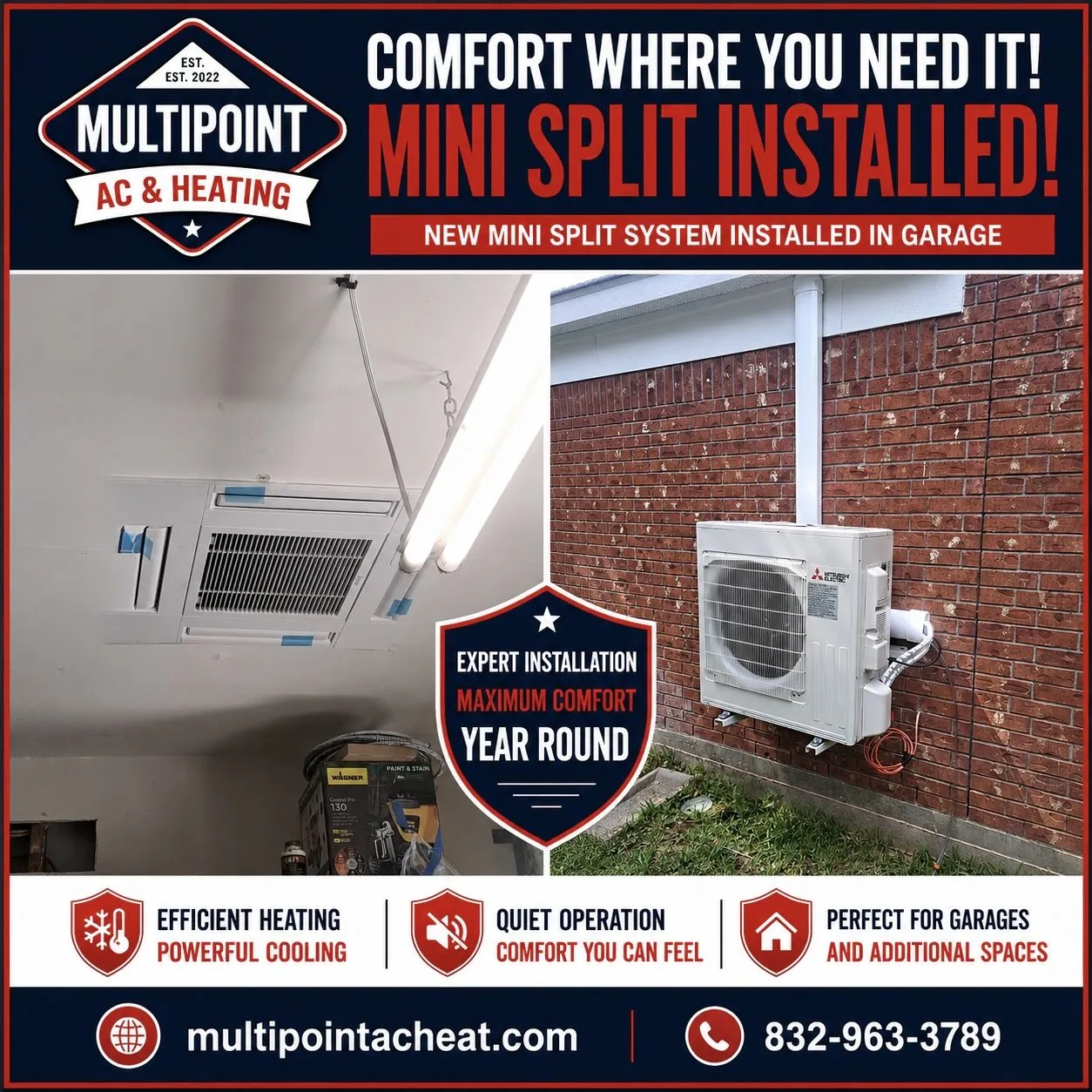
A mini-split can give a garage, home office or addition its own heating and cooling. The next decision is where the indoor unit belongs. A wall-mounted head stays visible on the wall. A ceiling cassette recesses into the ceiling, leaving its grille visible below.
For a Houston-area homeowner, the best choice depends on the room and the installation route. Ceiling space, airflow, drainage and cleaning access can matter more than how the unit looks in a product photo. Compare those details before approving either option.
Start with what the room can accommodate
Both styles connect to compatible outdoor equipment through refrigerant lines, wiring and a condensate drain. A heat-pump system can provide heating as well as cooling. Choosing a cassette does not automatically increase capacity or efficiency. Those depend on the selected equipment combination and its suitability for the space.
When a wall-mounted head is a practical fit
A wall-mounted unit deserves a close look when there is a clear mounting area and a reasonable route outside. It avoids recessing the indoor cabinet into the ceiling, which can simplify a finished-room installation when access above is limited.
The proposed location still needs checking. Windows, tall cabinets, shelving and the ceiling can limit available space. Ask the installer to show the manufacturer's required clearances and where the air will travel. A convenient patch of wall may aim the discharge directly at your desk or miss the area you use most.
When a ceiling cassette is worth evaluating
A cassette can keep wall space available for storage, windows or furniture. Its indoor cabinet sits above the finished ceiling, so the installer must verify the cavity, support and routes before promising that it will fit.
Cassettes differ. Some narrow models fit between standard ceiling joists, while other configurations need a larger opening or different framing arrangement. One-way and four-way airflow options also differ. Ask which exact model is proposed, where its grille will sit, and how it will be serviced. Structural members should never be altered simply to force a unit into place.
Plan airflow around how you use the space
Mark where you sit, work, exercise or sleep before choosing a location. Then consider what stands between the indoor unit and those areas. A tall storage rack, partition or beam can interrupt the intended air path.
A wall head may serve an open room well from one side. A suitable cassette may offer useful distribution from a ceiling location. Neither arrangement guarantees even temperatures behind a closed door or around every obstruction. Ask the installer to explain how the selected model's adjustable vanes and placement fit your actual layout.
For a garage, include the raised door and its tracks in that discussion. For an addition, include the furniture plan and any doorway separating it from the house. Capacity and the building's insulation still need evaluation, whichever indoor style you prefer. Our Houston mini-split installation guide covers those broader sizing and application decisions.
Ask where the condensate will go
An indoor coil produces water while cooling. That water needs a reliable route away from the unit. Before installation, ask where the drain ends, how its route will remain accessible, and whether the selected arrangement uses gravity drainage or a pump.
A wall-mounted system may use gravity when a suitable downhill route is available. A difficult route can require a pump. Many cassettes include a condensate lift pump, but its limits and the downstream piping must follow that model's instructions. A pump does not make every route workable.
Have the estimate identify any added pump and the proposed drain arrangement. At startup, ask for drainage operation to be checked. These details deserve attention before a cabinet is concealed above a finished ceiling.
Include future cleaning and service access
Picture yourself reaching the filter after the room is furnished. A high wall head above shelving can be awkward. A cassette above a parked vehicle, workbench or bed can also be difficult to reach safely. Follow the selected unit's cleaning instructions and ask the installer to demonstrate filter access.
The technician also needs room for deeper cleaning and repairs. Ask whether service requires another ceiling opening and whether that opening is included in the quote. Choose a location that allows the equipment to remain accessible over time, even if it means adjusting the furniture or storage plan.
You can see a real example in MultiPoint's published garage ceiling-cassette project. It shows one installation approach. Your ceiling, drain route and room use still need their own assessment.
Compare the complete installation scope
Ask for both alternatives to be priced for the same room and intended use. The written scope should identify the indoor and outdoor model numbers, placement, electrical work, line routing, drain arrangement and startup checks.
For a cassette, clarify ceiling cutting, access openings, support and any drywall or paint restoration. For a wall head, clarify the visible line cover and wall penetrations. Confirm who handles finishing work and whether it is included. A lower equipment price alone will not tell you which completed installation is the better value.
MultiPoint's mini-split service page explains the installation evaluation. For homes in Richmond, Fulshear, Katy, Sugar Land, Rosenberg and Greater Houston, the goal is a suitable system with a clear scope before work starts.
Frequently asked questions
Is a ceiling cassette always better for a garage?
No. It can preserve wall space, but ceiling structure, door tracks, drainage and service access may favor a wall unit. Compare feasible locations for the specific garage.
Will a cassette cool more than a wall-mounted mini-split?
Indoor style alone does not determine cooling capacity. Compare the rated system combination, the room's calculated load and the planned airflow path.
Can a ceiling cassette go beneath a second-floor room?
Possibly, if the ceiling cavity and installation routes accommodate the selected model. A finished floor above can make access and future repairs more involved, so inspect before quoting.
Can I choose the indoor style after buying the outdoor unit?
Check compatibility first. Indoor units must be approved for the selected outdoor equipment and configuration. Have the installer confirm the complete combination before ordering.
Get a mini-split estimate for your space
Call MultiPoint AC & Heating at (832) 963-3789 or request an estimate online. Tell us your city, how you use the room and whether there is access above the ceiling. We can assess the options and explain the installation scope before you decide.