
Mini Split Installation & Repair in Houston, TX
MultiPoint AC & Heating provides professional ductless mini-split installation, repair, and maintenance for homeowners throughout Houston, Katy, Sugar Land, Richmond, and surrounding areas. We help homeowners choose properly sized systems for efficient heating and cooling in bedrooms, home additions, garage conversions, and other living spaces.
What is a Ductless Mini Split?
A ductless mini split is a heating and cooling system that provides temperature control without relying on traditional ductwork. Unlike conventional central HVAC systems, which distribute conditioned air through a network of ducts, mini splits use an outdoor compressor connected to one or more indoor air-handling units.
These systems are designed to provide targeted comfort in individual rooms or specific areas of a home. Each indoor unit can be controlled independently, allowing homeowners to adjust temperatures based on the needs of each space.
For Houston homeowners, ductless mini splits can be a practical solution for areas that are difficult to cool with existing central air conditioning. They are particularly useful for garage conversions, room additions, home offices, upstairs bedrooms, and older properties without existing ductwork.
Mini splits are also available in heat pump configurations, providing both cooling and heating throughout the year. With proper equipment selection, professional installation, and routine maintenance, a ductless system can deliver reliable comfort while helping homeowners manage energy consumption.
Single-Zone vs. Multi-Zone Mini Splits
Ductless mini splits generally come in two configurations: single-zone and multi-zone systems.
A single-zone mini split connects one indoor unit to one outdoor unit. It is designed to provide heating and cooling for a specific room or area. This configuration is often suitable for a converted garage, home office, workshop, or individual bedroom.
A multi-zone mini split connects multiple indoor units to a single outdoor condenser. Each indoor unit can serve a separate room or zone, allowing homeowners to control temperatures independently throughout different areas of the house.
The right configuration depends on the property’s layout, the number of rooms requiring conditioning, equipment capacity, and installation requirements.
For homes with several rooms that need additional cooling, a properly designed multi-zone system may offer greater flexibility than installing multiple independent systems.
Where Do Mini Splits Work Best in Houston Homes?
Houston’s hot summers, high humidity, and extended cooling season make temperature control an important consideration for homeowners. However, not every part of a house is equally served by its existing central HVAC system.
Ductless mini splits offer an alternative for spaces where extending existing ductwork may be difficult, expensive, or impractical.
They can provide targeted heating and cooling without requiring major modifications to the home’s existing duct system.
Garage Conversions, Home Offices and Workshops
Garage conversions are among the common applications for ductless mini splits. Many garages were not originally designed to receive the same heating and cooling as the main living areas of a home.
When a garage is converted into a home office, gym, hobby room, or additional living space, temperature control becomes essential.
A mini split can provide dedicated cooling for the converted space without requiring the homeowner to extend the central HVAC system. This can also help avoid placing additional demand on an existing duct system that may not have been designed for the extra area.
Home offices and workshops can benefit from the same arrangement. Instead of cooling the entire house to maintain a comfortable temperature in one room, homeowners can operate the mini split independently.
For Houston properties, proper insulation, window exposure, ceiling height, and equipment sizing should all be considered before installation.
Room Additions and Upstairs Bedrooms
Room additions can create challenges for existing HVAC systems. An additional bedroom, enclosed patio, or expanded living area may increase the cooling demand beyond what the original system was designed to handle.
Extending ductwork to a new addition is sometimes possible, but it requires evaluating the existing system’s capacity and duct configuration.
A ductless mini split provides another option by delivering conditioned air directly into the new space.
Upstairs bedrooms can also experience uneven temperatures, particularly during Houston’s summer months. Heat accumulation, attic conditions, insulation, and airflow restrictions can contribute to rooms that remain warmer than the rest of the house.
A properly sized mini split can provide additional cooling for an individual upstairs room without requiring changes to the entire central HVAC system.
Guest Suites and Older Homes Without Ductwork
Guest suites, detached living spaces, and older homes may not have convenient access to existing ductwork.
Installing traditional ducted HVAC in these properties can require extensive modifications, including opening walls, adjusting ceilings, or creating space for new duct runs.
Ductless mini splits can simplify temperature control in these situations because they do not require a conventional duct network.
They are also useful for detached structures such as guest houses and backyard offices, provided the equipment, electrical supply, and installation layout are suitable.
Before selecting a system, an HVAC professional should evaluate the property’s construction, insulation, electrical capacity, and cooling requirements.
How Is a Mini Split Properly Sized?
Choosing the correct mini split capacity is one of the most important parts of the installation process.
A system that is too small may struggle to maintain comfortable temperatures during Houston’s hottest days. An oversized system may cycle improperly, resulting in inconsistent temperatures and potentially inadequate humidity removal.
Equipment selection should be based on the actual heating and cooling requirements of the space rather than square footage alone.
Room-by-Room Heating and Cooling Loads
Proper mini split sizing begins with evaluating the area that needs heating and cooling.
An HVAC professional considers several factors, including:
* Total room square footage and ceiling height.
* Number, size, and placement of windows.
* Insulation quality and air leakage.
* Direct sunlight and building orientation.
* Number of occupants and typical room usage.
* Heat generated by lighting, appliances, and electronics.
* Local outdoor temperature conditions.
These factors help determine the amount of heating and cooling capacity required.
For multi-zone installations, each room should be evaluated individually. The combined requirements of the indoor units must also be compatible with the selected outdoor condenser.
Rather than choosing equipment based on a general online sizing chart, homeowners should have the space evaluated before purchasing or installing a system.
Correct sizing helps support consistent temperatures, appropriate system operation, and long-term equipment performance.
Humidity Control in Houston
Temperature is only one part of indoor comfort. Humidity is another important consideration for Houston homeowners.
The region experiences high outdoor humidity, particularly during the warmer months. When moisture levels remain elevated indoors, rooms can feel uncomfortable even when the air conditioning is running.
Ductless mini splits remove some moisture from indoor air as part of their cooling operation. However, their ability to control humidity depends on equipment sizing, operating conditions, system settings, and the moisture load inside the space.
An oversized system may cool a room quickly without running long enough to remove sufficient moisture.
Proper sizing and installation are therefore important for both temperature and humidity management.
Homeowners should also address air leaks, insulation problems, and other sources of unwanted moisture. A mini split is not a substitute for correcting underlying humidity or water intrusion issues.
What Happens During Mini Split Installation?
Professional mini split installation involves more than mounting an indoor unit and connecting it to an outdoor condenser.
The installation process requires proper equipment selection, electrical planning, refrigerant line routing, condensate drainage, and system testing.
Every property has different installation requirements, so the process should begin with an evaluation of the space.
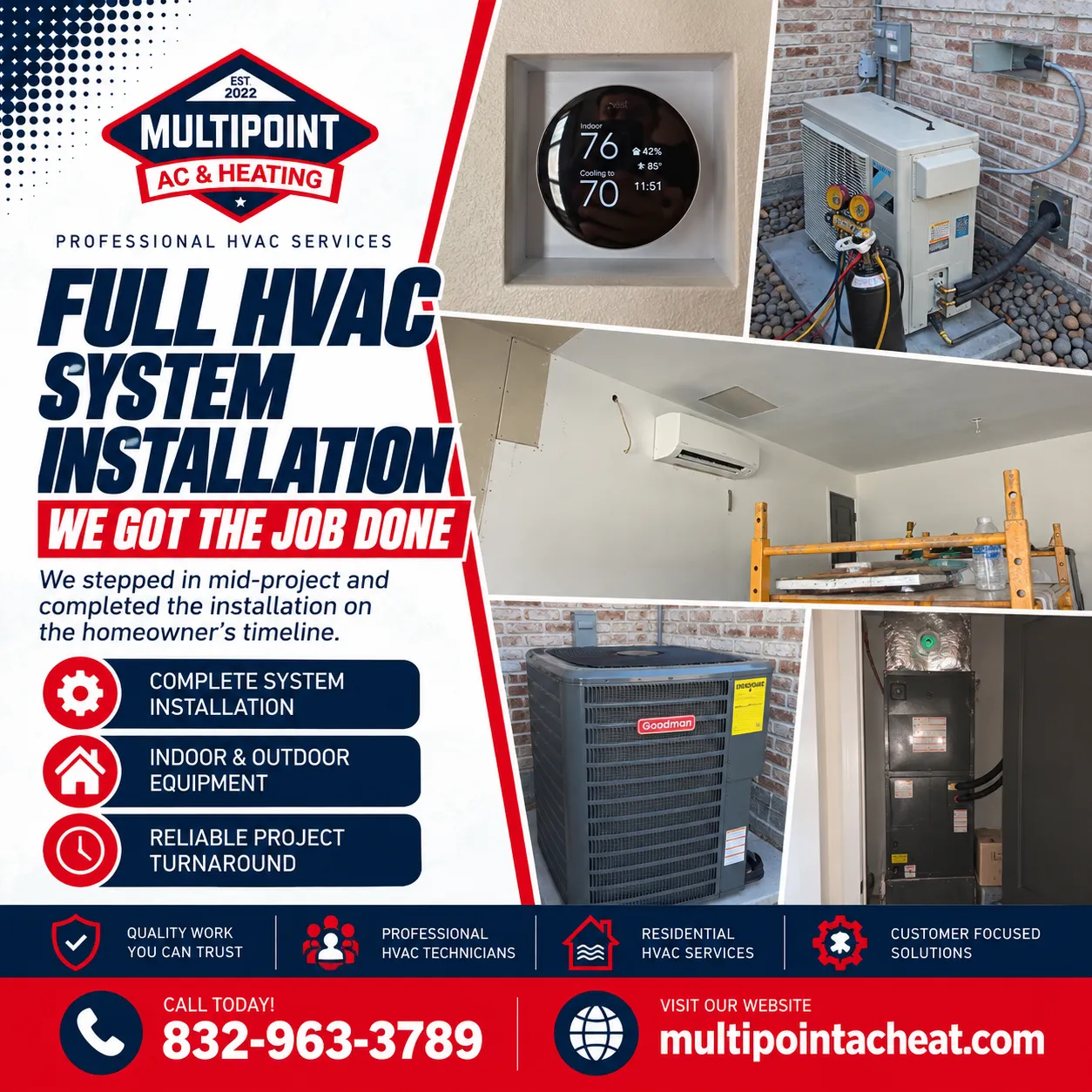
For an example of completed work, view our New Mitsubishi Mini Split Installation in Houston.
Equipment Placement and Electrical Planning
The first step involves determining where the indoor and outdoor units should be installed.
Indoor units are generally positioned to distribute conditioned air effectively throughout the intended space. Placement should consider wall construction, available clearance, airflow direction, furniture, and accessibility for future maintenance.
The outdoor condenser also requires an appropriate location with sufficient clearance for airflow and servicing.
Electrical requirements must be reviewed before installation. Mini split systems have specific voltage, circuit, and disconnect requirements depending on the equipment model and capacity.
An HVAC professional should verify the electrical supply and coordinate any necessary electrical work with a qualified electrician.
Proper planning helps prevent installation complications and ensures that the equipment can operate according to manufacturer specifications.
Refrigerant Lines, Drainage and Commissioning
Once the equipment locations have been established, technicians install the refrigerant line set connecting the indoor and outdoor units.
These lines carry refrigerant between the system components and must be properly sized, routed, insulated, and connected.
The installation also requires a condensate drainage solution. During cooling operation, moisture collected from indoor air must drain away from the indoor unit.
In Houston’s humid climate, proper condensate drainage is particularly important. An improperly installed or obstructed drain line can cause water leaks and potential property damage.
Before the system is placed into service, technicians should complete the required installation and commissioning procedures. These may include:
* Checking refrigerant line connections.
* Performing the manufacturer’s specified pressure and leak tests.
* Evacuating the refrigerant lines using appropriate procedures.
* Verifying electrical connections and operating parameters.
* Confirming proper condensate drainage.
* Testing heating and cooling operation.
* Checking airflow and system controls.
The final inspection helps confirm that the equipment is operating according to manufacturer requirements and that the installation is ready for normal use.
Mini Split Repair and Troubleshooting
Like other HVAC systems, ductless mini splits can experience performance issues over time.
Some problems are related to dirty filters, restricted airflow, drainage blockages, or incorrect settings. Others may involve electrical components, sensors, refrigerant leaks, or communication failures between the indoor and outdoor units.
Identifying the cause of the problem is important before attempting repairs.
If your mini split is not operating properly, professional diagnosis can help determine whether the issue requires cleaning, component replacement, electrical repairs, or additional service.
Mini Split Not Cooling or Heating
A mini split that runs but does not provide sufficient heating or cooling may have several possible causes.
Common issues include:
* Dirty air filters restricting airflow.
* Blocked indoor or outdoor unit airflow.
* Incorrect thermostat or remote control settings.
* Electrical or control board problems.
* Faulty temperature sensors.
* Refrigerant leaks or other refrigerant-related issues.
* Problems with the compressor or outdoor fan.
Homeowners can begin by checking the remote control settings, confirming the selected operating mode, and inspecting accessible air filters.
If the system continues to perform poorly, it should be evaluated by an HVAC technician.
Adding refrigerant without identifying the underlying cause is not a proper solution. A refrigerant leak, if present, must be investigated and addressed before the system is recharged according to manufacturer specifications.
For systems that provide both heating and cooling, the technician should also evaluate the appropriate operating mode and heat pump components.
Water Leaks, Noises and Communication Errors
Water leaking from an indoor mini split unit is another issue homeowners should address promptly.
Possible causes include a clogged condensate drain, improper drainage installation, a damaged drain pan, or other drainage-related problems.
Ignoring a water leak can result in damage to walls, ceilings, flooring, and nearby furnishings.
Unusual noises can also indicate that a system needs attention. Rattling, buzzing, grinding, or excessive vibration may be related to loose components, fan problems, debris, or mechanical issues.
Communication errors between indoor and outdoor units can cause the system to stop operating or display an error code.
These problems may involve wiring, control boards, sensors, or compatibility issues between system components.
Homeowners should record any displayed error codes and share them with the technician during diagnosis. Avoid repeatedly resetting a system that continues to display an error or operate abnormally.
For professional troubleshooting, schedule a diagnostic appointment with Multipoint AC & Heating.
Our diagnostic fee is $69. An additional $100 after-hours or weekend fee applies when applicable. The diagnostic fee is not waived when a repair is approved.
Mini Split Maintenance for Long-Term Performance
Routine maintenance helps ductless mini split systems maintain proper airflow, operate efficiently, and reduce the likelihood of preventable problems.
Because mini splits operate in individual rooms and zones, each indoor unit requires attention. Neglecting even one unit can affect its performance and contribute to airflow or drainage problems.
Basic maintenance includes regularly checking and cleaning accessible air filters according to the manufacturer’s instructions. Homeowners should also keep the indoor and outdoor units free from obstructions.
Professional maintenance may include:
* Inspecting and cleaning indoor unit components.
* Checking filters and airflow.
* Inspecting evaporator and condenser coils.
* Checking condensate drain lines and drainage operation.
* Inspecting electrical connections and system components.
* Checking refrigerant system performance.
* Testing heating and cooling operation.
* Identifying visible signs of wear or potential problems.
Houston’s humidity and extended cooling season make regular system care particularly important.
For homeowners looking for scheduled HVAC maintenance, Multipoint AC & Heating offers a maintenance plan for $209 annually. The plan includes two scheduled maintenance visits and a 10% discount on eligible repairs.
The maintenance plan does not include free filters, refrigerant, parts, or additional repairs.
Learn more about our HVAC Maintenance Plans and the services included.
Mini Split or Central HVAC: Which Is Better?
Both ductless mini splits and traditional central HVAC systems can provide reliable heating and cooling when properly selected and maintained. The better option depends on the home’s layout, existing equipment, budget, and comfort requirements.
Central HVAC systems use ductwork to distribute conditioned air throughout the home. They are commonly found in properties with existing duct systems and can provide whole-home temperature control through a central thermostat.
Ductless mini splits deliver conditioned air directly into individual rooms or zones. They are particularly useful for spaces where installing or extending ductwork is difficult.
Here are some important differences:
Ductwork: Central HVAC systems rely on ducts to distribute air. Mini splits do not require conventional ductwork.
Temperature control: Central systems typically regulate the home through a central thermostat, while multi-zone mini splits can provide independent temperature settings for different rooms.
Installation: Replacing an existing central HVAC system may be more practical when suitable ductwork is already available. Mini splits can be a good alternative for additions, detached spaces, and rooms without duct access.
Energy consumption: Both systems use energy to provide heating and cooling. Actual operating costs depend on equipment efficiency, sizing, insulation, usage patterns, and installation quality.
Maintenance: Central HVAC systems require attention to filters, coils, drainage, and ductwork where applicable. Mini splits require maintenance of their individual indoor units, outdoor equipment, and drainage components.
For many Houston homes, the best solution may be to retain the existing central HVAC system while adding a mini split to a room that needs independent temperature control.
Homeowners considering a heat pump solution can explore our Heat Pump Services.
Frequently Asked Questions About Mini Splits
Can a mini split cool a garage in Houston?
Yes. A properly sized ductless mini split can cool a garage in Houston, including garages converted into offices, gyms, workshops, or additional living spaces.
However, insulation, air sealing, garage door construction, ceiling height, and exposure to direct sunlight should be evaluated before selecting equipment.
A properly insulated garage generally provides better conditions for maintaining comfortable temperatures and managing energy consumption.
Do ductless mini splits provide heating and cooling?
Yes. Many ductless mini split systems use heat pump technology to provide both heating and cooling.
During warmer months, the system removes heat from indoor air and transfers it outdoors. During cooler weather, the refrigeration cycle reverses to bring heat indoors.
This makes heat pump mini splits a practical option for homeowners who want year-round temperature control without installing separate heating and cooling equipment.
The system’s heating performance depends on the equipment model and its rated operating temperature range.
How many rooms can one mini split cool?
The number of rooms depends on whether the system is single-zone or multi-zone.
A single-zone system typically serves one designated area using one indoor unit. A multi-zone system can connect multiple indoor units to one outdoor condenser.
The number of supported indoor units depends on the equipment model, outdoor unit capacity, and manufacturer specifications.
Each room should be evaluated separately to determine its heating and cooling requirements before choosing a multi-zone configuration.
How much does mini split installation cost?
Mini split installation costs vary depending on several factors, including:
* The system’s brand, model, and cooling capacity.
* The number of indoor units required.
* Single-zone versus multi-zone configuration.
* Electrical upgrades or additional circuit requirements.
* Refrigerant line length and installation complexity.
* Wall construction and equipment placement.
* Drainage requirements and other installation materials.
A single-zone installation will generally have different requirements and costs compared with a multi-zone system serving several rooms.
The most accurate way to determine the cost is to have the property evaluated and receive an installation estimate based on the actual project requirements.
Contact Multipoint AC & Heating to discuss your mini split installation needs in Houston.
How long does mini split installation take?
Installation time depends on the number of indoor units, equipment configuration, electrical requirements, refrigerant line routing, and accessibility of the installation area.
A straightforward single-zone installation may be completed within a day, while multi-zone installations or projects requiring additional electrical or construction work may take longer.
The installation timeline can be discussed after evaluating the property and determining the equipment requirements.
Schedule Mini Split Installation or Repair in Houston, TX
Whether you are converting a garage into a comfortable living space, adding temperature control to a home office, or addressing an existing mini split problem, choosing the right HVAC solution starts with a proper evaluation.
Multipoint AC & Heating provides HVAC services for homeowners in Houston, TX, including mini split installation, troubleshooting, repair, and maintenance.
Our team can help evaluate your space, identify equipment requirements, and determine the appropriate solution for your property.
Contact us today to discuss your project or schedule a service appointment.
Multipoint AC & Heating
Phone: (832) 963-3789
Website: https://multipointacheat.com/contact-us
Call MultiPoint AC & Heating at (832) 963-3789 or request mini split service for installation or repair in Houston and nearby communities.
Related Projects


Our Process for Mini Split Installation
Ensuring Comfort & Efficiency
Initial Needs Assessment
Our certified technicians conduct a comprehensive assessment to understand your specific cooling requirements. With advanced tools, we evaluate your space to determine the optimal Mini Split system and model, providing personalized recommendations to meet your needs.
Custom System Design & Scheduling
We design a tailored Mini Split system, using top-quality Daikin units, ensuring energy efficiency and comfort. Our team schedules the installation at your convenience, providing a clear timeline and preparing necessary resources in advance.
Professional Installation & Setup
Our installation team executes meticulous installation processes, observing all safety and quality standards. We set up your Mini Split unit, optimizing its efficiency and performance. After installation, a thorough functionality test and system walkthrough ensure you understand its operation.
Post-Installation Support & Maintenance
After installation, we review controls, basic care and recommended service with you. Any included maintenance or warranty terms are identified in the installation quote. Call (832) 963-3789 for ongoing service. Emergency service available after hours, except Sunday 3 PM to Monday 6 AM.
FAQs About Mini Split Systems
Common questions about mini split installations, efficiency, and services with Multipoint AC & Heating LLC.
- What is a mini split system?
A ductless mini split connects indoor and outdoor equipment to condition a room or defined area without a conventional duct network. Heat-pump models provide heating and cooling. The capabilities and suitable applications depend on the equipment selected and the space being served.
- How does a mini split system work?
Mini splits have two main components: an outdoor compressor/condenser and an indoor air-handling unit. Refrigerant lines connect these components, allowing heat to be transferred. The system is controlled via remote control or wall-mounted thermostat, offering targeted temperature control.
- Are mini split systems more energy-efficient than traditional HVAC systems?
Ductless systems can avoid energy losses from ductwork, but operating costs depend on equipment efficiency, sizing, installation, insulation and use. We review the space and existing system before explaining the options and their expected differences.
- How do I know if a mini split system is right for my home or business?
We review how the space is used, its heating and cooling load, equipment placement, electrical capacity, refrigerant-line route and condensate drainage. We then explain whether a ductless system or another approach fits the home and quote the proposed installation before approval.
- How long does a mini split installation take?
The timeline depends on the number of indoor units, electrical work, line routing, drainage and access. We confirm the installation scope and expected duration after reviewing the property and before the work is approved.
- Does Multipoint AC & Heating LLC offer maintenance for mini split systems?
Yes. We plan service around the equipment manufacturer's instructions and review applicable filters, accessible coils, blower components, condensate drainage and system operation. We confirm included cleaning and quote additional work before proceeding. Call (832) 963-3789 to discuss service or maintenance-plan options.
Highlights from our customers
Snapshots of their experiences
They are an amazing team and recommend them to everyone!
Really good ac repairs here in the katy area
(Translated by Google) Great company, very punctual with excellent customer service, I recommend them 100%. (Original) Muy buena compañia, muy puntuales con exelente trato al cliente, los recomiendo 100%
 Leave us a review
Stay Comfortable with Our Mini Split Solutions Today
Contact Multipoint AC & Heating now for seamless installation by trusted experts. Your comfort won't wait!