Whole-House vs. Portable Dehumidifiers: Which Fits Your Houston Home?
Compare portable and whole-house dehumidifiers for a Houston home. Learn what to measure and what to ask before paying for a ducted installation.
If one room feels damp, a portable dehumidifier may be all you need. If several rooms stay damp even when the temperature is comfortable, a whole-house system may be worth evaluating. Before buying either one, measure where and when humidity stays high. The pattern can tell you whether to treat one room, correct a source of moisture or ask for a ducted installation estimate.
That distinction matters in Greater Houston on mild days when the AC runs less. The living room can feel comfortable while a bedroom or another part of the house stays damp. Turning the thermostat down may cool rooms that are already comfortable. Start by finding out how far the moisture problem extends.
Compare Two Rooms Before Buying Equipment
Set one indoor humidity meter in the room that feels damp and another in a central living area. Keep them out of direct sunlight and away from supply vents, windows and bathrooms during showers. If the meters differ noticeably when placed side by side, use the same meter in both spaces at comparable times and let it settle before reading it.
Check morning and evening for several days. Write down the temperature, relative humidity and whether the AC was running. Note anything that could explain a jump, such as a shower or cooking. The EPA advises keeping indoor relative humidity below 60% where possible, ideally between 30% and 50%. A reading taken right after a shower tells you less about the rest of the house than elevated readings that persist hours later.
If you find a leak, damp building materials or repeated moisture around one window, deal with that source first. A dehumidifier can remove moisture from the air while the source continues adding it. If the readings are consistently higher in just one room, that is also a reason to check that room’s ventilation and airflow before buying a larger unit.
When a Portable Dehumidifier Is Enough
A portable unit is a practical option when one room needs extra drying and the rest of the home is within a reasonable range. A home office that stays damp with the door closed is a different purchase from a house where the living room and several bedrooms all have persistent readings above 60%.
Check the manufacturer’s capacity guidance for the room size and how damp it is. Ask yourself where the unit will sit and whether the fan noise will matter. Many portables stop when the collection bucket fills. If you need unattended operation, look for a model that supports continuous drainage and follow its instructions. After you set it up, take readings again in the same location. That tells you more about whether it’s helping than how often you empty the bucket.
When a Whole-House Dehumidifier Is Worth Evaluating
Consider a professionally sized system when high humidity keeps showing up in several rooms, especially during stretches when the AC seldom calls for cooling. A ducted unit can serve more than one area. With the appropriate controls, it can respond to humidity even when the thermostat is satisfied. How well it reaches bedrooms with closed doors depends on the installation and the home’s air paths.
Ask the contractor to check for a moisture source and explain how the proposed system will serve the rooms where you took readings. A higher capacity rating tells you how much water a unit removes under test conditions. Actual moisture removal changes with indoor temperature and humidity, so compare equipment on the same rating basis and ask why the proposed capacity fits your house.
What to Get in Writing Before You Approve
Coverage and controls. Which rooms will the system serve? Where will it draw and deliver air? Which sensor will tell it to run, and does the central blower need to run with it?
Drainage and access. Where will the water drain? If the equipment is above finished space, what overflow protection does the installation call for? Can someone reach the filter, drain and controls for service?
Startup checks. Ask the installer to confirm operation on a humidity call, test the drainage and show you how to check the readings after installation.
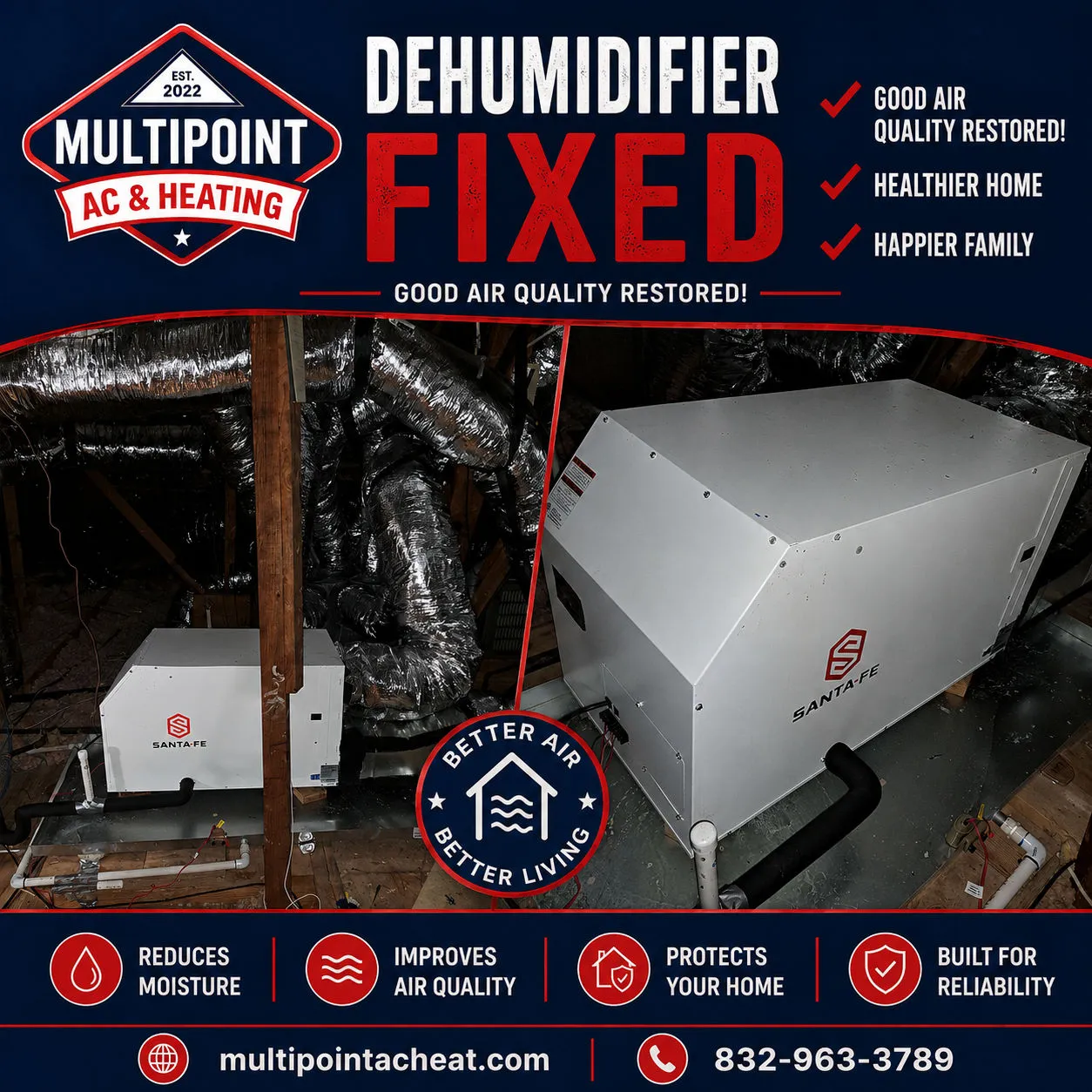
For a look at what ducted equipment can look like, see MultiPoint’s Houston Santa Fe dehumidifier repair project. That home already had an attic-mounted unit, and MultiPoint restored its operation.
Frequently Asked Questions
Can a portable dehumidifier dry several bedrooms?
It may help connected rooms with good air movement, but results depend on the layout and whether the doors are open. Check the actual humidity in each bedroom before assuming a unit in the hall is reaching them.
Can a whole-house unit work when the AC is off?
Yes, when the installation and controls are set up for independent humidity operation. Some layouts still use the central blower for distribution, so ask which fans will run during a humidity call.
Will a dehumidifier lower my electric bill?
Both types use electricity. The effect on your total bill depends on the unit, how long it runs and whether your cooling habits change. Start by measuring whether it solves the moisture problem in the rooms you care about.
Request a Humidity Assessment
If several rooms stay damp, bring your readings to a MultiPoint AC & Heating assessment. We can review where the moisture is showing up and discuss what a ducted option would involve. We serve Richmond, Fulshear, Katy, Sugar Land, Rosenberg and Greater Houston. Explore our indoor air quality services, request an assessment or call (832) 963-3789.