How Trees and Landscaping Around Your Houston Home Affect Your AC System
Discover how trees affect your Houston home's AC efficiency and learn tips for optimal landscaping to improve cooling performance and reduce maintenance.
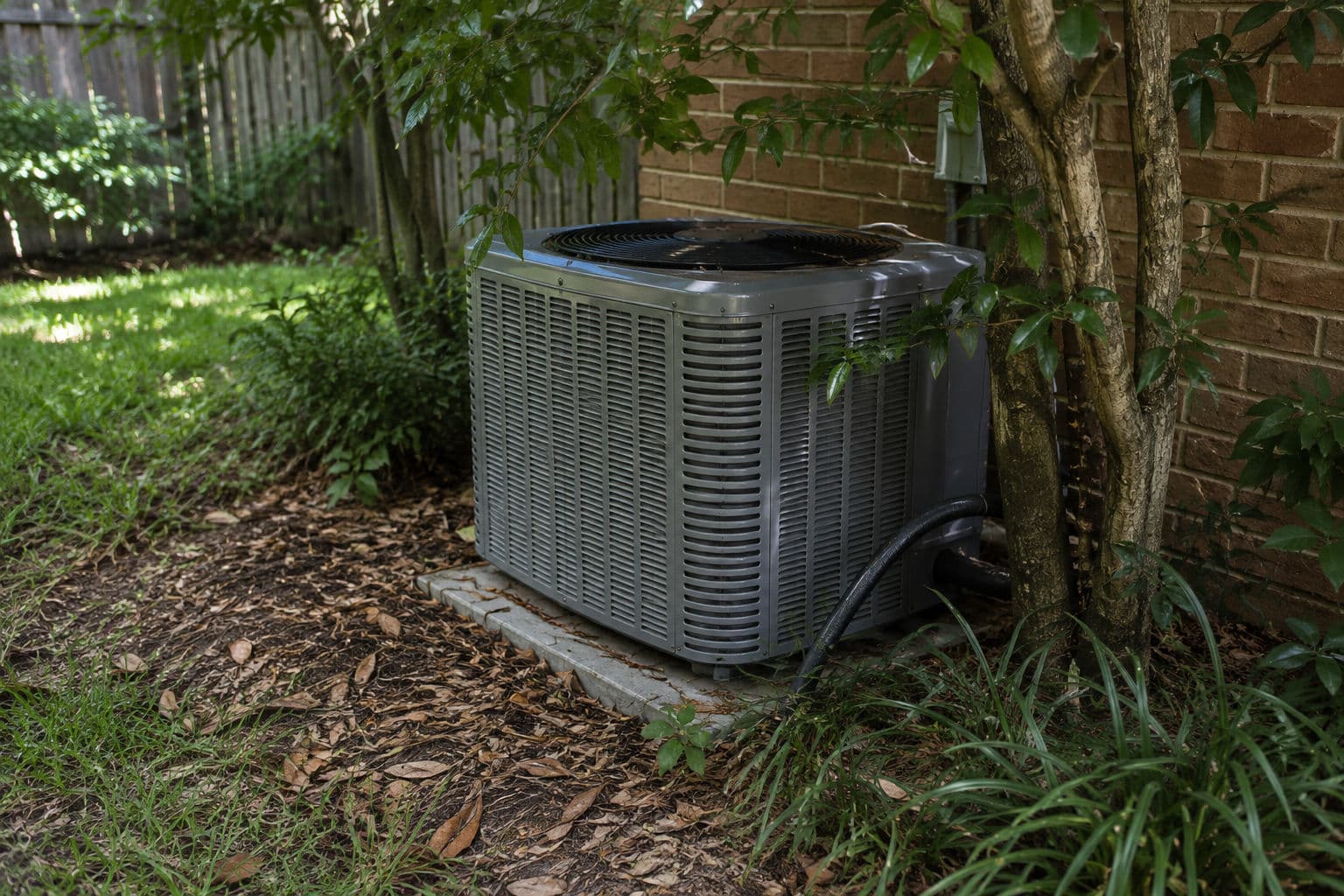
Houston is a green city. The tree canopy across established neighborhoods, the mature landscaping in communities that have been developed for decades, and the intentional preservation of existing vegetation in master-planned communities like The Woodlands and Kingwood are part of what makes living in the Greater Houston area distinctive compared to cities in drier parts of Texas. That vegetation has real effects on your home's cooling load and on the performance of your HVAC equipment — some positive, some negative, and most of them worth understanding if you want your AC system to perform as efficiently as possible through Houston's long summer.
The relationship between landscaping and HVAC performance isn't simple. The same tree that shades your home and reduces your cooling load can also be depositing debris into your outdoor unit at a rate that requires more frequent maintenance. Getting the most out of the landscaping around your home means understanding both dimensions.
HOW TREES AND SHADE REDUCE YOUR COOLING LOAD
Shade on the home itself is the most direct way that trees and landscaping reduce your AC system's workload. Solar heat gain — heat entering the home through the roof, walls, and windows from direct sun exposure — is one of the largest contributors to Houston's summer cooling load, and shade that intercepts that solar radiation before it reaches the home's surfaces reduces how much heat the AC has to remove.
Shade on the roof is the most impactful. The roof is the largest sun-exposed surface on most Houston homes and the primary pathway through which solar heat reaches the attic and transfers down into the living space. A mature tree with a canopy that shades a significant portion of the roof during the afternoon hours — when the sun angle and intensity are highest — reduces attic temperatures and the heat transfer through the ceiling that the AC is fighting continuously on peak summer afternoons.
Research on residential cooling loads consistently shows that effective shading on the west and southwest sides of a home — intercepting the afternoon sun that drives the highest cooling loads during Houston's hottest hours — can reduce cooling energy consumption by 10 to 25 percent compared to an unshaded home with otherwise identical characteristics. In a Houston home spending $1,800 per year on cooling energy, that range represents $180 to $450 per year in energy savings.
Shade on south and west-facing windows is the second most impactful location. As discussed in other contexts, direct sunlight through glass transmits heat into the home faster than almost any other pathway. A tree or large shrub that shades south or west-facing windows during the afternoon hours reduces the solar heat gain through those windows during the period when it would otherwise be highest.
Shade on the outdoor condenser unit itself provides a more modest but real benefit. An outdoor unit that's in direct afternoon sun operates in a higher ambient temperature than one that's shaded, which reduces its efficiency at heat rejection. A shaded condenser unit runs slightly more efficiently than an exposed one in otherwise identical conditions. The benefit is real but smaller than the benefits of shading the home itself — studies suggest shading the condenser unit alone reduces cooling energy consumption by 1 to 3 percent, which is meaningful but not transformative.
The important caveat for condenser unit shading is that shade structures must never restrict airflow around the unit. The condenser unit needs a minimum of two feet of clearance on all sides and unobstructed airflow above it for the condenser fan to move air effectively. A tree that shades the unit from above while allowing airflow around it is ideal. A fence, shrub, or structure that blocks airflow on any side of the unit negates the efficiency benefit of the shade and imposes an airflow penalty that outweighs the shading advantage.
HOW TREES AND LANDSCAPING HURT YOUR HVAC SYSTEM
The same trees and vegetation that provide shade on your home and outdoor unit are also sources of the organic debris that accumulates in your condenser coil fins and reduces your system's heat rejection efficiency. This is the tradeoff that every Houston homeowner with mature landscaping manages, and in some communities it's a more significant maintenance consideration than in others.
Pine needles are the most problematic debris type for condenser coils in Houston's wooded communities. Unlike leaves, which blow away relatively easily, pine needles pack tightly into the narrow fin passages of the condenser coil and resist being dislodged by wind or rain. Communities in The Woodlands, Kingwood, Conroe, Spring, Tomball, and other areas with significant pine tree populations have outdoor units that accumulate pine needle fouling at a rate that requires professional cleaning more frequently than units in open suburban settings.
Cottonwood fiber — the fluffy white seed material from cottonwood trees and certain other species common in Houston's residential landscapes — is nearly as problematic as pine needles. It accumulates on condenser coil surfaces and on the condenser fan motor housing and can restrict airflow significantly during the weeks when cottonwood production peaks.
Oak leaves, pecan leaves, and debris from other common Houston landscape trees accumulate on and around outdoor units in ways that reduce airflow and in some cases provide nesting material for insects inside the outdoor cabinet. Leaf litter that settles around the base of the outdoor unit can restrict bottom airflow on units with bottom-intake airflow configurations.
Tree root systems create a less obvious but real issue for outdoor units on concrete pads. Tree roots that grow under the pad can lift and tilt it over time, causing the outdoor unit to shift out of level. An outdoor unit that's significantly out of level can develop compressor oil pooling issues and in some cases refrigerant distribution problems. This is a slow-developing issue that typically takes many years to become significant, but in established Houston neighborhoods where mature trees surround outdoor units that have been in place for fifteen or more years, root-induced pad movement is an occasional finding.
Vines and climbing plants present a specific risk when they're allowed to grow on or near the outdoor unit. Vines that reach the outdoor unit can grow into the condenser coil fins, grow through the fan guard, and in some cases damage the coil or fan blade as they're removed. Keeping climbing plants well back from the outdoor unit prevents this issue entirely.
Grass and groundcover that grows against the outdoor unit reduces clearance on the sides and can be pulled into the condenser coil intake by the fan. Keeping the area around the outdoor unit mowed and trimmed back to maintain the minimum two feet of clearance is more important for units surrounded by active turf growth than for units on mulched or hardscaped areas.
FINDING THE RIGHT BALANCE FOR YOUR HOUSTON HOME
The goal isn't to choose between the shading benefits of mature trees and the maintenance demands they create — it's to position trees and landscaping in a way that captures as much of the shading benefit as possible while managing the debris impact on the outdoor unit.
Strategic placement of trees matters more than their presence or absence. A tree positioned to shade the west or southwest face of the home and the west-facing windows during afternoon hours provides the maximum shading benefit to the home while potentially depositing debris into the outdoor unit only if the unit is positioned on that side of the home in the same location as the tree canopy overhead. A tree positioned to shade only the outdoor unit without also shading the home provides much less benefit relative to the debris it introduces.
When planning new landscaping, positioning large trees to shade the west and southwest walls and roof sections of the home delivers the most cooling load reduction. Positioning them at a distance that allows the canopy to eventually shade the home without the canopy directly overhanging the outdoor unit avoids the worst of the debris accumulation problem.
For existing landscaping where mature trees already overhang the outdoor unit, the management approach is regular coil inspection and cleaning rather than tree removal. The shading benefit the tree provides to the home is likely worth more than the maintenance cost of more frequent coil cleaning — removing a mature shade tree to reduce condenser debris is in most cases trading a larger energy savings for a smaller maintenance reduction.
Keeping the outdoor unit on a regular cleaning schedule — professional cleaning annually at minimum, with supplemental rinsing between visits when debris accumulation is visible — manages the fouling that comes with a wooded setting without sacrificing the energy savings that come with it.
SPECIFIC RECOMMENDATIONS FOR HOUSTON'S MOST COMMON SETTINGS
Wooded communities with pine and hardwood canopy — The Woodlands, Kingwood, Conroe, Spring, and similar areas — benefit most from twice-yearly professional coil cleaning rather than the once-yearly that's appropriate for open suburban settings. The debris load from pine needles and hardwood leaf litter in these communities is genuinely higher than in open suburban settings, and the fouling rate is fast enough that an annual cleaning leaves the system running at degraded efficiency for several months of each cooling season.
Open suburban settings in Fort Bend County's agricultural corridor — Sugar Land, Katy, Needville, Richmond, and similar areas — have lower organic debris loads but more exposure to dust, grass clippings, and agricultural debris. Annual cleaning is appropriate, with supplemental rinsing after periods of high grass-cutting activity or windblown dust events.
Urban and inner-loop Houston communities with mixed mature tree cover — Bellaire, Meadows Place, Missouri City, and similar established neighborhoods — fall between the wooded community maintenance demands and the open suburban demands, and generally do well with annual professional cleaning supplemented by periodic rinsing when debris is visible on the outdoor unit.
Waterway-adjacent communities throughout the Greater Houston area — Kingwood, Atascocita, Baytown, Crosby, Highlands, and others — face the combined challenge of organic debris from riparian vegetation and elevated ambient humidity from the waterway environment. Both factors accelerate coil fouling and biological growth rates, making consistent maintenance more important in these communities than in drier inland settings.
WHAT TO DO BETWEEN PROFESSIONAL VISITS
Periodic inspection of the outdoor unit for visible debris accumulation is worth making a habit — particularly after significant wind events, after peak cottonwood season in spring, and after heavy leaf fall in autumn. A quick look at the outdoor unit takes thirty seconds and tells you whether debris has built up to a level that warrants rinsing before the next scheduled maintenance visit.
Rinsing the outdoor condenser coil with a garden hose from the inside out — after turning the system off at the thermostat and at the outdoor disconnect — removes surface debris that has accumulated between professional visits. Use gentle water pressure rather than a power washer, which can bend the delicate aluminum fin material. Rinsing from the inside of the unit outward pushes debris out through the fin openings rather than driving it further into the coil.
Keeping the two-foot clearance zone around the outdoor unit maintained — trimming grass, cutting back shrubs, removing leaf litter from the area around the base — reduces what the condenser fan pulls against the coil surface between visits and makes each professional cleaning more effective because the coil isn't re-fouling as quickly between cleanings.
In communities with significant pine tree populations, placing the outdoor unit away from directly under pine branches during any future installation or replacement is worth considering if site conditions allow. A unit that's partially under a pine canopy accumulates needles at a rate that a unit five feet further from the drip line of the same tree would not.
Multipoint AC & Heating provides AC maintenance, coil cleaning, and repair throughout Greater Houston, including Harris County, Fort Bend County, Montgomery County, and Austin County. For questions about your outdoor unit's maintenance needs given the landscaping around your home, or to schedule a professional coil cleaning, contact us today.