Why Is One Room in My Houston Home Always Too Hot or Too Cold?
Learn why one room in your Houston home is too hot or cold and how to fix it. Common HVAC issues explained with effective solutions.
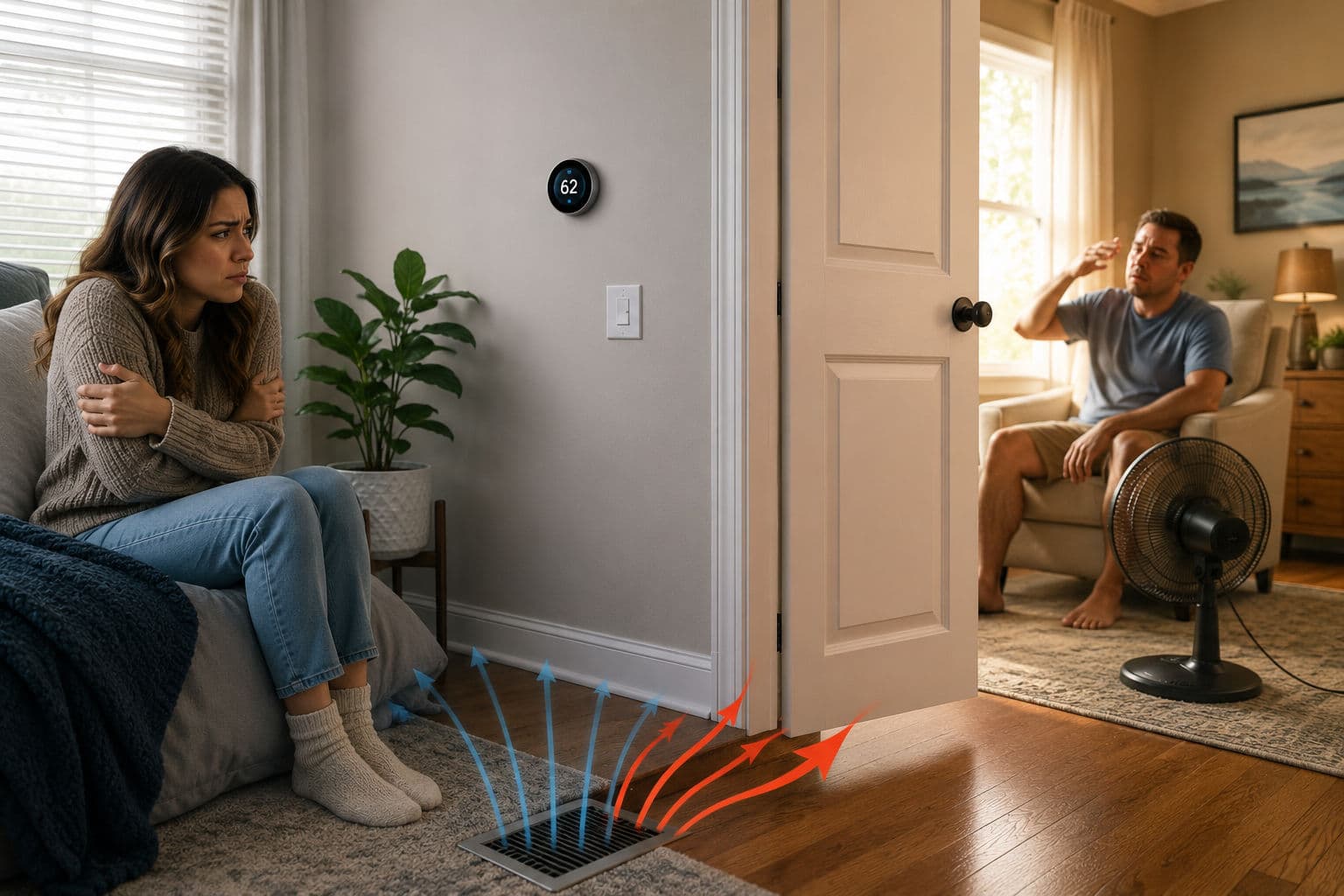
Uneven temperatures from room to room are one of the most common HVAC complaints we hear in Houston. Here's what's causing it — and how to fix it.
By Multipoint AC & Heating | Serving Greater Houston
You've got one room that's always freezing in the winter and sweltering in the summer no matter what you do. The rest of the house feels fine, but that one bedroom, back office, or bonus room just won't cooperate. Sound familiar?
Uneven cooling and heating is one of the most common complaints we hear from homeowners across the Houston area. The good news is that it almost always has a fixable cause. Here's a breakdown of the most likely culprits and what you can do about each one.
1. Blocked or Closed Vents
This is the first thing to check — and the easiest to fix. If a supply vent in the problem room is blocked by furniture, drapes, or rugs, or if it's been manually closed, air simply can't flow into that space the way it's designed to.
What to do: Walk through every room in your home and make sure all supply and return vents are fully open and unobstructed. Move furniture away from vents and make sure nothing is sitting on or covering floor registers. Your HVAC system is designed to balance airflow across all vents — closing one off throws the entire system out of balance and can actually cause problems elsewhere.
2. Closed Interior Doors
Keeping interior doors shut — especially in rooms with supply vents but no return vents — traps conditioned air and prevents it from circulating back through the system. This creates pressure imbalances that result in some rooms being over-conditioned and others being under-conditioned.
What to do: Keep interior doors open as much as possible, especially in rooms that tend to run hot or cold. If privacy is a concern, consider having an HVAC technician cut a small return air grille into the door or wall to allow airflow without sacrificing privacy.
3. Leaky Ductwork
Your ducts carry conditioned air from your HVAC system to every room in the house. If there are leaks, gaps, or disconnected sections in the ductwork — particularly in unconditioned spaces like attics or crawl spaces — a significant portion of that air never reaches its intended destination.
In Houston, attic ductwork is especially vulnerable. Summer attic temperatures can reach 140°F or higher, and ducts that aren't properly sealed and insulated lose a tremendous amount of cooling capacity before the air ever reaches your living space.
Signs your ducts may be leaking:
One or more rooms that never reach the set temperature
Noticeably weak airflow from certain vents
Dusty or stuffy air in specific rooms
Higher than expected energy bills despite the system running constantly
What to do: Schedule a duct inspection with a licensed HVAC technician. Duct sealing and insulation is one of the highest-return improvements you can make to your home's comfort and energy efficiency.
4. Undersized or Improperly Designed Ductwork
Even if your ducts have no leaks, they may simply be the wrong size for your home. Ductwork that's too small restricts airflow to certain rooms, while ducts that are too large can result in too much air being dumped into spaces close to the unit and not enough reaching rooms at the far end of the system.
This is a common issue in older Houston homes that have been renovated or expanded over the years without upgrading the duct system to match. It's also seen in homes where a new, larger HVAC unit was installed without reassessing whether the existing ductwork could handle the increased airflow.
What to do: Have a technician perform an airflow analysis and Manual D calculation — the industry standard for duct sizing. If your ductwork is undersized or poorly laid out, there are options ranging from adding supplemental ducts to redesigning sections of the system.
5. Poor Insulation
If the problem room is on an exterior corner, directly below the attic, above a garage, or at the end of the house, poor insulation may be allowing outdoor temperatures to overwhelm whatever your AC is pumping in. In Houston's summers, attic temperatures regularly exceed 130 to 140°F — and if the ceiling or walls of a room aren't properly insulated, that heat radiates directly into your living space.
Signs insulation may be the issue:
The problem room faces west and gets intense afternoon sun
The room is directly under the attic or above an unconditioned garage
The walls or ceiling in that room feel noticeably warm to the touch in summer
What to do: Have your attic insulation inspected. The U.S. Department of Energy recommends R-38 to R-60 insulation for Houston's climate zone. Adding attic insulation is one of the most cost-effective home improvements available — it reduces the load on your HVAC system and improves comfort in the rooms most affected by heat gain.
6. Wrong Size HVAC System for Your Home
An AC system that's too small for your home's square footage will struggle to keep up with Houston's heat, leaving the rooms farthest from the unit perpetually warm. A system that's too large — counterintuitively — can also cause uneven temperatures by short-cycling: it cools the air near the thermostat quickly and shuts off before conditioned air reaches every corner of the home.
What to do: Have an HVAC professional perform a Manual J load calculation to determine the correct system size for your home's specific layout, insulation levels, window area, and local climate. If your system is significantly over or undersized, replacement with a properly sized unit will solve problems that no amount of tweaking can fix.
7. The Room Has Too Much Sun Exposure
West and south-facing rooms in Houston take a significant solar heat load in the afternoon. Large windows, glass doors, or skylights can let in enough radiant heat to overwhelm a correctly functioning HVAC system — especially in rooms at the end of a duct run where airflow is already weakest.
What to do: Consider adding window film, blackout or thermal curtains, or exterior shading solutions like awnings or solar screens. These are relatively inexpensive fixes that can make a dramatic difference in rooms with heavy sun exposure without putting additional strain on your AC system.
8. You Need a Zoning System
If your home has multiple stories, large open areas, or rooms with very different sun exposure and usage patterns, a single thermostat controlling one system may simply not be the right solution. A zoning system divides your home into separate areas, each controlled independently, so you can deliver exactly the right amount of heating and cooling to each space without overcooling one room to heat another.
Zoning is particularly effective in two-story Houston homes where heat naturally rises and the upstairs is always warmer than the downstairs — a complaint we hear constantly from homeowners across the area.
What to do: Talk to an HVAC professional about whether a zoning system makes sense for your home. It's a more significant investment upfront but can solve chronic comfort problems that simpler fixes can't address.
Houston Pro Tip: Start With the Simple Stuff
Before calling anyone, spend five minutes doing a quick walkthrough. Check that all vents are open and unblocked, all interior doors are open, and your air filter is clean. These three things alone resolve a surprising number of uneven temperature complaints — and they cost nothing.
If the problem persists after checking the basics, it's time to bring in a professional to assess your ductwork, insulation, and system sizing.
We Can Find the Problem and Fix It
Uneven temperatures are frustrating, but they're almost always solvable. At Multipoint AC & Heating, our technicians diagnose comfort imbalances across homes of all sizes and ages throughout Houston, Katy, Sugar Land, The Woodlands, Pearland, Friendswood, Missouri City, Cypress, Humble, Pasadena, and the entire Greater Houston metro area.
Don't spend another Houston summer with a room you can't use — give us a call.