Why September Is the Smartest Month to Make HVAC Decisions in Houston
September is Houston's ideal month for HVAC choices—plan ahead with lower stress and higher availability. Optimize your comfort efficiently.
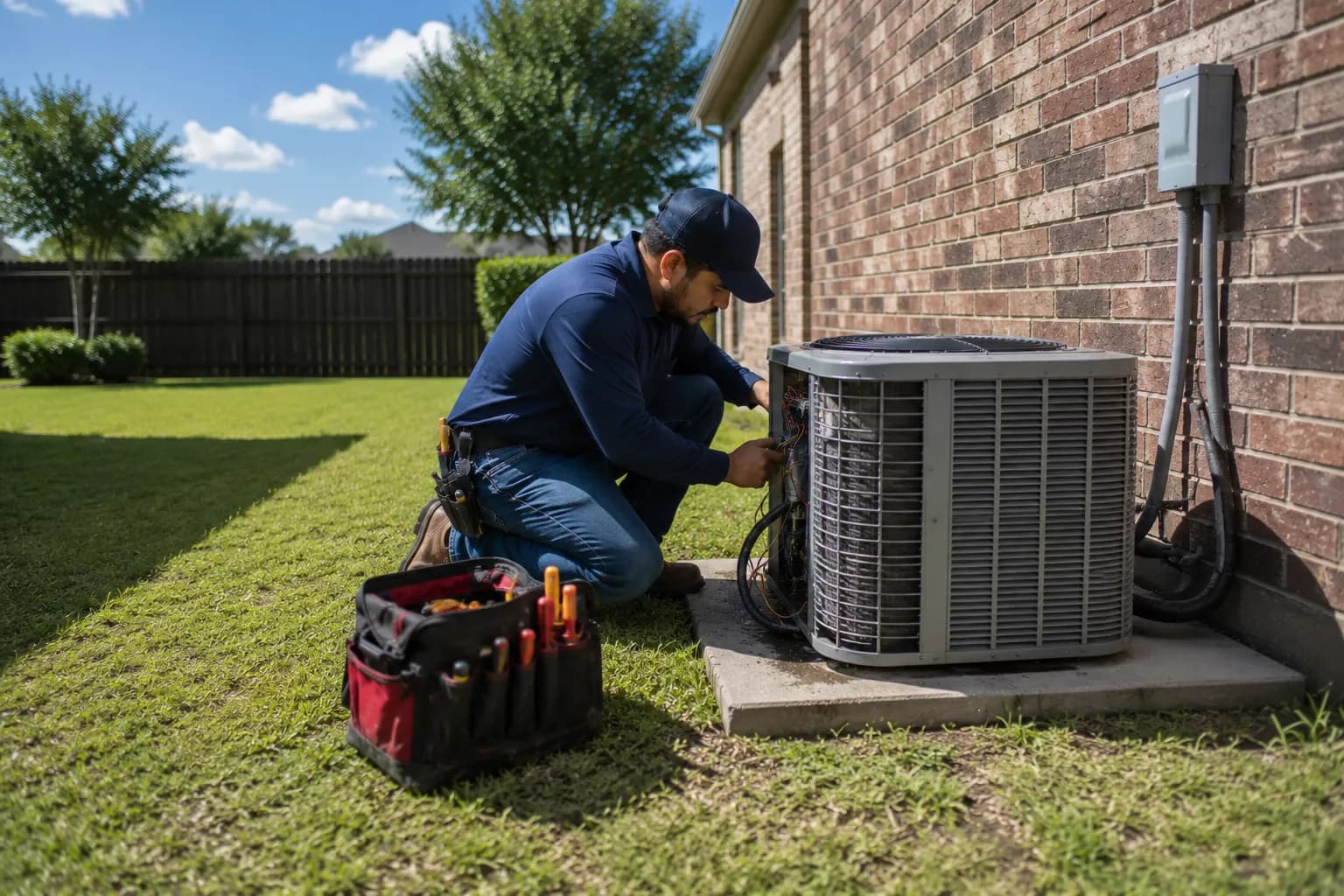
Most Houston homeowners make HVAC decisions reactively — they call when something breaks, they replace when a technician tells them the system can't be repaired, and they schedule maintenance when they remember to rather than when it makes the most strategic sense. The result is that most of the major HVAC decisions in Greater Houston happen either in the peak of summer under emergency pressure or in the dead of winter when a cold front has already arrived and the furnace isn't working.
September is different. And if you understand what makes September different, you can use it to make better HVAC decisions than most Houston homeowners make — decisions on your timeline, with full information, without the pressure of an emergency or the distraction of being uncomfortable while you make them.
HERE IS WHAT MAKES SEPTEMBER UNIQUE IN HOUSTON'S HVAC CALENDAR
September sits at a specific intersection in Houston's climate calendar that no other month occupies. The peak cooling season is behind you — the most brutal weeks of Houston summer, the highest heat indexes, the maximum AC runtime, the greatest probability of a peak-load failure — are in the past. But the cooling season isn't over. September still sees regular temperatures in the upper 80s to low 90s in Houston, the AC runs daily through most of the month, and the system is still observable under real operating conditions rather than sitting idle.
At the same time, September is the beginning of the planning window for the heating season. The first cold front of the year in the Greater Houston area typically arrives sometime in October — sometimes early October in Montgomery County, sometimes mid-October for Fort Bend County and inner Houston. That means October is when the furnace gets its first real-world test of the season. September is the last full month to evaluate, service, and address anything in the heating system before that test arrives.
The combination of these two factors — the cooling system still running and observable, the heating season not yet here but approaching — makes September the month where HVAC decisions are made with the most information and the least pressure of any month in the year.
THE COOLING SEASON DEBRIEF — WHAT SEPTEMBER TELLS YOU THAT JULY COULDN'T
In July, when the AC is running at maximum output against peak Houston heat, the system's performance characteristics are hardest to separate from the external conditions. A home that never quite reaches 74 degrees on a 102-degree afternoon with a heat index of 112 degrees may have a system that's slightly undersized, or it may have a correctly sized system that's performing as designed under conditions that push the limits of what a residential system is expected to handle. The distinction is difficult to make in the middle of peak demand.
In September, as outdoor temperatures moderate and the system's peak load decreases, a clearer picture of actual system performance emerges. A system that still struggles to maintain the set temperature on a 90-degree September afternoon — a load that a correctly sized, properly functioning Houston AC should handle comfortably — has a genuine performance deficit that's now separable from the peak-load ambiguity of July. A system that's been producing higher-than-expected energy bills all summer, and continues to do so in September when the load has moderated somewhat, is telling you something about its efficiency that's easier to interpret now than it was during the peak.
September is when the summer's HVAC story becomes clearest. The data points from the full cooling season — the energy bills, the comfort observations, the sounds, the repair calls if any were needed — can now be evaluated in aggregate rather than individually. Patterns that weren't obvious in June are clear in September. A system that struggled in July and August didn't just have a bad week — it had a difficult season, and September is when that assessment is most accurate.
IF THE SYSTEM STRUGGLED THIS SUMMER — ACT IN SEPTEMBER, NOT NEXT APRIL
Houston homeowners who experienced comfort problems, unexpected repairs, or higher-than-normal energy bills during the 2026 summer face a choice in September that they won't face cleanly again until next spring — and even then, the spring decision point is compressed by the approaching cooling season.
The choice is whether to address what happened this summer now, in September, when the system is still running and the conditions that revealed the problems are still present, or to defer until next spring when the urgency of the approaching cooling season creates a different kind of pressure.
Acting in September has specific advantages that are worth understanding.
The system is still observable under real operating conditions. A diagnostic visit in September on a system that struggled during peak cooling can replicate the conditions that revealed the problem — it's still warm enough to run the AC and observe its behavior under a meaningful load. A diagnostic visit in January on the same system is trying to evaluate cooling performance in conditions where the system runs infrequently and the load is minimal. Some problems that were obvious in August are difficult to reproduce in January.
Scheduling is easier in September than in either peak summer or the spring. September represents the beginning of the HVAC industry's transitional period between the summer emergency service rush and the fall heating inspection surge. The first few weeks of September still have elevated demand from the tail of the cooling season, but by mid-September the scheduling windows that were compressed during July and August begin to open. A homeowner who wants a diagnostic visit, a coil cleaning, a second opinion on a repair recommendation, or a system replacement consultation in September can generally schedule it within a reasonable timeframe rather than competing with peak-season demand.
Equipment availability is better in September than in peak summer. During July and August, certain equipment and parts can have lead times that extend into weeks because demand across the entire Houston market is at its annual peak simultaneously. In September, that demand has moderated and equipment availability typically improves. A system replacement scheduled in September has a higher probability of being completed with the exact specified equipment than the same replacement rushed during a peak-season breakdown.
Replacement in September avoids the spring decision crunch. Homeowners who know their system is at or near the end of its service life but defer the replacement decision until spring find themselves making that decision in March or April when service demand is already picking up ahead of the cooling season. The combination of rising demand, tightening scheduling windows, and the psychological pressure of the approaching summer creates less-than-ideal decision conditions. Making the replacement decision in September, scheduling the installation, and starting the new cooling season with a new system is a better outcome in almost every respect.
IF THE SYSTEM PERFORMED WELL — SEPTEMBER IS STILL THE RIGHT TIME FOR SPECIFIC ACTIONS
A system that carried the 2026 summer without comfort problems, without unexpected repairs, and without concerning symptoms doesn't need an emergency response in September. But September is still the optimal time for specific maintenance actions that protect the system heading into the transition season and the heating season beyond it.
The fall heating inspection. This is the single most important HVAC action of September for most Houston homeowners, and it's the one most commonly deferred until October — by which point the first cold front may have already arrived in Montgomery County. A fall heating inspection in September confirms that the furnace or heat pump heating system is ready to operate before it's actually needed. It checks the heat exchanger, the ignition system, the gas pressure and burner operation, the blower motor, the safety controls, and overall heating system response. Problems found in September are addressed in September — before cold weather arrives and before every HVAC company in Houston is fielding heating failure calls simultaneously.
For homeowners in The Woodlands, Conroe, Shenandoah, Oak Ridge North, Willis, and other upper Montgomery County communities where the first meaningful cold front typically arrives earlier and with more severity than in Fort Bend County or inner Houston, scheduling the fall heating inspection in the first two weeks of September rather than waiting until late September or October is specifically worthwhile. The gap between the inspection and the first heating demand is shorter in these communities than in the southern Houston suburbs.
Professional coil cleaning if the system hasn't had one since before the summer. The condenser coil has accumulated a full season of debris since the last cleaning. In wooded Houston communities, that debris includes pine needles packed into the coil fins; in agricultural Fort Bend County communities, crop dust and organic material; in open suburban settings, grass clippings and general dust. A professional coil cleaning in September removes the full season's accumulation and restores the system to efficient operation for the remaining weeks of the cooling season and for the first cooling run of next spring.
Refrigerant charge verification if there's any reason to suspect the charge has dropped during the season. A system that performed slightly less well in August than in June — taking longer to cool, producing slightly warmer supply air, running slightly longer per cycle — may have experienced a slow refrigerant loss during the season. Verifying the charge in September, while the system is still running regularly enough to test accurately, confirms whether a slow leak has been developing and allows it to be addressed before the system sits idle through fall and winter with a deplete charge.
THE HEATING SYSTEM CONVERSATION — WHAT TO THINK ABOUT NOW
For Houston homeowners whose heating system is aging, September is the right time to have the replacement conversation for the heating components specifically — not under the pressure of a failed furnace on a cold January night, but thoughtfully, with time to evaluate options.
A gas furnace in the Greater Houston area that's approaching fifteen years of age has entered the range where annual inspection is essential and where the replacement question deserves honest assessment. Houston furnaces don't accumulate the annual operating hours that furnaces in cold climates do — but the idle season in Houston's humidity environment has its own degradation effects, and a furnace that's been through fifteen Houston winters has experienced the corrosive effects of sitting idle through fifteen Houston summers. Components that have been through that cycle repeatedly are more likely to develop issues than equivalent components in a furnace that's been in service for the same number of years in a drier climate.
The question to ask in September is not just whether the furnace is working now — it is — but whether it's likely to be working reliably through a Houston winter that includes the kind of cold fronts that arrive without much warning and drop temperatures dramatically in a short period. An honest assessment of a fifteen-year-old furnace in Houston's environment, done in September when there's no immediate pressure, produces a clearer answer than the same assessment done on a January night when the furnace has already failed and the house is cold.
WHAT A SEPTEMBER SERVICE VISIT SHOULD COVER
A September HVAC service visit that positions you well for the transition season and the heating season ahead should cover both the cooling system's end-of-season condition and the heating system's readiness.
For the cooling system, the visit should include condenser and evaporator coil inspection and cleaning, refrigerant charge verification, capacitor and contactor testing, condensate drain inspection and clearing, blower motor assessment, thermostat calibration check, and an overall performance assessment in the context of the full season's history. The technician should know what, if anything, happened with the system during the summer and should evaluate current condition in that context.
For the heating system, the visit should include heat exchanger inspection, ignition system testing including flame sensor cleaning or replacement if indicated, gas pressure and burner operation verification, blower motor assessment for the heating cycle, safety control testing, and flue and venting inspection.
A single comprehensive visit in September that covers both systems positions you heading into fall with full information about both sides of the HVAC equation — rather than discovering heating system issues in October when a cold front is already on the way or addressing cooling system problems that went unresolved through the summer.
THE FINANCIAL CASE FOR SEPTEMBER DECISIONS
HVAC decisions made in September rather than under peak-season or emergency pressure consistently produce better financial outcomes than the same decisions made reactively.
A system replacement decision made in September, after a summer that revealed genuine performance decline, allows you to compare multiple quotes from qualified contractors, select equipment thoughtfully rather than accepting whatever's available, and schedule the installation at a convenient time. The same decision made on a July afternoon when the system has completely failed means accepting a faster timeline, potentially accepting whatever equipment the contractor has available, and making a several-thousand-dollar decision while uncomfortable and under time pressure.
A preventive repair made in September after a maintenance visit identifies a borderline capacitor or low refrigerant charge is a planned, budgeted expense that prevents a summer emergency. The same repair, made as an emergency call in July, costs the emergency service rate, may involve longer wait times, and has already produced the discomfort of a system that failed at the worst possible time.
The energy efficiency improvement from a professional coil cleaning done in September extends through the remaining weeks of the cooling season — reducing energy costs for the month or so of continued AC operation — and produces a clean starting condition for next spring rather than carrying a fouled coil through the fall idle period and into next year's cooling season.
Every September action has a compounding benefit that extends beyond the immediate season. Every deferral to a more convenient time that never quite comes carries a compounding cost that extends beyond the immediate inconvenience.
THE SIMPLE TRUTH ABOUT SEPTEMBER IN HOUSTON
September is the month when Houston homeowners who stay ahead of their HVAC systems do the work that protects them through the transition and into the next season. It's not a month that produces HVAC emergencies the way July does. It's not a month that creates the anxiety of an approaching summer that hasn't been prepared for the way March does. It's the month between those two pressure points where the decisions are most clearly seen, most calmly made, and most effectively executed.
The homeowner who uses September well — who schedules the fall heating inspection, addresses what the summer revealed, and positions the system for the transition ahead — is the homeowner who doesn't have a furnace failure story to tell in November or a summer emergency to recover from financially in August.
Multipoint AC & Heating provides HVAC maintenance, diagnostic, repair, and installation throughout Greater Houston, including Harris County, Fort Bend County, Montgomery County, and Austin County. September is the right time to call. Contact us at 832-963-3789 to schedule your fall inspection or end-of-season assessment before October's calendar fills.