What Is SEER Rating and Why Does It Matter for Houston Homeowners?
Explore the significance of SEER ratings in choosing energy-efficient air conditioners for Houston's climate.
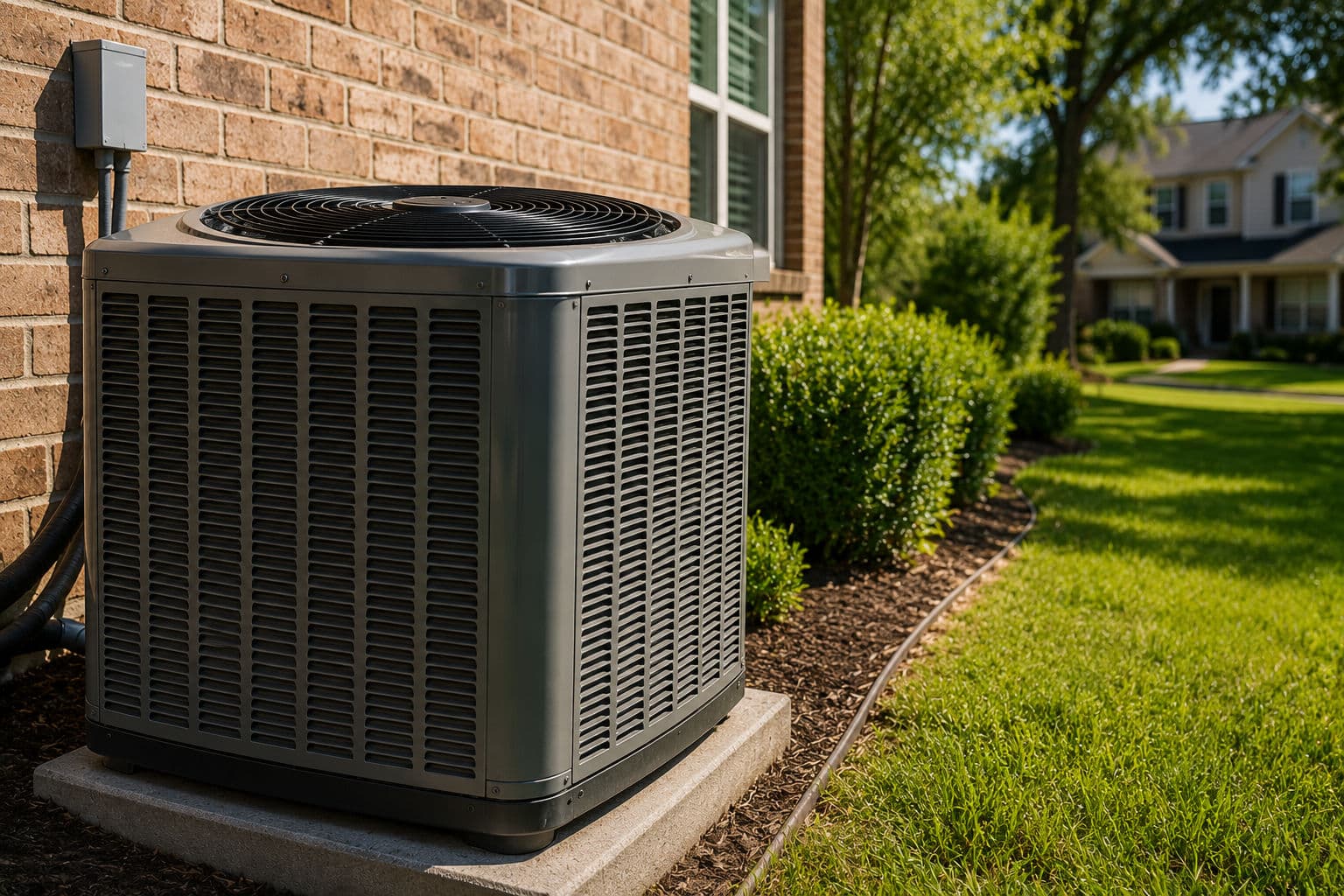
If you've been shopping for a new air conditioner or gotten a replacement quote recently, you've seen the term SEER rating on every piece of equipment. It's one of those specifications that appears prominently in every product description and every contractor proposal, but most homeowners have only a vague sense of what it actually means and whether it should influence their buying decision.
In Houston's climate, where the AC runs for eight or more months out of the year, SEER rating has a more direct impact on your annual energy costs than it does in most other markets in the country. Understanding what it means and how to apply it to your situation is genuinely useful knowledge before making a several-thousand-dollar equipment decision.
WHAT SEER RATING ACTUALLY MEANS
SEER stands for Seasonal Energy Efficiency Ratio. It measures how much cooling output a system produces relative to the electrical energy it consumes over a typical cooling season. The higher the SEER number, the more efficiently the system converts electricity into cooling.
The math behind it is straightforward. A system with a SEER rating of 16 produces 16 BTUs of cooling for every watt-hour of electricity it consumes under standardized testing conditions. A system with a SEER rating of 20 produces 20 BTUs per watt-hour. The higher-rated system delivers the same cooling for less electricity.
What SEER doesn't capture is real-world performance variability. The standardized testing conditions used to calculate SEER ratings don't perfectly replicate the conditions a Houston system operates in — particularly the sustained high temperatures and humidity loads of a Houston July and August that push systems harder than the test cycle assumes. Two systems with the same SEER rating from different manufacturers can perform differently in real Houston conditions, which is why equipment brand and installation quality matter alongside the efficiency number.
In 2023 the industry moved from SEER to SEER2, a revised efficiency standard that uses testing conditions designed to better reflect real-world installation and operating conditions. You'll now see SEER2 ratings on new equipment, and the numbers are slightly lower than the equivalent SEER rating for the same equipment — a system that was rated 16 SEER under the old standard is approximately 15 SEER2 under the new one. The underlying efficiency hasn't changed, just the measurement standard.
WHAT SEER RATING IS REQUIRED IN HOUSTON
Federal and regional efficiency standards set minimum SEER requirements for new residential AC equipment, and those minimums are higher in the southern United States — including Texas — than in cooler northern states, because the longer cooling seasons in warmer climates make efficiency gains more impactful.
As of 2023, the minimum efficiency standard for new residential split system air conditioners installed in the South region, which includes Texas, is 15 SEER2. Equipment below this threshold cannot be legally installed as new equipment in the Greater Houston area. This means if you're getting quotes for a new system, the base-level option should already meet this minimum.
Any contractor offering to install equipment below the current minimum standard as new equipment in Houston is not in compliance with federal regulations — something worth knowing when evaluating proposals.
HOW MUCH DOES A HIGHER SEER RATING ACTUALLY SAVE IN HOUSTON
This is the question that matters most for the buying decision, and the answer depends on your current system's efficiency and how many hours per year your AC runs — which in Houston is significantly more than the national average.
The energy savings from moving up in efficiency tier are real but follow a diminishing return pattern. The biggest savings jump comes from moving off a very old, low-efficiency system. A Houston home replacing a 10-year-old system that's been running at the equivalent of 10 SEER due to age and maintenance degradation with a new 16 SEER system can see 35 to 40 percent reductions in cooling energy consumption. That's a meaningful dollar amount in a Houston home running the AC for eight months per year.
Moving from a 16 SEER system to a 20 SEER system saves an additional 20 percent of the cooling energy that the 16 SEER system used — a real savings, but a smaller dollar amount than the previous jump because the baseline is already more efficient.
Moving from 20 SEER to 22 SEER saves an additional 9 percent of what the 20 SEER system used — real but incrementally smaller with each step up the efficiency ladder.
Whether the additional upfront cost of a higher efficiency tier pays back in energy savings depends on how much cooling your home requires, what electricity rates you're paying, and how long you plan to stay in the home. In Houston's climate, where annual cooling hours are among the highest in the country, higher efficiency tiers pay back faster than they would in a market with a shorter cooling season.
A rough calculation: if a Houston home spends $1,800 per year on cooling energy with a 14 SEER system, upgrading to 18 SEER reduces that cost by approximately 22 percent — about $400 per year. If the 18 SEER system costs $1,500 more than the 14 SEER option, the payback period is roughly 3.5 years in energy savings alone, not counting any difference in equipment longevity or comfort.
SEER RATING AND HUMIDITY REMOVAL IN HOUSTON
Here's something the efficiency number alone doesn't tell you, and it matters specifically in Houston's climate. Higher SEER systems — particularly variable-speed and two-stage systems that typically carry the higher efficiency ratings — generally do a better job of removing humidity from the air than single-stage systems at lower efficiency tiers.
A single-stage system runs at full capacity or off. A variable-speed system runs at whatever capacity the conditions require — often at lower speeds for extended periods during mild Houston days. Those longer, lower-capacity run cycles remove more moisture from the air per hour of operation than shorter, full-capacity cycles do. In Houston's humidity environment, this difference in dehumidification performance is often as noticeable in comfort terms as the temperature control improvement.
For Houston homeowners dealing with indoor humidity complaints — homes that feel sticky and uncomfortable even when the thermostat is at the right temperature — moving to a variable-speed high-efficiency system sometimes resolves the humidity problem that a single-stage replacement at the same capacity wouldn't.
SINGLE-STAGE VERSUS TWO-STAGE VERSUS VARIABLE-SPEED
These terms describe how the compressor operates, and they correlate with SEER rating tiers in practice even though they're technically separate specifications.
Single-stage systems run at one speed — full capacity or off. They're the most common and least expensive option, typically found in the 14 to 16 SEER range. They work well in Houston and are the appropriate choice in many situations, particularly for homeowners prioritizing upfront cost.
Two-stage systems have a high and a low capacity setting, typically running at the lower setting for a large percentage of operating time and switching to full capacity when conditions demand it. They're generally in the 16 to 18 SEER range, offer better humidity control than single-stage systems, and run more quietly because they spend most of their time at lower capacity.
Variable-speed systems modulate compressor speed continuously to match exactly the cooling load the home requires at any given moment. They spend most operating time at low capacity — sometimes as low as 30 to 40 percent of rated output — with long, gentle run cycles that deliver superior humidity control, quieter operation, and the highest efficiency ratings, typically 18 to 26 SEER. They're the most expensive option upfront and have more complex control systems, but in Houston's humidity environment and long cooling season, they often deliver the most noticeable improvement in both comfort and energy costs.
WHAT SEER RATING MAKES SENSE FOR YOUR HOUSTON HOME
There's no single right answer for every Houston homeowner, but a few guidelines make the decision clearer.
If upfront cost is the primary constraint and the home is a standard size with average insulation, a 15 to 16 SEER system is the appropriate base option. It meets current efficiency standards, performs reliably in Houston's climate, and represents a meaningful improvement over aging equipment.
If you plan to stay in the home for five or more years, electricity rates in your area are high, and your home has above-average cooling needs — large square footage, poor attic insulation, many windows — moving to 17 to 19 SEER is likely to pay back the premium within a reasonable period.
If indoor humidity is a persistent problem, comfort throughout the home is a priority, and budget allows for the higher upfront cost, a variable-speed system in the 20 SEER and above range delivers the most significant improvement in both efficiency and comfort quality in Houston's specific climate.
If the home is being sold in the near future, the efficiency tier that makes financial sense is typically the minimum current standard — the incremental value added to the home by a higher efficiency system rarely equals the additional cost in a short-term ownership scenario.
SEER AND INSTALLATION QUALITY — THE PART THAT DOESN'T SHOW ON THE SPEC SHEET
One of the most important things to understand about SEER ratings is that they represent what the equipment can achieve under correct installation conditions — not what it will achieve under any installation. A 20 SEER system installed with an incorrect refrigerant charge, improperly sized ductwork, or inadequate return air doesn't perform at 20 SEER in the field. It performs at whatever the actual installation conditions allow, which can be significantly lower.
Proper load calculation, correct refrigerant charging at commissioning, and a duct system that can support the new equipment's airflow requirements are the installation factors that determine whether the efficiency rating on the spec sheet translates into real-world performance and real-world energy savings. This is why equipment selection and installation quality are inseparable parts of the same decision.
Multipoint AC & Heating provides AC installation throughout Greater Houston, including Harris County, Fort Bend County, Montgomery County, and Austin County. Contact us to discuss equipment options and efficiency tiers that make sense for your specific home and situation.