How to Prepare Your Houston Home's HVAC for Fall — A September Action Plan
Prepare your Houston HVAC for fall with our comprehensive September action plan. Avoid surprises and keep your system running smoothly.
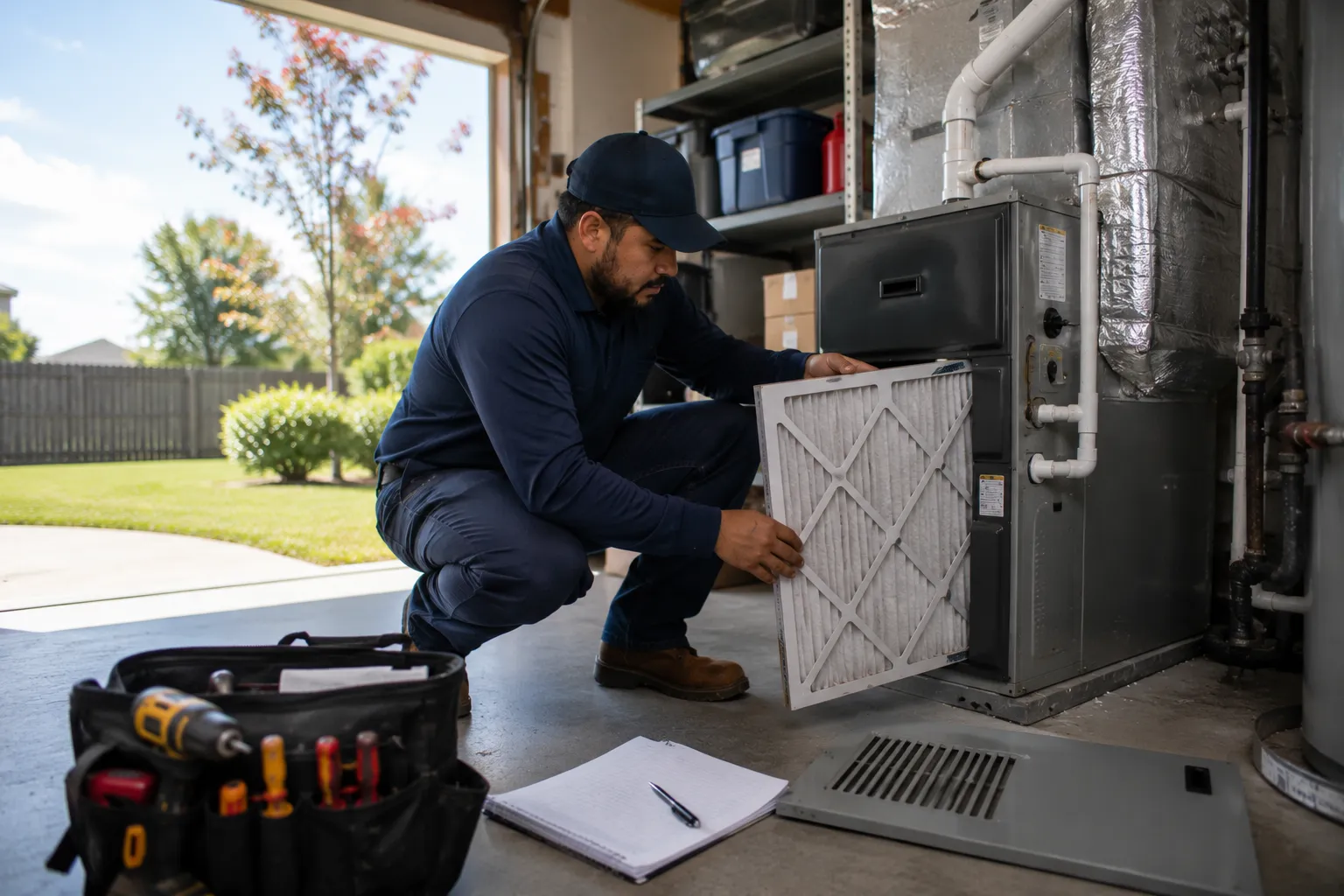
September in Houston is the month where two seasons overlap in a way that's unique to this climate. The air conditioning is still running — temperatures in the upper 80s and low 90s through most of the month mean the cooling system hasn't been retired yet. At the same time, the first cold front of the fall is approaching on the horizon, and the furnace that's been sitting idle since February or March is about to be called on without much warning.
Most Houston homeowners manage this transition passively — they run the AC until they don't need it, then switch to heat when the first cold front arrives and hope the furnace works. That passive approach is exactly why HVAC emergency calls spike in October and November in the Greater Houston area every year. The furnace that failed the first time it was needed had a problem that developed during the long idle period. The problem was findable in September. Nobody looked.
Here's a practical September action plan that changes that pattern.
WEEK ONE — END OF SUMMER COOLING SYSTEM ASSESSMENT
The first week of September, while the AC is still running daily, is the window for a final cooling season assessment. The system is still operating under real load conditions, the season's performance is fresh in your memory, and anything that needs attention can be scheduled before the fall transition compresses the calendar.
Conduct the honest summer debrief. Look back at the 2026 cooling season and answer four questions honestly. Did the home feel as comfortable as it did last summer at the same thermostat settings? Were energy bills in the expected range for your home's size and system age? Did any unusual sounds, smells, or symptoms appear at any point during the season? Were any repairs needed, and if so, what were they? The answers to these questions determine whether the system carried the season well or whether something needs attention before fall.
A summer where all four answers are positive — comfortable, normal bills, no symptoms, no repairs — means the cooling system is in good shape heading into the transition and the September focus can be on the heating system rather than the cooling system.
A summer where any of the four answers raises a concern means a diagnostic visit before the cooling season ends is appropriate. Schedule it in the first two weeks of September while the system is still running regularly enough to observe the problem under real conditions.
Replace the air filter. After the full cooling season, the filter is carrying the accumulated load of Houston's entire summer. Regardless of when it was last changed, checking it at the start of September and replacing it if it's loaded gives the system clean airflow for the remaining weeks of cooling operation and a clean starting point heading into the heating season.
Inspect the outdoor condenser unit. Walk around the unit and evaluate the coil fin surface condition. After a full Houston summer, the coil has accumulated whatever debris the outdoor environment produces — pine needles in wooded communities, cottonwood and grass in more open settings, agricultural dust in Fort Bend County's rural corridor. If the coil surface is visibly fouled, rinse it from the inside out with a garden hose after turning the system off at the thermostat and the outdoor disconnect. If the fouling is significant or if the system hasn't had a professional cleaning this year, schedule a service visit that includes professional coil cleaning.
Check the condensate drain. If your air handler is accessible, look at the drain pan and verify that condensate is draining rather than accumulating. After a full season of handling several gallons of water per day, the drain line has experienced its maximum annual biological growth. A line that's been partially blocking all summer may be close to full blockage — catching it now prevents the overflow that would damage the surrounding structure during the remaining weeks of cooling operation.
WEEK TWO — SCHEDULE THE FALL HEATING INSPECTION
The second week of September is when the fall heating inspection should be booked if it hasn't been already. The reasons for September rather than October are specific and worth understanding.
October is when the inspection is most commonly scheduled — and it's also when every other Houston homeowner who thought about scheduling in September but didn't gets around to calling. HVAC company calendars in October fill faster than in September, particularly in the first cold front period when people who haven't scheduled yet are suddenly motivated by cold weather. A September booking secures the date and time you want rather than accepting whatever's available when you finally call in October.
For Montgomery County communities — The Woodlands, Conroe, Shenandoah, Willis, Oak Ridge North, and surrounding areas — the cold front timing argument for early scheduling is stronger than in Fort Bend County or inner Houston. Upper Montgomery County sees the first meaningful cold fronts of the fall earlier and with more severity than communities further south. A furnace inspection scheduled for the third week of October in Conroe may be coming after the first significant cold front has already arrived. A furnace inspection scheduled for late September in Conroe is ahead of that first cold front with time to spare.
When you schedule the fall heating inspection, specifically request that the visit include heat exchanger inspection, ignition system testing and flame sensor evaluation, gas pressure and burner operation verification, blower motor assessment, safety control testing, and flue and venting inspection. These are the items that matter for a Houston furnace heading into fall and that differentiate a thorough fall inspection from a cursory one.
WEEK THREE — THE HEATING SYSTEM HONEST ASSESSMENT
While you're waiting for the scheduled heating inspection, use the third week of September for the heating system equivalent of the cooling system debrief.
How old is the heating system? If you know the age from the nameplate serial number — and the previous blog on reading serial numbers covers how to decode the manufacture date from any major HVAC brand — use that information to calibrate expectations. A furnace under ten years old in Houston's climate with consistent maintenance history has good remaining life ahead of it. A furnace between ten and fourteen years old deserves careful inspection and honest assessment of its condition. A furnace past fifteen years old should be evaluated with replacement as a near-term likelihood rather than a distant possibility.
What was the heating system's history last winter? Did it start reliably when the first cold front arrived? Were there any symptoms — longer than usual warm-up times, rooms that weren't heating evenly, unusual sounds or smells — that you noticed and dismissed? Last winter's performance is the most recent data point on the heating system's condition, and September is the right time to recall it clearly before the upcoming season obscures it.
Have any repairs been made to the heating system in the past two years? A furnace that's had multiple repairs in recent seasons is showing the pattern of end-of-life component failure that indicates the system is entering its final years regardless of what individual repair seemed manageable at the time.
Is the system using R-22 refrigerant, and if so, does it have a heat pump component? R-22 heat pump systems face the compound challenge of aging equipment, phase-out refrigerant costs, and the specific heat pump component vulnerability that comes with years of dual-mode operation. An R-22 heat pump in Houston's climate that's more than twelve years old is a strong replacement candidate heading into the fall.
WEEK FOUR — THE TRANSITION PREPARATION AND HEATING SYSTEM TEST
The last week of September — or whenever the fall heating inspection has been completed — is when the transition from cooling to heating season preparation is finalized.
Run a furnace test before the first cold front. Don't wait for a cold front to discover that the furnace isn't working. Set the thermostat to heat mode at a temperature above the current indoor temperature — this can be done during a mild September morning when the house is cool enough to allow a brief heat call without making the home uncomfortable. The furnace should light reliably, warm air should appear at the supply registers within a few minutes, and the system should run a complete heating cycle without safety shutdowns or unusual sounds. If anything in this test doesn't go as expected, you have time to schedule service before cold weather makes it urgent.
For heat pump systems, test both modes. Set the system to heating mode and verify that the heat pump produces warm air, that the outdoor unit is operating, and that the defrost system is responsive. Then switch back to cooling mode and verify that the system returns to cooling operation correctly. A reversing valve that's sticky or a defrost system that doesn't respond correctly is identifiable in this test — and identifiable in late September is a very different situation from identifiable when the first cold front has already arrived.
Review your thermostat programming for the heating season. Programmable and smart thermostat schedules that were set for summer operation — higher setpoints during the day, lower at night — may need adjustment for heating season. Many smart thermostats handle this automatically through learned schedules, but manually programmed thermostats require deliberate seasonal adjustments. Verify that the schedule is appropriate for heating season operation before the first cold front makes it relevant.
Know where the furnace filter is located and verify its condition. Many Houston homeowners are aware of the AC filter at the return grille but less familiar with the furnace filter location — which in some systems is in the air handler cabinet rather than at the return grille and may be different from the filter that was just replaced for the cooling season. Confirm the filter location and condition before the heating system begins operating regularly.
Test your carbon monoxide detectors. Carbon monoxide from a compromised furnace heat exchanger or a blocked flue is a safety concern that's specific to the heating season. Carbon monoxide detectors that are more than five to seven years old should be replaced — they have a defined sensor lifespan after which their detection reliability degrades. Test existing detectors by pressing the test button and confirming they respond. If the test button produces no response or a weak alarm, the detector needs replacement before the heating season begins.
WHAT THE COMPLETED SEPTEMBER ACTION PLAN ACHIEVES
A homeowner who completes the September action plan described above enters the fall transition with specific knowledge rather than assumptions.
They know whether the cooling system had a genuinely good season or whether something needs attention before it's decommissioned for winter. They've addressed the end-of-season maintenance items that protect the cooling system from carrying a season's worth of neglect into next year. They have a scheduled fall heating inspection or have already completed one. They've run a heating system test that confirmed the furnace or heat pump is ready. And they have a working carbon monoxide detector and a clean filter going into the heating season.
That's a different position than the homeowner who assumes everything is fine because nothing obvious went wrong, who calls for furnace service when the first cold front arrives and the furnace doesn't work, and who makes emergency HVAC decisions under pressure and discomfort in October.
The September action plan isn't complicated or time-consuming. Most of the items on it take minutes — a filter check, a thermostat review, a condensate drain inspection, a furnace test run. The scheduling items require a phone call or an online booking. The professional service visit requires a morning or afternoon at home.
The return on that investment is avoiding the October emergency call, the November furnace failure, the January heating crisis. In Houston's climate, where HVAC decisions have real financial consequences and system failures in extreme weather have real comfort and safety consequences, September preparation is the single most effective thing a Houston homeowner can do to control what happens to their HVAC system over the next six months.
Multipoint AC & Heating provides fall heating inspections, end-of-season AC maintenance, and comprehensive HVAC service throughout Greater Houston, including Harris County, Fort Bend County, Montgomery County, and Austin County. Contact us at 832-963-3789 to schedule your September service visit before the fall calendar fills.