How Pets Affect Your HVAC System in Houston — and What to Do About It
Explore how pets influence HVAC systems in Houston and essential maintenance tips. Keep your system efficient and your pets safe!
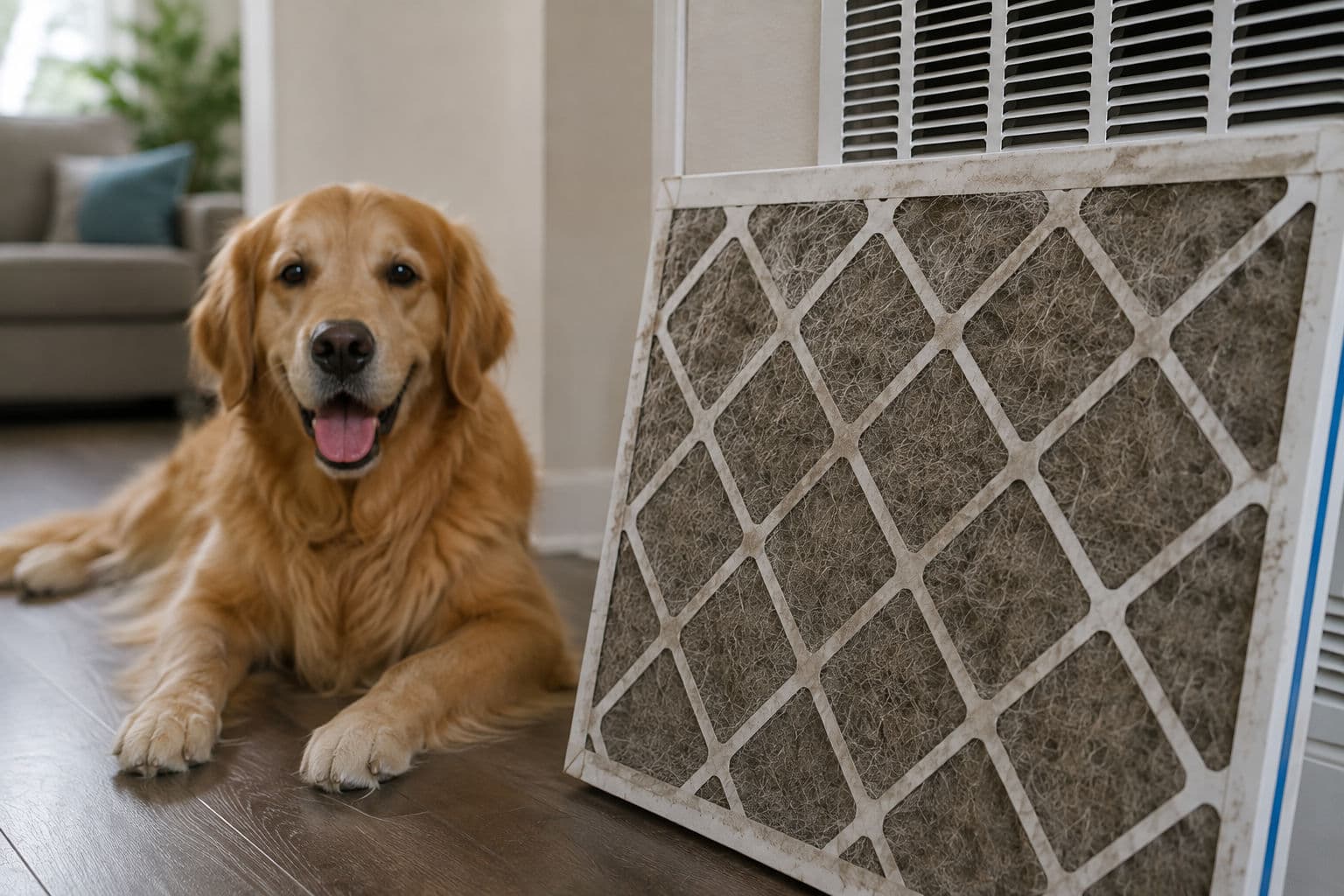
Houston is a pet-friendly city and most households in the Greater Houston area have at least one dog, cat, or other animal sharing the home. What most pet owners don't fully appreciate is how significantly pets affect HVAC system performance — particularly in Houston's climate, where the AC runs for most of the year and the combination of pet hair, dander, and the moisture environment Houston's humidity creates produces conditions that affect the system faster and more severely than in moderate climates.
None of this means pet ownership and a well-performing HVAC system are incompatible. It means pet owners need to approach HVAC maintenance with a different cadence and awareness than households without animals.
HOW PETS AFFECT YOUR HVAC SYSTEM
Pet hair and dander are the primary culprits, and they affect the system through two main pathways.
The first is the air filter. Pet hair and dander are among the most effective filter-clogging materials in a residential environment. A household with two shedding dogs or cats can clog a standard air filter in three to four weeks during Houston's cooling season — a fraction of the 60 to 90 day interval that filter manufacturers typically suggest for moderate-use households. A clogged filter restricts airflow through the system, which causes the evaporator coil to run colder than designed, reduces cooling and dehumidification efficiency, and in severe cases causes the coil to freeze and the system to stop cooling entirely.
The second pathway is direct — pet hair and dander that bypasses or passes through the filter deposits on the evaporator coil. In Houston's humidity, where the evaporator coil surface stays moist for extended periods and biological growth establishes itself on the coil, pet dander and hair bind to the wet coil surface and become part of the fouling layer that reduces the coil's heat transfer efficiency. Pet dander contains proteins that also serve as a nutrient source for the biological growth on the coil — meaning pet-owner households don't just have more debris on the coil, they have conditions that promote faster biological growth on it.
The outdoor condenser unit is affected by pets in a different way. Dogs that urinate on or near the outdoor unit expose the condenser coil fins to a concentrated acid that corrodes the aluminum fin material. Repeated exposure causes the fin material to deteriorate and eventually fail, reducing airflow through the condenser and creating leak points in the coil itself. This is one of the more common sources of premature outdoor unit degradation in pet-owning households throughout the Greater Houston area, and it's one that most homeowners don't connect to their pet's bathroom habits until significant damage has already occurred.
Dogs that chew or scratch at the outdoor unit, refrigerant lines, or electrical conduit connected to the outdoor unit create a different category of damage. Refrigerant lines that have been chewed through require leak repair and refrigerant recharge. Electrical conduit damage exposes wiring that creates both equipment failure risk and electrical safety concerns.
PETS AND INDOOR AIR QUALITY IN HOUSTON
The indoor air quality dimension of pet ownership in Houston extends beyond what the HVAC system can address on its own. Pet dander — microscopic skin flakes shed continuously by dogs and cats — is one of the most common indoor allergen triggers, and it accumulates in the home's air, on surfaces, and in the ductwork over time regardless of how frequently the home is cleaned. In Houston's humidity, pet dander in the ductwork bonds to moisture and biological growth in ways that make it harder to remove through standard cleaning and that circulate it through the home every time the system runs.
Pet odors also concentrate in ductwork and air handler components over time, particularly in Houston's climate where the system runs nearly year-round. A home that smells fresh at floor level may have pet odor concentrated in the duct system that becomes noticeable when the system first starts up after a period of inactivity.
WHAT PET OWNERS SHOULD DO DIFFERENTLY FOR HVAC MAINTENANCE
Change the air filter more frequently. This is the single most impactful maintenance adjustment for pet-owning Houston households. Rather than the monthly check and 30 to 60 day change interval appropriate for most Houston homes, pet-owning households should check the filter every two to three weeks during the active cooling season and change it when it shows significant loading — which for a multi-pet household may be every three to four weeks rather than every month or two. Keeping replacement filters stocked at home rather than making a separate trip when the current one is due makes consistent replacement more likely.
Consider upgrading to a MERV 10 or 11 filter. A higher MERV-rated filter captures more of the fine pet dander particles that standard MERV 8 filters allow to pass through to the coil. The tradeoff is slightly more airflow restriction, which makes the more frequent filter change interval even more important — a higher MERV filter clogged with pet hair restricts airflow more severely than a standard filter in the same condition. For households where pet allergies are a concern, the air quality benefit of the higher-rated filter is worth the additional maintenance attention it requires.
Schedule professional coil cleaning more frequently. The standard annual coil cleaning during the spring maintenance visit is adequate for households without pets. Pet-owning households benefit from coil cleaning every six to twelve months during the active cooling season, particularly multi-pet households or those with heavy-shedding breeds. The combination of pet dander bonding to the moist coil surface and serving as a nutrient for biological growth means pet-owner households develop significant coil fouling faster than the annual maintenance interval addresses.
Protect the outdoor unit from pet access. If dogs have access to the outdoor condenser unit, a simple barrier — a low fence or decorative screen that maintains the required two feet of clearance on all sides for airflow — prevents both the urine corrosion problem and the chewing or scratching damage. The investment in a basic barrier is trivially small compared to the cost of replacing corroded condenser coil fins or repairing chewed refrigerant lines.
If a dog has already been urinating near the outdoor unit, rinse the condenser coil thoroughly with a garden hose from the inside out — after turning the system off — to flush corrosive material from the fin surfaces. Inspect the fin condition for corrosion and have a technician evaluate whether the damage is affecting airflow or coil integrity if you notice significant fin deterioration.
Consider a UV germicidal system. The UV germicidal systems that Houston homeowners with general air quality concerns benefit from have particular value in pet-owning households. The biological growth on the evaporator coil that pet dander nutrients help support is directly addressed by continuous UV-C irradiation of the coil surface — preventing the establishment and growth of mold, mildew, and bacteria in the location where they most directly affect air quality. For households with both pets and allergy sufferers, a UV system alongside a higher-MERV filter and more frequent filter changes provides meaningfully better indoor air quality than any of these steps alone.
Consider whole-home air purification. In pet-owning households where indoor air quality is a significant concern — multiple pets, allergy sufferers, or both — a whole-home air purification system installed in the duct system captures pet dander, hair, and allergens at a higher rate than the standard filter alone. These systems work in combination with the existing filter rather than replacing it and provide a level of air cleaning that neither standard filtration nor UV treatment alone achieves.
PETS AND THE AC WHEN YOU'RE AWAY FROM HOME
One consideration specific to pet-owning households is thermostat management when the home is unoccupied. The standard recommendation for Houston homeowners — raising the thermostat to 80 or 82 degrees while away to save energy — has a limit when pets are in the home.
Dogs and cats are vulnerable to heat stress at elevated indoor temperatures, particularly in Houston's humidity environment. At 80 degrees with high humidity, most healthy adult dogs and cats are uncomfortable but not in immediate danger. Above 85 degrees with Houston's ambient humidity, heat stress risk increases significantly, particularly for brachycephalic breeds like bulldogs and pugs, older animals, or those with health conditions.
For pet-owning Houston households, a setback to 78 to 80 degrees while away — rather than the 82 to 85 degrees that might otherwise maximize energy savings — is the appropriate balance between energy conservation and pet safety during the work day. For extended absences of more than a day, maintaining 78 degrees throughout is safer than a higher setback temperature.
If the AC system fails while the home is unoccupied with pets inside during a Houston summer, the temperature inside the home can reach dangerous levels within hours. Having a neighbor, friend, or pet sitter who can check on animals during an extended absence, or smart home monitoring that alerts you if the indoor temperature rises above a set threshold, provides an important safety backstop for pet-owning households.
THE SPECIFIC CHALLENGE OF MULTIPLE PETS
The HVAC impact of pets scales with the number of animals in the household, but not linearly. Two dogs don't simply double the impact of one dog — in Houston's climate where the coil is moist and biological growth is promoted, the additional dander load from a second pet accelerates coil fouling and filter clogging faster than a simple doubling would suggest. Multi-pet households — particularly those with three or more animals or with heavy-shedding breeds — should treat the more frequent maintenance intervals described above as a floor rather than a ceiling and monitor system performance actively during peak cooling season.
Multipoint AC & Heating provides AC maintenance, repair, and installation throughout Greater Houston, including Harris County, Fort Bend County, Montgomery County, and Austin County. For pet-owning households whose systems need more frequent attention during Houston's demanding cooling season, contact us to discuss a maintenance plan that fits your home's specific situation.