October HVAC Checklist for Houston Homeowners — What to Do Right Now
Prepare your Houston home's HVAC system for fall with our October checklist. Avoid emergency calls and ensure efficient heating this season.
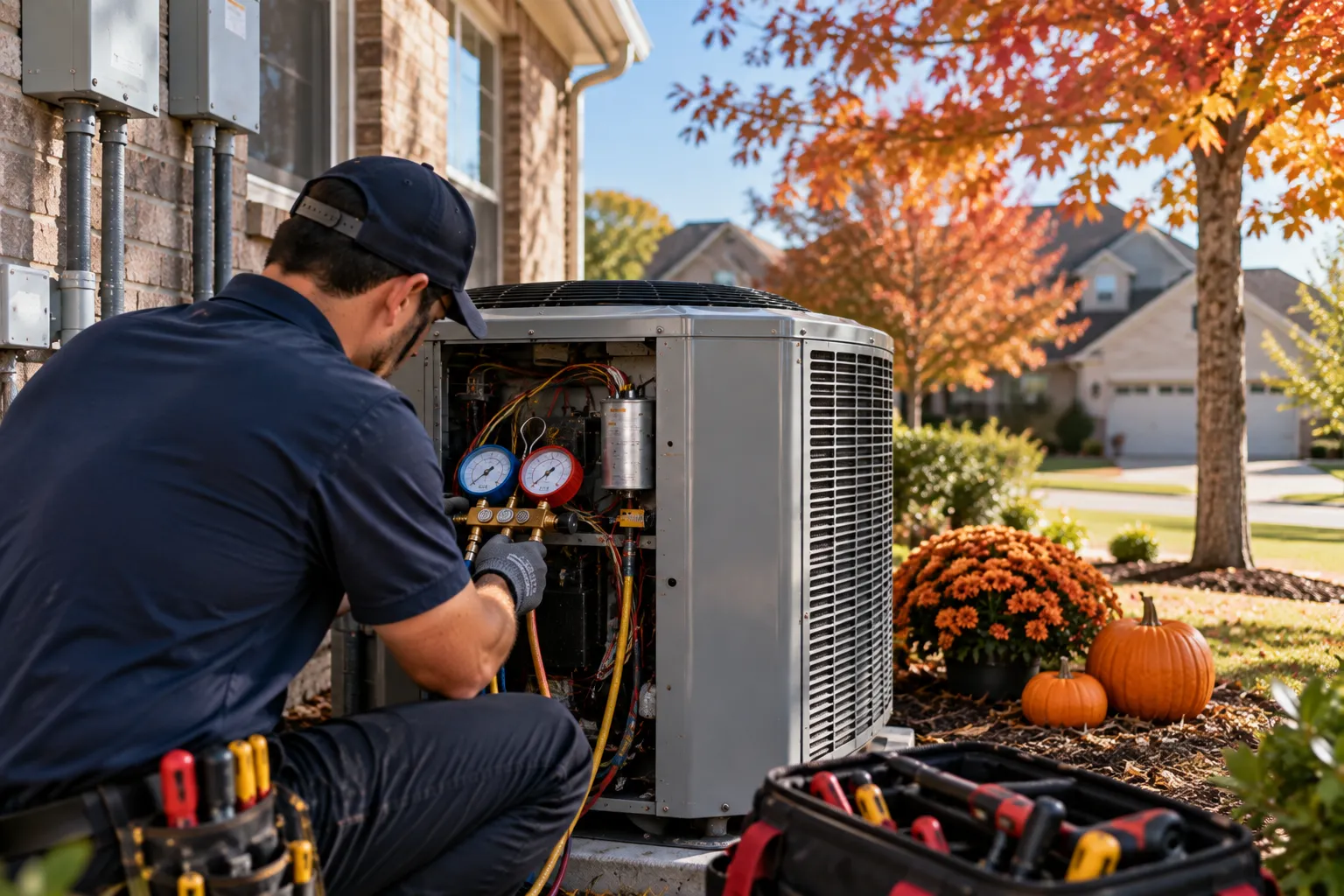
October 1st in Houston. The calendar says fall. The weather is starting to agree — temperatures are finally dropping into the 70s on some mornings, the AC is running less than it was in August, and somewhere in the next few weeks, the first significant cold front of the fall season is going to arrive and drop temperatures dramatically in the span of a day or two.
This is the most consequential month in the Houston HVAC calendar. Not because it's the most demanding — July and August hold that title — but because October is the transition month where two seasons overlap, where the decisions made right now determine how well the system performs through the rest of fall and into winter, and where the gap between prepared and unprepared households becomes visible in the form of emergency service calls, heating failures on cold nights, and equipment problems that could have been caught weeks ago.
Here is exactly what Houston homeowners should be doing right now, in the first week of October, to make the most of the transition window before it closes.
THE MOST URGENT ITEM — TEST THE HEATING SYSTEM TODAY
If you do nothing else on this list, do this one thing today. Set the thermostat to heat mode at a temperature two to three degrees above the current indoor temperature and let the system run a complete heating cycle.
For a gas furnace, you should hear the draft inducer start within a few seconds, followed by the ignition sequence and the burner lighting. Warm air should appear at the supply registers within two to three minutes. The system should run through a complete cycle and shut off cleanly when it reaches the setpoint.
For a heat pump, warm air should appear at the registers within three to four minutes of the thermostat calling for heat. The outdoor unit should be running — in heating mode, the heat pump extracts heat from the outdoor air and transfers it inside, so the outdoor unit operates during heating just as it does during cooling.
If the system fails this test — doesn't start, starts and shuts off within a few seconds, runs without producing warm air, makes an unusual sound or smell — you now know about the problem on October 1st rather than on the morning of the first cold front. Call for service today. The technician who comes this week is working a manageable schedule. The technician who comes when the cold front hits is working against a surge of simultaneous heating failures across the metro, with longer wait times and emergency rates applying to calls that happen after hours.
If the system passes the test, you have confirmation of basic heating function. That's reassuring, but it's not the same as a professional inspection that has evaluated the flame sensor, ignitor, heat exchanger, and other components that the idle-season degradation pattern affects. The test confirms the system works. The inspection confirms it's ready.
SCHEDULE THE FALL HEATING INSPECTION THIS WEEK
October 1st is the scheduling deadline for a fall heating inspection timed to be ahead of the first significant cold front. Cold fronts in the Greater Houston area can arrive as early as the second or third week of October in some years — particularly in upper Montgomery County communities like Conroe, The Woodlands, Shenandoah, and Willis where fall cold fronts are felt earlier and with more severity than in Fort Bend County or inner Houston.
A heating inspection that hasn't been scheduled yet as of October 1st needs to be scheduled immediately — this week, not later this month. Companies that had availability in September are booking up now as October's first cold front approaches and homeowners who didn't schedule in September are all calling at once.
When you call to schedule, be specific about what you want the inspection to cover. Flame sensor evaluation and cleaning. Ignitor testing against specification. Heat exchanger inspection with appropriate equipment. Gas pressure and burner operation verification. Blower motor assessment. Safety control testing including the high-limit switch and pressure switches. Flue and venting inspection.
These are the components that Houston's idle-season failure pattern most commonly affects — the components that deteriorate during seven months of sitting dormant in Houston's humidity and that fail when the furnace is first called on. Having them inspected and any issues addressed before the first cold front is the direct path to not having a heating emergency in October.
REPLACE THE AIR FILTER NOW
The air filter that's been running the AC through Houston's summer — if it hasn't been replaced recently — is carrying five or more months of accumulated debris from Houston's cooling season. Replacing it at the start of October serves multiple purposes simultaneously.
It gives the heating system clean airflow from its first sustained operation of the fall. A furnace running against a severely clogged filter overheats and trips the high-limit safety switch — the safety control that shuts the system off when the air handler temperature exceeds the design limit. A household that can't figure out why the furnace keeps running briefly and shutting off may be dealing with a clogged filter rather than a mechanical failure.
It removes a filter that's accumulated biological material in Houston's summer humidity. When the heating system starts pushing air through the system, whatever biological material is on a neglected filter gets distributed through the supply airstream. Starting fall with a clean filter starts fall with clean air.
It establishes the beginning of the heating season filter cadence. Houston's fall and winter heating season is shorter and less demanding than the cooling season, but the filter still needs attention. A clean filter installed on October 1st, checked monthly through the heating season, keeps the system operating at design airflow throughout the winter.
Check the size printed on the edge of the current filter before removing it, replace it with the same size and an appropriate MERV rating for your system, and write the installation date on the edge of the new filter so you know exactly when it was installed.
CHECK AND REPLACE CARBON MONOXIDE DETECTORS
October 1st is the right moment for carbon monoxide detector verification because it's before the heating season begins in earnest — before the furnace is running regularly and the risk of a heat exchanger problem allowing combustion gases into the supply airstream becomes active.
Test every CO detector in the home by pressing the test button. A functioning detector responds with an alarm. A detector that produces no response or a weak response needs immediate replacement.
Check the manufacture date on the back of every detector. CO detectors have a sensor lifespan of five to seven years — the sensor element that actually detects carbon monoxide degrades over time regardless of whether the alarm circuitry continues to function. The test button tests the alarm circuit, not the sensor. A detector manufactured before 2019 or 2020 is at or past its sensor replacement threshold and should be replaced before the heating season regardless of whether it responds to the test.
CO detector coverage appropriate for a Houston home with gas appliances includes at least one detector on each sleeping floor, one near the furnace or air handler, and one near any other gas appliances — water heater, gas range, gas dryer — that are in enclosed utility spaces. A single detector in the utility room is not adequate whole-home coverage.
Replacement CO detectors are available at any hardware store for $20 to $50. This is not an item to defer.
INSPECT THE OUTDOOR UNIT AND CLEAR DEBRIS
Fall leaf drop has begun in earnest in Houston's wooded communities — The Woodlands, Kingwood, Conroe, Spring, Tomball — and the debris that accumulated on the outdoor condenser unit during summer has been joined by fall leaf accumulation over the past several weeks.
The outdoor unit matters in October because for heat pump systems it's actively operational during heating mode — extracting heat from the outdoor air and transferring it inside. A heat pump outdoor unit with restricted airflow from debris accumulation has reduced heating efficiency. For conventional split systems with gas furnaces, the outdoor unit is the AC condenser and isn't heating-critical, but it will be called on when the AC runs on the warm October afternoons that still occur regularly before consistent cool weather arrives.
Rinse the outdoor unit from the inside out with a garden hose after turning the system off at the thermostat and at the outdoor disconnect. This removes surface debris from the condenser coil fins that accumulated since the last professional cleaning. Check the clearance around the unit — two feet on all sides and above — and trim back any vegetation that's grown into the clearance zone during the summer.
For wooded community homeowners where pine needle accumulation on the condenser coil is significant, the fall coil inspection and cleaning that's appropriate for these environments should be part of the fall service visit rather than waiting until spring.
ADJUST THERMOSTAT SETTINGS FOR HEATING SEASON
The thermostat schedule that served the cooling season — higher setbacks during the day, lower temperatures in the evening — needs adjustment for heating season operation, where the pattern reverses.
For programmable thermostats, review the heating schedule and verify that setpoints make sense for the heating season. Morning warmth before the household leaves, appropriate setback during the day when the home is unoccupied, comfortable temperatures in the evening when the family is home, and a reasonable overnight minimum — 68 degrees is appropriate for most Houston households — should be programmed before the first cold front makes them relevant.
For smart thermostats, verify that the system is transitioning its learned schedule appropriately as the season shifts from cooling calls to heating calls. Some smart thermostats handle this automatically and well. Others benefit from a manual review of the current schedule to confirm the transition has been recognized.
Set a minimum temperature floor — the lowest indoor temperature the system will allow overnight even if nobody has manually called for heat. This protection matters particularly during cold fronts that arrive overnight, when indoor temperatures can drop faster than the system has been called to manage if the thermostat isn't set to maintain a floor.
WALK THROUGH THE HOME AND CHECK EVERY VENT
A five-minute walk through the home checking supply registers and return grilles catches two problems that show up in October heating calls regularly.
Supply registers that were partially or fully closed during the cooling season — either to redirect airflow in specific rooms or accidentally — should be opened before the heating system runs. Closed supply registers during heating create the same pressure problems they create during cooling and can cause the furnace to overheat and trip the high-limit switch.
Return grilles that furniture was pushed against during the summer should be cleared. Adequate return airflow is as critical for heating performance as it is for cooling performance. A return grille blocked by a sofa or storage item causes the heating system to work against restricted airflow and run hotter than designed.
Note any registers that seem to produce significantly less airflow than others in comparable rooms. Uneven airflow across the home can indicate duct problems — a partially disconnected flex duct, a kinked run — that affect heating distribution in the same rooms that were harder to condition during cooling season. Finding these in October when you can call for a duct evaluation allows the problem to be addressed before winter rather than discovered when those rooms stay cold through the heating season.
THE WEATHERSTRIPPING AND INFILTRATION CHECK
October cold fronts in Houston arrive with wind. Cold air that infiltrates through gaps in the building envelope — around exterior doors, at window frames that have separated from the wall, through unsealed penetrations — makes the heating system work harder and creates drafts that make the home feel colder than the thermostat reading suggests.
Check weatherstripping on all exterior doors by closing each door against a piece of paper and pulling the paper out. If the paper slides out without resistance, the seal is inadequate. Feel around the perimeter of closed exterior doors on a mildly cool day for any air movement. Door sweeps that show daylight at the bottom when the door is closed should be replaced — adhesive or screw-mounted door sweeps are available at any hardware store and are a straightforward DIY fix.
Window frames that have separated from the surrounding wall — visible as a gap between the frame and the drywall or siding — can be sealed with paintable caulk. This is a fifteen-minute project per window that reduces both cold air infiltration during fall and warm air infiltration during next summer.
THE HUMIDITY TRANSITION — WHAT OCTOBER BRINGS INDOORS
As the AC runs less frequently through October, the passive dehumidification it was providing during the cooling season decreases. For many Houston homes, October is when indoor humidity begins to climb above what the reduced AC runtime can manage — a phenomenon covered in detail in the fall and winter humidity blog in this series.
A basic hygrometer in the main living area tells you whether indoor relative humidity is staying in the acceptable 40 to 55 percent range or climbing above it as the AC runtime decreases. Consistent readings above 60 percent indicate that active humidity management is needed — either running the AC briefly on mild fall days specifically for dehumidification, using portable dehumidification in the most affected areas, or the whole-home dehumidifier solution that manages year-round humidity independent of whether the AC or heating system is actively running.
Window condensation that appears on cool October mornings is the most visible symptom of elevated indoor fall humidity. The condensation forms when the interior glass surface drops below the dew point of the indoor air — which happens at lower temperature differentials when indoor humidity is high. Seeing condensation on windows in October is a signal that indoor humidity is higher than appropriate and that the air inside is carrying more moisture than the building envelope can manage at fall temperatures.
THE ENERGY BILL TRANSITION — WHAT OCTOBER SHOULD LOOK LIKE
As August and September recede and October's cooler temperatures reduce daily AC runtime, electricity bills should begin declining from their summer peaks. A household that was using 1,800 to 2,200 kWh per month during July and August should see October consumption drop meaningfully as cooling degree days decrease and AC operation becomes less continuous.
If October electricity consumption isn't declining relative to August despite clearly milder weather, the AC system's efficiency may be degraded enough that it's consuming more energy per unit of cooling than it should. This is a diagnostic signal worth noting — particularly if the same pattern was true in September. A system that consumed more energy than expected all summer and continues consuming more than expected in milder fall weather has a developing efficiency problem that a diagnostic visit can identify and address.
Natural gas usage for homes with gas furnaces will begin appearing on October bills if any cold fronts have triggered meaningful heating operation. A first cold front that required a day or two of furnace operation adds only a small amount to the gas bill. If the October gas bill is unexpectedly high relative to the amount of cold weather that occurred, the furnace's combustion efficiency may be worth evaluating — a furnace running at significantly degraded combustion efficiency uses more gas per BTU of heat delivered than a properly tuned system.
WHAT OCTOBER MEANS FOR SYSTEM REPLACEMENT PLANNING
For Houston homeowners who have been deferring a replacement decision on an aging system — hoping the system would hold through one more summer, telling themselves they'd deal with it in the fall — October 1st is the decision point that makes the most sense to act on.
A system replacement decision made in October has several advantages over one made under peak-season pressure or emergency pressure. Equipment availability is generally good in October — the summer demand surge that sometimes extended lead times on specific equipment configurations has passed. Contractor scheduling is more flexible than it was in July and August. The installation can happen during mild weather when the home doesn't need either heating or cooling continuously, making a day or two without full system operation manageable. And the new system starts the 2027 cooling season from a full-confidence starting point rather than from whatever condition the aging system would have been in after another Houston summer.
For households whose system is past twelve years old and showed performance decline, required repairs, or concerning symptoms during the 2026 summer, October is genuinely the right month to have the replacement conversation rather than deferring it into spring when the approaching cooling season compresses the decision timeline.
THE WEEK-ONE OCTOBER SUMMARY
The actions that matter most this first week of October are the ones with direct safety and heating readiness implications. Test the heating system today. Schedule the fall inspection this week. Replace the CO detectors if they're past their sensor lifespan or not responding to the test. Replace the air filter.
The actions that matter in the next two to three weeks are the ones that complete the seasonal transition. Clear and inspect the outdoor unit. Adjust thermostat settings for heating season. Walk through the supply registers and return grilles. Check weatherstripping on exterior doors.
The action that matters before the first cold front arrives — however far away that is — is having the fall heating inspection completed so that whatever the idle-season degradation did to the flame sensor, the ignitor, the heat exchanger, or any other component during seven months of sitting dormant in Houston's humidity has been found and addressed before the cold front tests the system under real conditions.
October 1st is the right day to start. Not later this week, not when the forecast shows a front approaching, not when the house is already cold on an October morning and the furnace isn't working. Today.
Multipoint AC & Heating provides fall heating inspections, furnace repair, heat pump service, and 24/7 emergency HVAC service throughout Greater Houston, including Harris County, Fort Bend County, Montgomery County, and Austin County. Contact us at 832-963-3789 today to schedule your October inspection before the first cold front of fall 2026 arrives.