How Much Does a New AC Unit Cost in Houston, TX? The Complete Guide
Explore 2026 AC unit costs in Houston. Understand price ranges, efficiency options, and installation factors to consider.
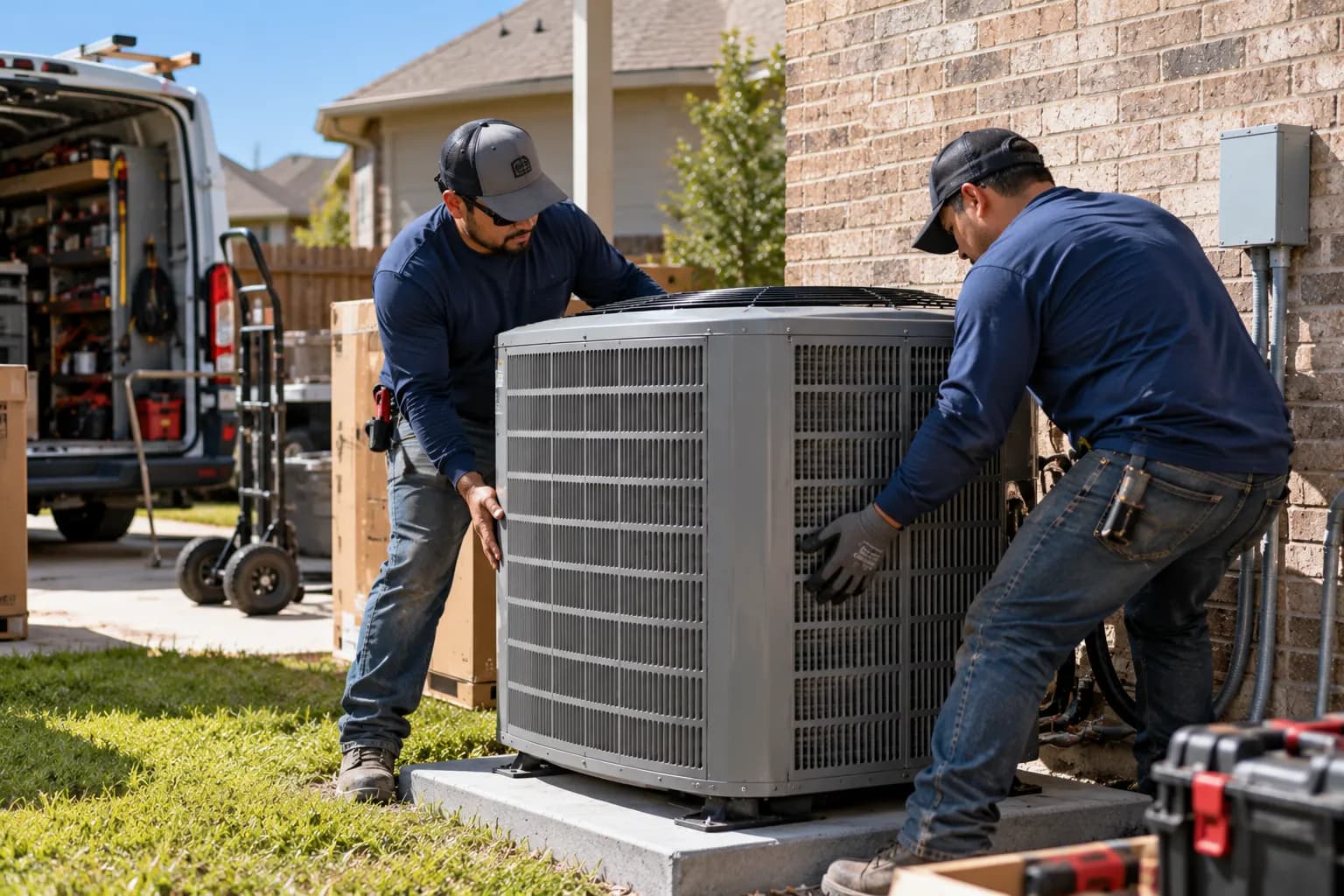
The question Houston homeowners search more than almost any other HVAC question — right behind "AC repair near me" — is some version of "how much does a new AC unit cost in Houston." It gets searched when a technician has just told someone the system isn't worth repairing. It gets searched when a system has failed completely and the replacement conversation is suddenly urgent. It gets searched when a homeowner has been watching a struggling system and is trying to decide whether to repair it again or replace it before another summer arrives.
The answer to this question in Houston's market is more nuanced than the generic national figures that most online cost calculators produce — because Houston's climate, Houston's equipment needs, and Houston's contractor market all create a specific cost picture that differs from what's true in moderate markets. Here is an honest, specific breakdown of what a new AC system actually costs in the Greater Houston area in 2026, what determines where your replacement falls in that range, and what to watch for when evaluating quotes.
WHAT A NEW AC SYSTEM COSTS IN HOUSTON IN 2026 — THE REAL NUMBERS
A complete AC system replacement in Greater Houston in 2026 ranges from approximately $4,500 to $14,000 installed, with most standard residential replacements landing between $6,000 and $10,000. That's a wide range, and understanding what determines where a specific replacement falls within it is the more useful information than the range itself.
The price of a new AC system has several distinct components that add up to the total installed cost. Equipment cost — the outdoor condenser unit and the indoor air handler or coil — is the largest component but not the only one. Refrigerant for the initial charge, electrical work if needed, ductwork modifications if required, the disconnect box and line set if they need replacement, permits where applicable, and labor for the installation itself all contribute to the total.
A contractor quote that seems significantly lower than the range above is almost always lower for one of a few reasons — less efficient equipment at a lower SEER2 rating, a brand tier with lower manufacturing quality, skipped components that should be replaced alongside the system, or a contractor whose margins are compressed in ways that raise questions about the quality of the installation work. Understanding what's in the quote is as important as the quote number itself.
WHAT DRIVES THE COST OF YOUR SPECIFIC REPLACEMENT
System size is the largest single cost driver. AC systems are sized in tons — a measure of cooling capacity where one ton equals 12,000 BTUs per hour of cooling. A properly sized system for a Houston home is determined by a Manual J load calculation that accounts for the home's square footage, insulation level, window area and orientation, ceiling height, and local climate conditions. Using square footage rules of thumb — one ton per 400 square feet is a common but oversimplified guideline — produces systems that are often significantly oversized for the actual load, particularly in newer, better-insulated Houston homes.
For general context, Houston homes commonly fall in the following size ranges based on square footage — though the actual calculation can produce results that differ significantly from these approximations.
Homes in the 1,200 to 1,800 square foot range typically require 2 to 2.5 ton systems. Replacement cost for this size in Houston in 2026 typically runs $4,500 to $7,500 depending on efficiency tier and other factors.
Homes in the 1,800 to 2,500 square foot range typically require 3 to 3.5 ton systems. Replacement cost for this size runs $5,500 to $9,000.
Homes in the 2,500 to 3,500 square foot range typically require 4 to 5 ton systems. Replacement cost for this size runs $7,000 to $12,000.
Larger homes above 3,500 square feet, homes with multiple systems, or homes with specific load characteristics that push toward larger equipment run from $9,000 to $14,000 or more for a complete single-system replacement, and two-system homes are roughly double the single-system cost.
Efficiency tier is the second largest cost driver and the one with the clearest financial return over the system's service life in Houston's climate. The current minimum efficiency standard for new residential AC equipment installed in Texas in 2026 is 15 SEER2. Equipment and installation costs increase at each efficiency tier above the minimum, but so do annual energy savings — and in Houston's market, where the AC runs for eight or more months per year and electricity rates have increased significantly from pre-2021 levels, the annual savings from each efficiency tier step are more financially meaningful than they would be in a shorter-season market.
Standard efficiency tier — 15 to 16 SEER2, single-stage equipment. This is the entry tier and the most price-competitive option. For a 3-ton replacement in Houston, installed cost in this tier runs approximately $5,500 to $7,500. These systems cool effectively but have limited modulation — they run at full capacity or off — which affects humidity management and efficiency in Houston's climate.
Mid efficiency tier — 17 to 18 SEER2, two-stage equipment. Two-stage systems can run at a lower capacity for mild conditions and full capacity when needed, producing better humidity management and more efficient operation during the extended shoulder seasons that Houston's climate includes in spring and fall. For a 3-ton replacement, installed cost in this tier runs approximately $7,000 to $9,500.
High efficiency tier — 19 SEER2 and above, variable-speed equipment. Variable-speed systems modulate continuously from a low fraction of rated capacity to full capacity, providing the best humidity management, the lowest energy consumption per unit of cooling, and the most precise temperature and comfort control. For a 3-ton replacement, installed cost in this tier runs approximately $9,000 to $12,500.
Brand and manufacturer tier affects equipment cost within each efficiency tier. Major residential HVAC manufacturers — Trane, Carrier, Lennox, Daikin, York, Rheem, Goodman, and others — all produce equipment across the efficiency range. The price difference between a premium brand's 16 SEER2 equipment and a value brand's 16 SEER2 equipment at the same efficiency level reflects manufacturing quality, component specifications, and warranty terms rather than fundamental cooling effectiveness. The decision between brand tiers at the same efficiency level should be based on warranty terms, the installing contractor's experience with the specific brand, and parts availability in the Houston market — not on marketing differentiation.
Installation complexity affects labor cost beyond the standard replacement scenario. A straightforward replacement — same location, same duct connections, same electrical configuration, same line set — has a standard labor cost that's included in most replacement quotes. Situations that add labor cost include attic air handler installations where working conditions are more difficult, ductwork modifications needed to connect the new system correctly, electrical panel work to add or upgrade the circuit for the new equipment, line set replacement when the existing copper lines are corroded or damaged, and permit requirements in specific Houston-area jurisdictions that add administrative cost and inspection requirements.
The age and condition of the existing ductwork is relevant for replacement cost and for the performance of the new system. A new, efficient AC system installed in a home with severely leaky or undersized ductwork delivers less of its rated capacity to the living space than the same system installed in a home with adequate, well-sealed ductwork. A contractor who evaluates duct condition as part of the replacement proposal and identifies duct sealing or modification needs is giving you a more complete picture of what the replacement will actually deliver than one who simply proposes like-for-like equipment replacement without addressing the distribution system.
THE REBATES AND INCENTIVES AVAILABLE IN HOUSTON IN 2026
Several financial incentives are available to Houston homeowners replacing AC systems in 2026 that reduce the net cost of the replacement and in some cases meaningfully improve the payback period on higher-efficiency equipment.
Federal tax credits under the Inflation Reduction Act are available for qualifying high-efficiency HVAC equipment installations. In 2026, the federal tax credit for qualifying central AC or heat pump installations is 30 percent of the installed cost up to a defined maximum — consult the current IRS guidance or a tax professional for the specific credit amount and equipment qualification requirements for your installation, as the details have been subject to regulatory updates since the IRA's passage. This credit applies to the tax year in which the equipment is installed and is a direct reduction of tax liability rather than a deduction.
Utility rebate programs from some Houston-area retail electricity providers offer rebates for the installation of qualifying high-efficiency equipment. The availability, amount, and equipment eligibility requirements for these programs vary by provider and may have annual funding caps that affect whether the rebate is available when you're ready to install. Contact your current retail electricity provider before finalizing an equipment selection to determine whether a rebate applies to the equipment you're considering.
The combination of a federal tax credit and a utility rebate on a high-efficiency variable-speed system can meaningfully reduce the net cost difference between the standard efficiency tier and the high-efficiency tier, making the upgrade decision more financially straightforward than the sticker price difference suggests.
HOW TO EVALUATE REPLACEMENT QUOTES IN HOUSTON
Getting multiple quotes for an AC system replacement in Houston is standard and appropriate. Three quotes from licensed, insured contractors is the commonly recommended number — it establishes a market range and identifies outliers in either direction. Here's how to evaluate what you receive.
Verify that each quote specifies the exact equipment being proposed. The quote should name the manufacturer, the model number or series, and the SEER2 rating of both the outdoor unit and the indoor air handler or coil. A quote that says "new 3-ton 16 SEER system" without model-level detail doesn't allow meaningful comparison between proposals — you may be comparing a premium brand at 16 SEER2 with one quote and a value brand at 16 SEER2 with another without knowing it.
Compare the same efficiency tier across quotes. A quote at $6,000 for a 15 SEER2 system and a quote at $8,500 for an 18 SEER2 system aren't directly comparable — they're different products with different long-term energy cost profiles. Establish what the quotes are proposing at the same efficiency tier and compare those prices, then separately evaluate whether an efficiency upgrade makes financial sense given the annual savings it would produce at your electricity rate.
Look at what's included in each quote regarding ductwork, electrical, and existing components. A quote that includes a line set replacement, a new disconnect box, and a permit is providing a more complete scope than a quote that includes none of those items. The lower quote may look better until the items excluded from the scope start showing up as additional charges during the installation.
Ask each contractor about their load calculation process. A contractor who confirms they'll perform a Manual J load calculation before specifying equipment is approaching the replacement correctly. A contractor who proposes to simply match the tonnage of what's being replaced — or who sizes by square footage rule of thumb — may be proposing equipment that's oversized for your home's actual load, with the humidity management and efficiency problems that oversizing creates in Houston's climate.
Ask about the labor warranty and the equipment manufacturer warranty. Standard manufacturer warranties on residential AC equipment are typically 5 to 10 years on parts with registration, and some manufacturers provide extended compressor warranty separately from the parts warranty. Contractor labor warranties typically run one to two years from installation date — the period during which any installation workmanship issues are the contractor's responsibility to correct at no additional charge. Understanding the warranty structure before the installation gives you the framework for how to handle any issues that develop in the first few years.
THE QUESTIONS WORTH ASKING ANY HOUSTON HVAC CONTRACTOR BEFORE SIGNING
Beyond the quote evaluation, several questions during the initial conversation with any Houston contractor help you assess whether you're dealing with a company that will serve you well through the replacement and beyond.
Are you licensed by the Texas Department of Licensing and Regulation and can you provide your license number? This is the minimum professional standard for HVAC work in Texas and the first qualifier for any contractor you're considering. Verification takes two minutes on the TDLR website.
Do you carry general liability and workers' compensation insurance and can you provide the certificates? Liability insurance protects your property if the installation causes damage. Workers' compensation protects you from liability if a technician is injured at your home. Both are non-negotiable.
Will you perform a Manual J load calculation for my home before specifying equipment? The correct answer is yes. A contractor who proposes to match existing tonnage or size by square footage without a calculation is taking a shortcut that affects how well the new system performs in your home for its entire service life.
What does the installation include — line set, disconnect, electrical, permits, haul-away of the old equipment? A complete answer to this question reveals the scope behind the price and allows accurate comparison between proposals.
Do you offer a maintenance plan after installation? A contractor who installs your system and also maintains it has ongoing accountability for that system's performance. A maintenance relationship with the company that installed the equipment is the most efficient path to keeping the new system in the condition that protects the manufacturer warranty and maximizes the system's service life.
THE REPAIR VERSUS REPLACE DECISION — HOW TO KNOW WHICH IS RIGHT
Many Houston homeowners arrive at the replacement question after a technician has told them the system needs a significant repair. The decision about whether to repair or replace deserves a clear framework rather than simply accepting the technician's recommendation without evaluating it.
The 5,000 rule is the most widely used starting point — multiply the system's age in years by the repair cost in dollars. If the result exceeds $5,000, replacement is typically the more financially sound decision. A ten-year-old Houston system facing a $600 repair produces $6,000, which suggests replacement deserves serious consideration. A five-year-old system facing the same repair produces $3,000, which clearly favors repair.
In Houston's climate, apply this rule more conservatively than in moderate markets. Houston systems accumulate more annual operating hours than systems in shorter-season markets, reaching the effective end of their service life earlier in calendar years than the equipment's theoretical lifespan would suggest. A twelve-year-old Houston system is closer to end of life than a twelve-year-old system in a city with a three-month cooling season.
Additional factors that shift the calculation toward replacement regardless of the 5,000 rule outcome: the system uses R-22 refrigerant and has a refrigerant leak, because R-22 cost and supply constraints make recharging increasingly expensive; the system has needed multiple repairs in the past two to three years, indicating it's entered the end-of-life repair cycle; the compressor has failed on a system past twelve years, because compressor replacement cost on an aging system rarely makes financial sense; or the system's efficiency has declined enough that annual energy costs significantly exceed what new equipment would consume.
WHAT TO EXPECT FROM THE INSTALLATION PROCESS
For homeowners who decide to move forward with replacement, knowing what the installation process involves reduces the uncertainty that often accompanies a significant home investment.
A standard residential AC replacement in Greater Houston takes one full day for a single system in a typical installation scenario. The technician or installation crew recovers the refrigerant from the old system using EPA-certified equipment — refrigerant cannot be vented to the atmosphere legally or responsibly — removes the old outdoor unit and indoor components, installs the new outdoor unit and indoor air handler or coil, makes the electrical and refrigerant line connections, charges the new system with the correct refrigerant quantity verified by measurement rather than by weight alone, and tests the system through multiple operating cycles to confirm correct performance.
The day of the installation, verify with the contractor before they begin that the scope matches what was agreed in the quote — the equipment being installed, what components are being replaced, what's included. Having this conversation at the start prevents misunderstandings about scope that can arise during the installation.
After installation, ask for the documentation you'll need for warranty registration and for your own records — the equipment model and serial numbers, the refrigerant type and charge amount, any permit documentation from the jurisdiction, and the contractor's labor warranty in writing. Manufacturer warranty registration typically needs to happen within a defined period after installation — often 60 to 90 days — and some manufacturers require registration to activate the full warranty term rather than a shorter default warranty.
MULTIPOINT AC & HEATING — SERVING GREATER HOUSTON WITH HONEST REPLACEMENT GUIDANCE
At Multipoint AC & Heating, we know that a system replacement is one of the largest single investments a Houston homeowner makes in their property — and that the decision deserves honest guidance rather than a sales push toward whatever produces the highest margin for the contractor.
Our replacement process starts with a proper load calculation for your specific home. We'll tell you the right size system for your actual load — not the size of what you're replacing, not a square footage estimate. We'll walk you through the efficiency tier options with the honest energy cost math behind each one, including what rebates and incentives apply to your situation. We'll give you a written quote that specifies the exact equipment, the complete scope, and the warranty terms before you make any decision.
We're a licensed, insured, family-owned company that has been serving Greater Houston homeowners across Harris County, Fort Bend County, Montgomery County, and Austin County. When we install a system, we want it to still be running well when you call us for your annual tune-up ten years from now — which means we have a long-term interest in getting the replacement right from the start.
If your system has failed, is failing, or you've been told it needs a repair that's making you question whether replacement makes more sense, we'll give you a straight assessment — what we found, what the repair would cost, what a replacement would cost, and what we'd genuinely recommend given your system's age, condition, and your home's specific situation.
Contact Multipoint AC & Heating at 832-963-3789 to schedule a replacement consultation or diagnostic visit anywhere in Greater Houston. We'll give you the information you need to make the right decision for your home — without pressure.