Why October Is the Most Dangerous Month for Houston HVAC Systems
October poses unique challenges for Houston HVAC systems. Learn why this month is critical for maintenance and how to prevent costly failures.
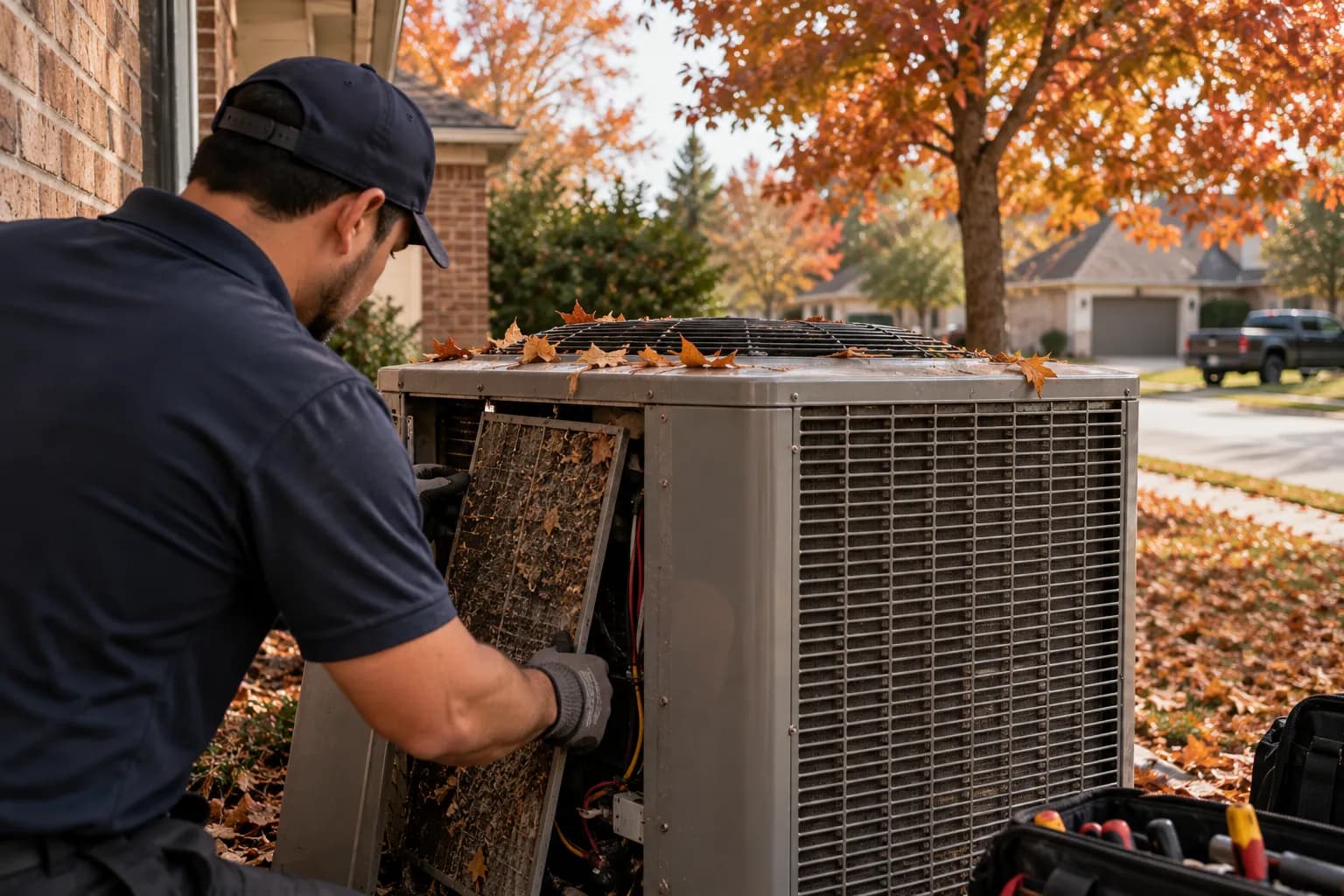
October has a reputation in Houston as the month when things finally start to cool down. The brutal heat of July and August is behind you, September has been gradually moderating, and the prospect of fall weather arriving makes October feel like the relief month after the long punishment of another Houston summer. For HVAC systems throughout Harris County, Fort Bend County, and Montgomery County, October tells a very different story.
October is the month when more Houston homeowners discover their heating system doesn't work than any other month of the year. It's also the month when AC systems that limped through the tail end of summer finally give out completely. And it's the month when the scheduling and pricing dynamics of the HVAC service market shift in ways that make getting help more difficult and more expensive than at any other point in the year.
Understanding why October is the most dangerous month for Houston HVAC systems — and what to do about it before the month arrives — is the most practically valuable HVAC planning conversation a Houston homeowner can have right now.
WHY OCTOBER IS UNIQUELY HAZARDOUS
The October HVAC danger in Houston is the product of three things happening simultaneously that don't overlap this way in any other month of the year.
The first is the first cold front of the fall season. Houston cold fronts don't announce themselves weeks in advance with gradual temperature decline. They arrive — typically with a day or two of forecast warning — and drop temperatures 30 to 40 degrees in a matter of hours. When a cold front drops from 85 degrees on a Tuesday afternoon to 45 degrees by Wednesday morning, hundreds of thousands of Houston households switch their thermostats from cool to heat simultaneously. Most of those heating systems haven't run since February or March. A meaningful percentage of them fail the first time they're asked to run.
The second is end-of-season AC failures. Systems that struggled through the summer — that were running on a borderline capacitor, losing refrigerant slowly from a developing leak, operating with a condenser coil that needed cleaning, or showing other developing conditions that hadn't yet produced complete failure — have accumulated additional wear through September. October's remaining warm days, when the AC still needs to run on afternoons that reach the mid to upper 80s, push those borderline systems past the threshold they cleared all summer. The capacitor that made it through July fails in October. The slow refrigerant leak that reduced efficiency all summer produces obvious cooling failure in October. The compressor that was showing subtle signs of stress since June stops working in October.
The third is the scheduling and pricing collision. October is when AC emergency calls from end-of-season failures and furnace first-use failures arrive at HVAC companies simultaneously — at the same time that scheduled fall heating inspections are consuming calendar availability for preventive service visits. The result is the most compressed HVAC service scheduling environment of the year. Companies that had reasonable availability in September are fully booked in October. Emergency service call rates apply to after-hours and weekend calls that represent a large fraction of the demand. Wait times for non-emergency service extend in ways they don't during summer because the summer emergency surge had more technician coverage built around it than the fall transition surge does.
THE HEATING SYSTEM FAILURE PATTERN — WHY IT HAPPENS EVERY OCTOBER
The specific failure pattern that produces Houston's October heating crisis follows a predictable path that makes it entirely avoidable with the right timing.
Houston furnaces and heat pumps — whichever is serving the heating function in a given home — sit completely idle from approximately February or March through September or October. In Houston's climate, that's seven to eight months of dormancy. Unlike furnaces in cold climates that run continuously through winter and develop problems gradually under active use, Houston heating systems develop problems during the long idle period that go completely undetected until the first time the system is asked to run.
The humidity environment of a Houston summer makes this worse. The air handler cabinet, the furnace components, and the associated wiring and controls are exposed to Houston's ambient humidity for seven to eight months without the regular air movement and temperature cycling that active operation provides. Flame sensors that were functioning in February develop oxidation during the idle period that prevents them from generating the clean signal the control board needs to confirm the burner is lit. Ignitors that were at the margin of their functional life in February age further during the idle period. Control board connections develop corrosion from the humidity. Blower motor capacitors degrade.
None of these developing problems produce any symptom during the summer because the heating system isn't running. All of them announce themselves the first time the thermostat calls for heat — which in Houston is usually when the first significant cold front of October arrives and the household discovers that the system that worked in February isn't working in October.
The failure mode looks like this: the cold front arrives on a Wednesday morning. By Wednesday evening, the household has noticed the house isn't warming up despite the thermostat being set to heat. They check the thermostat — it's in heat mode, the setpoint is above the indoor temperature, everything looks correct. They go outside to check the outdoor unit — for a heat pump, it should be running; for a gas system, the outdoor unit isn't relevant to heating. They listen at the air handler — either the furnace is attempting to start and shutting off after a few seconds, or nothing is happening at all. They call for service. Every HVAC company in Houston is getting the same call from other households in the same situation.
THE AC END-OF-SEASON FAILURE PATTERN
The AC failure component of October's risk is less talked about than the heating failure but equally real. Here's why it happens.
During Houston's peak cooling season, borderline components sometimes produce intermittent symptoms — a system that struggles on the hottest afternoons but recovers when temperatures moderate in the evening. Homeowners experiencing these intermittent symptoms often dismiss them because the system recovers and continues functioning, because replacing a functioning system feels premature, or simply because calling for service during peak summer when scheduling is difficult feels like more trouble than the intermittent symptom warrants.
These borderline conditions don't improve on their own. They continue developing through September and October. By the time an October afternoon reaches 88 degrees — warm enough to still require cooling — the capacitor that was at 25 percent below specification in August may have failed completely. The refrigerant that was at 90 percent of specification in July may have dropped to 75 percent in October. The compressor that was showing subtle signs of stress in June may fail in October when the combination of accumulated wear, a borderline capacitor that's been stressing it all summer, and the thermal cycling of cooling and not cooling through September pushes it past its operating limits.
October AC failures also have a specific frustration dimension — homeowners who believed the worst was behind them because the system made it through the summer discover in October that making it through summer was the last thing their system managed.
WHAT THE OCTOBER SCHEDULING SITUATION ACTUALLY LOOKS LIKE
Understanding the HVAC service market in October helps explain why October problems are more disruptive than the same problems in July.
In July, HVAC companies have built their staffing and scheduling around peak cooling season demand. Technician availability is at its annual high, scheduling windows are built around high volume, and emergency service infrastructure is activated for peak season. The surge is expected and prepared for.
October demand is not built around in the same way. The surge of simultaneous heating failures and end-of-season AC failures happens on top of the scheduled fall inspection demand that's occurring simultaneously — and it happens at a staffing level that has moderated from peak summer. The scheduling collision produces wait times that surprise homeowners who experienced reasonable service response times during summer.
What this means practically is that an October furnace failure that happens on a Wednesday cold-front morning may not receive same-day service response from the first company called — or the second. Emergency service premium rates apply for after-hours and weekend service. Wait times for non-emergency scheduled service may extend to five to seven days in the most compressed periods. And homeowners who are without heat during a Houston cold front — when indoor temperatures can drop to the low 60s before the front passes — are making service decisions under temperature discomfort rather than calm planning.
The homeowner who scheduled the fall heating inspection in September is not in this situation. The inspection found the oxidized flame sensor in September. It was cleaned or replaced in September. The first cold front arrives in October and the furnace works — because someone looked at it before the cold front made looking at it urgent.
THE SPECIFIC RISKS BY SYSTEM TYPE IN OCTOBER
Gas furnace systems. The flame sensor, ignitor, and heat exchanger are the three most important components to have evaluated before October's first cold front. The flame sensor and ignitor for the reasons described above — idle-period vulnerability that produces first-use failure. The heat exchanger because a cracked heat exchanger that allows combustion gases into the supply airstream is a safety issue that's more likely on older systems and that's specifically worth catching before the system is running regularly through Houston's winter.
Heat pump systems. The reversing valve — the component that switches the system between cooling and heating mode — should be tested specifically before the first cold front. A reversing valve that's been in cooling mode for six months without being switched to heating mode may be slow to respond or may fail to shift completely when it's first asked to reverse. Testing it in September or early October before the cold front creates urgency is the appropriate timing. The defrost system should also be verified — a defrost control board that's failed during the idle period won't become apparent until outdoor temperatures are cold enough to produce frost on the outdoor coil that the defrost cycle needs to clear.
Aging systems of either type. Any heating system past twelve years old in Houston's climate deserves honest evaluation before October rather than the hope that it will work when needed. The idle-period degradation that affects flame sensors and ignitors on younger systems compounds with the broader component aging on older systems to produce a higher probability of first-use failure in October on aging equipment than on younger systems.
WHAT TO DO RIGHT NOW — THE OCTOBER PREVENTION PLAN
If you haven't scheduled a fall heating inspection yet, do it today. Not this week — today. The October scheduling compression begins with the first cold front forecast, which in Montgomery County communities can arrive as early as the first week of October. A heating inspection booked today for late September or early October is available. The same inspection booked after the first cold front is announced will be competing with every other household that had the same realization at the same time.
When you schedule, request specifically that the visit includes flame sensor evaluation and cleaning, ignitor testing, heat exchanger inspection, gas pressure and burner operation verification for gas systems, reversing valve and defrost system testing for heat pump systems, blower motor assessment, and safety control testing. These are the specific items that prevent October failures — not a cursory system check, but the components that the October failure pattern traces back to.
Test your heating system yourself this week. Set the thermostat to heat mode at a temperature above the current indoor temperature — on a mild morning when the house is in the low to mid 70s, setting to 76 or 77 degrees in heat mode allows the system to run a brief heating cycle that confirms the basic function. The furnace should light within sixty seconds and produce warm air at the registers within two to three minutes. A heat pump in heating mode should produce warm air within three to four minutes of the thermostat calling for heat. If either system fails this basic test — doesn't start, starts and shuts off within a few seconds, runs but produces no warm air — you have advance notice of a problem that can be scheduled for repair in advance rather than discovered when the first cold front makes it an emergency.
Check the carbon monoxide detectors in your home this week. Carbon monoxide from a compromised heat exchanger is a heating-season safety risk, and CO detectors older than five to seven years have sensor elements that may have degraded past effective detection. Test every CO detector in the home and replace any that don't respond to the test button or that you know to be older than their sensor lifespan.
Know your options if the heating system fails during the first cold front before you can get service. Identifying an air-conditioned and heated location you can use — a family member's home, a nearby hotel — before you need it eliminates the stress of figuring out options while the house is cold. Knowing which family members or neighbors might need additional support during an extended cold front removes one more decision that would otherwise happen under pressure.
THE HEATING SYSTEM THAT WAS FINE LAST YEAR — WHY THAT DOESN'T MEAN WHAT YOU THINK
One of the most common reasons Houston homeowners skip the fall heating inspection is the logic that the system worked fine last winter so it should work fine this winter. This reasoning has a specific flaw in Houston's climate that's worth understanding.
A system that was fine last winter was inspected by its own operation last winter — it ran, it worked, the problems that existed in it at that time didn't prevent function. But between last February and this October, eight months of Houston's humidity have been working on that system's components. The flame sensor that was borderline last February has had eight more months of oxidation. The ignitor that was at 70 percent of its rated output last February has aged toward its failure point for eight additional months. The control board connections that had slight corrosion last February have eight more months of corrosion development.
Working fine last winter is evidence that the system was functional last winter. It's not evidence that the same system is functional after eight additional months of Houston's idle-period vulnerability conditions. The inspection that would tell you whether the system is ready for this October is the one that hasn't been done yet — not the one that didn't happen because the system worked last February.
THE OCTOBER OPPORTUNITY FOR HOMEOWNERS WHO ACT NOW
October doesn't have to be a dangerous month for your HVAC system. Everything that makes October dangerous — the heating system failures, the end-of-season AC collapses, the scheduling compression and emergency pricing — is predictable and preventable with the inspection and maintenance timing that September allows.
The homeowner who acts in September is the one who enters October knowing the heating system was inspected and is ready, knowing the AC system's end-of-season condition was evaluated and anything developing was addressed, and knowing that if something still goes wrong they're calling from a non-emergency position with a maintained system rather than from a cold house on a Wednesday morning competing for service with everyone else who didn't look ahead.
That's not a complicated position to be in. It requires a phone call today, a service visit in September, and the fall checklist that converts October's most dangerous HVAC month into a non-event.
Multipoint AC & Heating provides fall heating inspections, end-of-season AC diagnostic visits, and full HVAC service throughout Greater Houston, including Harris County, Fort Bend County, Montgomery County, and Austin County. Contact us at 832-963-3789 today to schedule before October's calendar fills.