How to Lower Your Electric Bill This Summer Without Sacrificing Comfort in Houston
Discover easy, cost-effective ways to reduce your electric bill this summer in Houston without sacrificing comfort. Optimize your home's cooling efficiently.
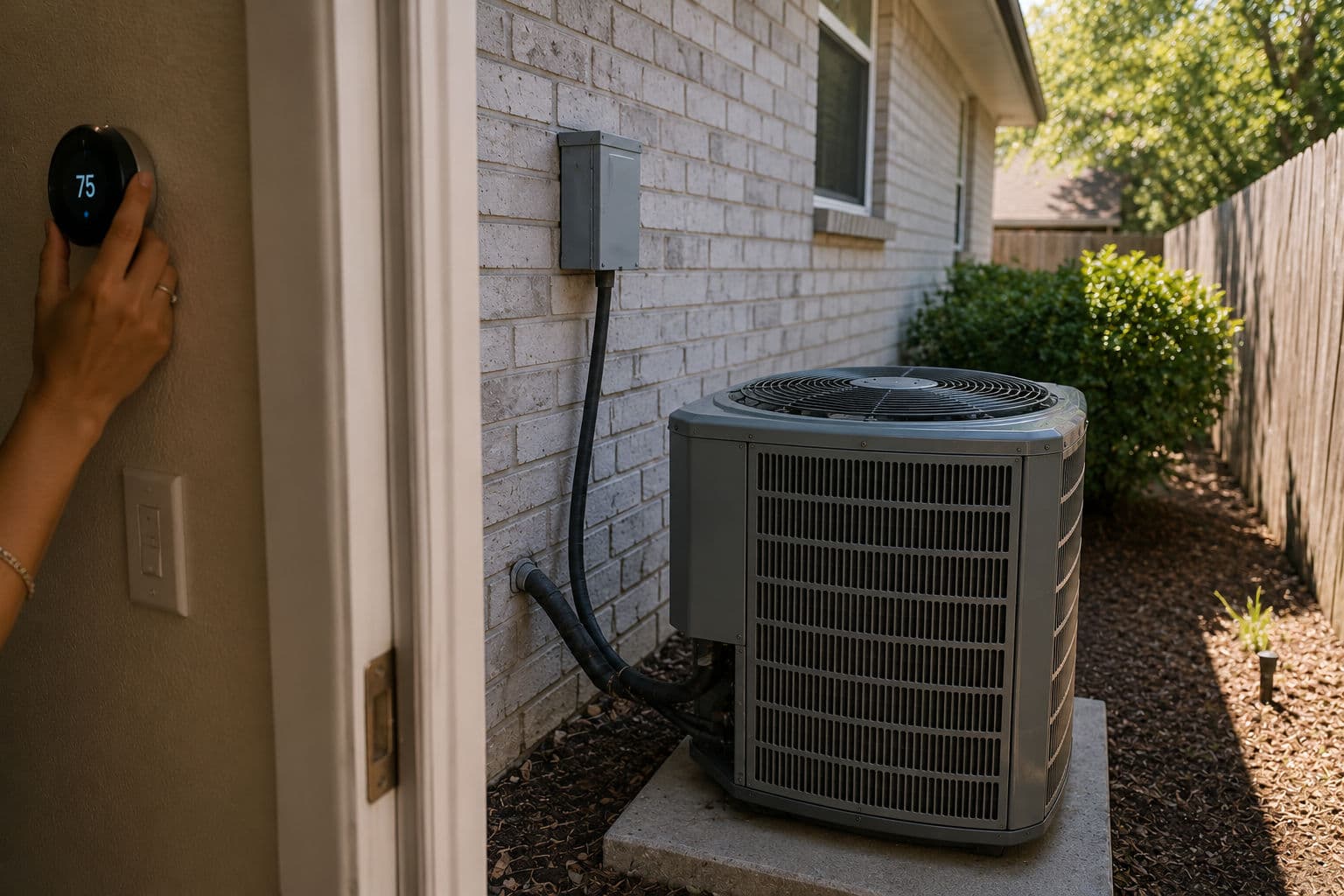
Houston electricity bills in summer are a source of genuine sticker shock for a lot of homeowners, and the response is usually one of two things — lower the thermostat setting and accept higher bills, or raise it and accept being uncomfortable. Neither is the full picture. There are meaningful steps between those two options that reduce cooling costs without making your home less comfortable, and some of them cost nothing to implement.
Here's what actually moves the needle on a Houston summer electric bill.
THE FREE CHANGES THAT MAKE AN IMMEDIATE DIFFERENCE
Set the thermostat correctly for when you're home versus away. The single biggest driver of unnecessary cooling cost in Houston homes is maintaining full comfort temperatures in an empty house. Every degree you raise the thermostat above your normal comfort setting while the house is unoccupied reduces cooling energy consumption by 3 to 5 percent for that period. A home set to 80 degrees during an eight-hour workday and returned to 74 before you get back is meaningfully cheaper to cool than one held at 74 all day — and with a smart thermostat or programmable thermostat handling the adjustment automatically, you don't feel any difference in comfort when you're actually home.
Use ceiling fans in occupied rooms. Ceiling fans create a wind chill effect that makes a room feel several degrees cooler than it actually is. Running ceiling fans in rooms you're occupying allows most people to be comfortable at a thermostat setting two to three degrees higher than they would be without the fan — which directly reduces AC runtime and energy consumption. The key detail is that ceiling fans cool people, not rooms. Turn them off when you leave a room, because a fan running in an empty room is just wasting electricity without providing the cooling benefit.
Close window coverings during the hottest part of the day. Direct sunlight through windows during Houston's summer afternoons adds significant heat load to your home that the AC has to overcome. South and west-facing windows in particular drive substantial afternoon heat gain. Closing blinds or curtains on these windows between noon and 6pm reduces the heat entering the home during the period when outdoor temperatures are highest, which directly reduces AC runtime during the most expensive part of the day.
Move heat-generating activities to morning or evening. Cooking on the stove, running the oven, using the dishwasher, and running the clothes dryer all generate heat inside the home that the AC has to remove. In Houston's peak summer, scheduling these activities in the early morning or after 8pm rather than during the afternoon significantly reduces the indoor heat load during the hours when the AC is already working hardest against the outdoor temperature.
Make sure all supply vents are open. Closing vents in unused rooms is a common habit that people believe saves energy — it doesn't. Closed vents increase static pressure in the duct system, reduce total system airflow, and can cause the evaporator coil to freeze, all of which make the system less efficient rather than more. Open all supply vents throughout the home and make sure furniture, rugs, and other objects haven't been moved to cover return air grilles.
Check your air filter. A clogged filter restricts airflow through the system and forces it to work harder to move the same volume of air, which increases energy consumption directly. In Houston's humidity, filters accumulate biological material alongside dust and clog faster than in drier climates. Monthly checks and 30 to 60 day replacement intervals during peak season keep the system operating with adequate airflow.
THE LOW-COST CHANGES WITH MEANINGFUL RETURNS
Install a smart thermostat or programmable thermostat if you don't have one. A basic programmable thermostat costs $25 to $50 and eliminates the most common source of unnecessary cooling cost — maintaining full comfort temperatures in an empty home — by automating the setback schedule so it happens consistently every day without requiring you to remember. Smart thermostats with app control and geofencing cost more but add the ability to adjust the system remotely and to use your phone's location to set back automatically when you leave.
The energy savings from consistent setback scheduling in a Houston home over a full cooling season typically pay back the cost of a basic programmable thermostat within the first summer. This is one of the highest return-on-investment changes available for most Houston homeowners.
Seal obvious air leaks around doors and windows. Air infiltration — outdoor hot, humid air entering the home through gaps and cracks — adds directly to the cooling and dehumidification load the AC has to manage. Weatherstripping on exterior doors, caulk around window frames, and door sweeps on doors with visible gaps at the bottom are inexpensive materials that reduce air infiltration meaningfully. In Houston's humidity environment, reducing the volume of outdoor air entering the home also reduces the indoor humidity load, which improves comfort alongside reducing energy costs.
Add attic insulation if your home is older. Homes built in the 1970s through early 1990s — a large portion of the housing stock in established Houston communities like Katy, Sugar Land, Missouri City, Humble, Spring, and Pearland — often have original attic insulation that has settled and degraded below current performance standards. Houston's climate zone calls for R-38 to R-60 of attic insulation. A home with R-13 of original insulation that's been in place for thirty years is transferring substantially more heat from the 140-degree attic into the living space than current standards allow, and the AC is working continuously against that heat gain.
Adding attic insulation to bring it up to current standards is one of the highest-return energy improvements available to owners of older Houston homes. The upfront cost varies with attic size but is typically paid back in energy savings within three to five years, and the improvement in summer comfort is often immediately noticeable.
Schedule a maintenance tune-up if you haven't had one this season. A dirty condenser coil, low refrigerant, or a capacitor that's reading below specification all reduce system efficiency and increase energy consumption without producing obvious symptoms beyond a higher electric bill. A professional tune-up that includes coil cleaning, refrigerant verification, and electrical component testing restores the system to operating at its designed efficiency — and in many Houston homes, the improvement in cooling efficiency from a thorough coil cleaning alone shows up on the following month's bill.
THE EQUIPMENT INVESTMENTS WITH LONGER PAYBACK PERIODS
Seal your ductwork. Leaky supply ducts dump conditioned air into your attic — where temperatures reach 130 to 150 degrees in Houston summer — before it reaches your living space. The system keeps running to replace the lost conditioned air, which never efficiently cools the home. The Department of Energy estimates that homes with leaky ductwork lose 20 to 30 percent of conditioned air before it reaches the living space. Professional duct sealing addresses both the energy loss and the comfort problems that duct leakage causes simultaneously, with energy savings that typically pay back the investment within two to three Houston cooling seasons.
Consider a whole-home dehumidifier. This is specific to Houston's climate and the comfort dynamics it creates. In a humid environment, the thermostat setting that feels comfortable depends significantly on indoor humidity levels. A home at 76 degrees and 45 percent relative humidity feels noticeably more comfortable than a home at 74 degrees and 65 percent relative humidity. Homeowners in Houston frequently lower the thermostat setting trying to achieve comfort that's actually being prevented by elevated humidity rather than temperature — which drives up energy costs without solving the underlying problem.
A whole-home dehumidifier maintains indoor relative humidity at comfortable levels independently of the AC cycle, which often allows Houston homeowners to raise the thermostat setting by two to three degrees without any reduction in perceived comfort. The energy savings from running the AC less frequently at a higher setpoint often offset a significant portion of the dehumidifier's operating cost, while the improvement in comfort is immediate.
Replace an aging system with a higher efficiency unit when replacement is due. An aging Houston AC system that's been in service for 12 to 15 years is operating at a fraction of its original efficiency rating due to normal wear and degradation. Replacing it with a current-efficiency system in the 16 to 20 SEER range delivers immediate, sustained energy savings that compound across every season of the new system's service life. In Houston's climate, where the system runs for eight or more months per year, the payback on efficiency improvement from a system replacement is faster than it would be in a market with a shorter cooling season.
WHAT DOESN'T WORK — COMMON MISCONCEPTIONS
Closing vents in unused rooms does not save energy and typically makes the system work harder. This misconception is widespread in Houston but consistently counterproductive.
Turning the AC off completely during the day does not save meaningful money in Houston's summer climate and creates the recovery problems and potential moisture and heat damage described elsewhere. A setback strategy is better than complete shutdown in every practical respect.
Setting the thermostat lower than your target temperature to cool the home faster does not work. AC systems cool at the same rate regardless of how far below the target the thermostat is set — setting it to 65 when you want 74 doesn't cool the home faster, it just overshoots the target and costs more.
Running the fan continuously in the on rather than auto position does not improve cooling or reduce humidity. In Houston's humidity environment, running the fan continuously actually redistributes moisture that has condensed on the evaporator coil back into the airstream during the periods between cooling cycles, which increases indoor humidity. The auto setting runs the fan only when the system is actively cooling and is the correct setting for Houston's climate.
Multipoint AC & Heating provides AC maintenance, repair, and installation throughout Greater Houston, including Harris County, Fort Bend County, Montgomery County, and Austin County. If your summer energy bills are higher than they should be and you'd like a professional assessment of your system's efficiency, contact us to schedule a visit.