- Home
- Blog
- HVAC Maintenance Plans in Houston, TX — What They Include, What They Cost, and Why Multipoint AC & Heating Is the Right Choice
HVAC Maintenance Plans in Houston, TX — What They Include, What They Cost, and Why Multipoint AC & Heating Is the Right Choice
Learn what HVAC maintenance plans in Houston include, their costs, and why Multipoint AC & Heating is the trusted choice for homeowners.
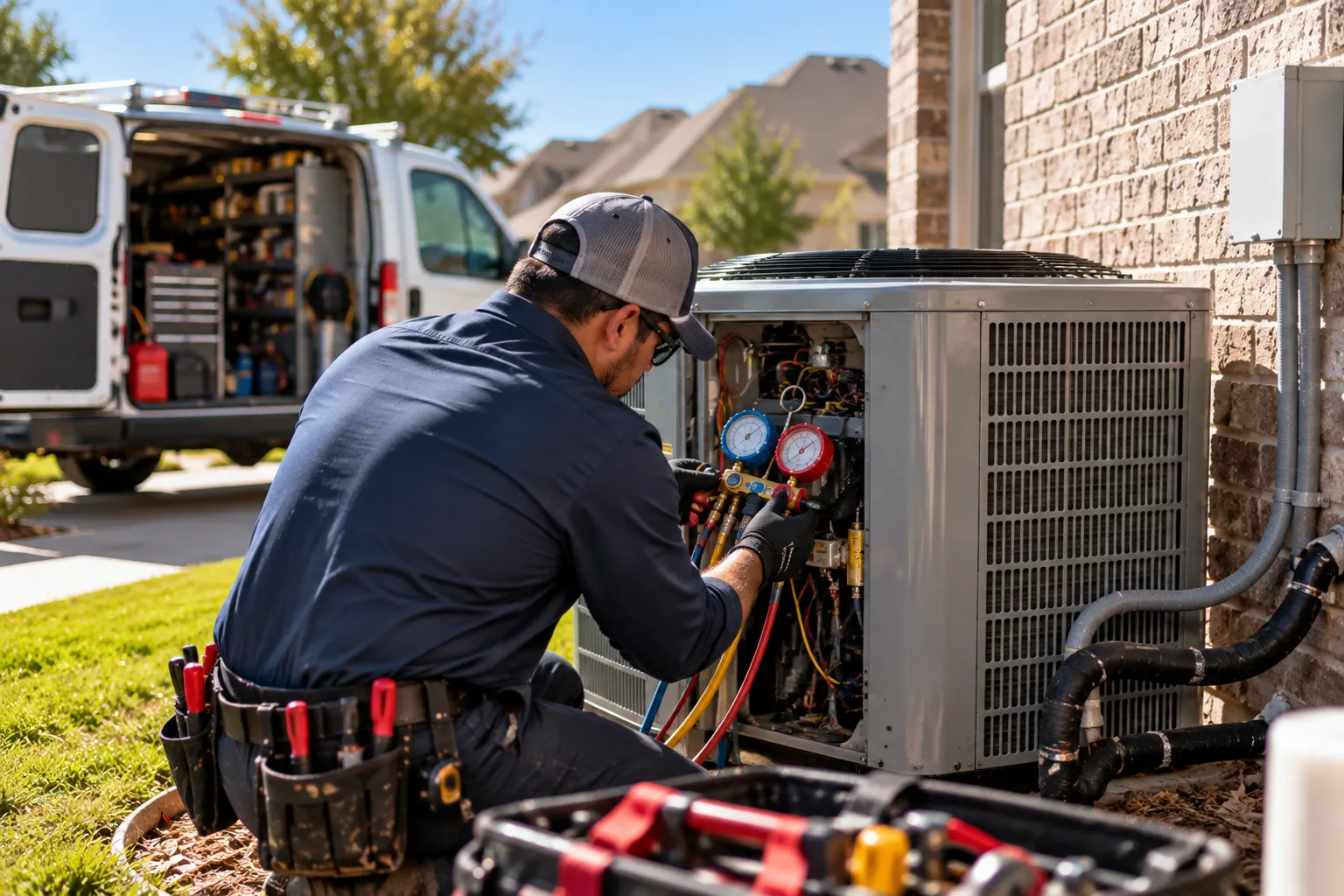
If you've ever had an AC break down on a Saturday afternoon in July, or discovered your furnace wasn't working on the first cold night of October, you already understand the core problem that an HVAC maintenance plan solves. Systems that aren't regularly maintained fail more often, fail at worse times, cost more to repair when they do fail, and reach the replacement decision point earlier than systems that receive consistent professional care. A maintenance plan is the mechanism that ensures the professional care happens on schedule — before the failures, not after them.
In Houston's market, where the AC runs for eight or more months per year and where a summer breakdown is a genuine health and safety concern rather than just an inconvenience, a maintenance plan isn't a luxury add-on. It's the most financially sound approach to HVAC ownership available to Houston homeowners. And the company you choose for that plan determines whether you're actually protected or just paying a fee for the appearance of protection.
Here's everything you need to know about HVAC maintenance plans in Houston — what a real plan includes, what it should cost, what separates a genuine plan from a hollow one, and why Multipoint AC & Heating is the right company to call today.
WHAT AN HVAC MAINTENANCE PLAN ACTUALLY DOES FOR YOU
An HVAC maintenance plan does three distinct things that have specific financial value in Houston's climate.
It keeps the system running efficiently. An AC system with a dirty condenser coil, degraded capacitors, a low refrigerant charge, and a clogged condensate drain is running at significantly below its rated efficiency. In Houston, where the system runs for eight or more months per year, that efficiency gap translates directly into higher electricity bills — every month, every billing cycle, for as long as the degraded conditions persist. Annual maintenance that keeps the coils clean, the refrigerant at specification, and the components within their rated performance range keeps energy costs closer to what a properly functioning system should cost rather than the inflated cost of a neglected system.
Research on residential AC systems consistently shows that a moderately fouled condenser coil reduces efficiency by 10 to 30 percent. For a Houston home spending $1,800 per year on cooling energy, a 20 percent efficiency reduction costs $360 per year in unnecessary electricity expense. Over the three to four years between professional cleanings that characterizes many unplanned maintenance approaches, that's $1,000 to $1,400 in excess energy costs that consistent maintenance would have prevented.
It catches developing problems before they become failures. Every compressor failure that wasn't preceded by weeks of a degraded capacitor stressing the motor. Every refrigerant leak that wasn't caught until the charge had dropped enough to affect comfort. Every flame sensor that oxidized during the idle season and failed on the first cold front. These failures share a common characteristic — they were preceded by conditions that a professional maintenance visit would have identified and could have addressed before the failure occurred.
A capacitor that tests 25 percent below specification during a spring tune-up gets replaced for $150 to $250 before it fails. The same capacitor that fails completely during peak July heat produces an emergency service call at emergency rates, a period without cooling while waiting for service, and in some cases motor damage from the period of inadequate capacitor support — a total cost several times what the planned replacement would have cost.
It gives you priority access when you do need service. Even with the best maintenance, systems occasionally need unplanned service. A component fails unexpectedly, a refrigerant leak develops between maintenance visits, a cold front reveals a heating issue that the fall inspection didn't predict. When that happens, whether you're a maintenance plan customer or not determines how quickly you get help.
In Houston's summer, when service demand is at its annual peak and scheduling windows for non-emergency visits can extend days, maintenance plan customers at Multipoint receive priority scheduling. Not a different category of technician, not a different quality of service — priority placement in the scheduling queue that means a shorter wait when your system needs attention and you need it fast.
WHAT A REAL HOUSTON HVAC MAINTENANCE PLAN INCLUDES
Not all maintenance plans are equal. Some are comprehensive service agreements that genuinely protect your system. Others are lightly discounted tune-up visits packaged with a priority scheduling promise. Knowing what a real plan should include lets you evaluate what you're actually getting.
A genuine Houston HVAC maintenance plan should include two professional service visits per year — one for the cooling system before the summer season and one for the heating system before the fall cold front season.
The cooling season visit — ideally scheduled in March or April — should include professional cleaning of both the condenser coil and the evaporator coil, refrigerant charge verification with actual pressure measurements and documentation of the readings, capacitor testing on all capacitors against their rated specifications with documentation of the results, contactor inspection, condensate drain inspection and clearing, blower motor amperage check, thermostat calibration verification, filter inspection with replacement guidance, electrical connection inspection, and an overall system performance assessment with written findings.
The heating season visit — ideally scheduled in September or early October, before the first cold front — should include flame sensor inspection and cleaning, ignitor testing against specification, heat exchanger inspection with appropriate equipment and documentation of findings, gas pressure and burner operation verification, draft inducer motor inspection, pressure switch testing, blower motor inspection, safety control verification including high-limit and roll-out switches, flue and venting inspection, and a system performance confirmation through a complete heating cycle.
Both visits should produce written service reports documenting what was inspected, what readings were taken, what was found, and any recommendations. This documentation serves as your maintenance history for manufacturer warranty compliance — most HVAC manufacturer warranties require documented annual professional maintenance — and as the reference record for tracking system condition over time.
Beyond the two service visits, a genuine maintenance plan includes priority scheduling for service calls when unplanned issues arise, a defined discount on diagnostic fees for service calls within the plan period, and in some cases parts or labor discounts on repairs identified during the maintenance visits.
WHAT A HOUSTON HVAC MAINTENANCE PLAN COSTS
The market range for a comprehensive HVAC maintenance plan from a licensed, insured Houston HVAC company in 2026 runs approximately $200 to $450 per year for a single system. This includes both service visits, the priority scheduling benefit, and whatever additional plan benefits the specific company offers.
At the lower end of this range — $200 to $280 per year — plans typically include the two visits with standard service scope and basic priority scheduling. At the upper end — $350 to $450 per year — plans typically include more comprehensive service scope at each visit, more defined priority scheduling commitment, and more substantial repair discounts or credits.
Plans below $150 per year for two visits are worth scrutinizing carefully. The economics of professional HVAC service don't support a genuinely comprehensive two-visit maintenance plan at pricing significantly below this range. Either the visits are compressed versions of what a proper service visit should cover, or the plan is designed as a lead-generation vehicle for upsells rather than as genuine maintenance delivery.
Two-system homes — a common configuration in larger Houston homes and in two-story homes with separate upstairs and downstairs systems — typically pay approximately double the single-system plan rate for coverage of both systems.
The financial math on maintenance plans is consistently favorable in Houston's market. The plan cost of $200 to $450 per year covers two visits and priority scheduling. The energy savings from running an efficient system rather than a fouled one is typically $200 to $500 per year depending on system size and current condition. The avoided cost of emergency service calls, parts replaced under stress rather than at scheduled intervals, and the compressor and motor damage that degraded components produce over time is harder to quantify precisely but consistently exceeds the plan cost in any year where a significant failure is averted.
The calculation that makes the most sense is not whether the plan pays for itself in the current year — it almost always does when energy savings are factored in — but whether it protects the system over its full service life. A Houston system that receives consistent annual maintenance reaches the replacement decision point at a later age and with more predictable timing than one that doesn't, converting an unpredictable capital expense into a planned one.
WHAT SEPARATES A GENUINE MAINTENANCE PLAN FROM A HOLLOW ONE
Several practices distinguish companies whose maintenance plans deliver real value from those whose plans primarily serve as marketing vehicles.
The visit takes the time it actually requires. A cooling system tune-up that includes professional coil cleaning on both coils, actual refrigerant pressure measurements, capacitor testing with documented readings, condensate drain clearing, blower motor checks, and all the other items a proper visit covers takes at least 60 to 90 minutes for a standard single system. A technician who's in and out in 25 minutes hasn't completed a comprehensive service. If you're evaluating a maintenance plan, ask how long the scheduled visit typically takes. The answer tells you something about the depth of service you'll actually receive.
Measurements are taken and documented. Capacitor readings, refrigerant pressures, motor amperage draws — these are specific numbers that a technician performing a proper maintenance visit produces. A company whose technicians document actual measurements and provide them to the customer in the written service report is demonstrating transparency and rigor that companies doing abbreviated visits typically don't. Ask specifically whether the service report includes actual measurement readings or just a checklist of items checked.
Recommendations are supported by specific findings. A maintenance visit that consistently produces recommendations to replace components without providing the specific measurement or observation that supports the recommendation is a visit where the recommendations deserve skepticism. A capacitor replacement recommendation should come with the specific reading that's below specification. A coil replacement recommendation should come with a specific observation — a leak at the coil, physical damage to the fin material — not just a general note that the coil is aging. Findings-first recommendations are the standard of a trustworthy maintenance provider.
The plan includes genuine priority scheduling, not just a promise. Priority scheduling has real value in Houston's market specifically because summer service demand is high enough that wait times for non-emergency service calls can extend two to five days during peak periods. A plan that promises priority scheduling should be backed by a company with the technician capacity to actually deliver on that promise. Ask specifically what priority scheduling means for the company you're considering — is it same-day or next-day service, or just placement at the front of the queue whenever the technician becomes available?
The company is reachable after hours. A maintenance plan from a company that doesn't answer phones in the evening or on weekends provides limited protection for a Houston homeowner whose AC fails on a Saturday night in August. The emergency service availability of the company behind the plan is as important as the plan terms themselves in Houston's climate.
WHY HOUSTON HOMEOWNERS CHOOSE MULTIPOINT AC & HEATING FOR THEIR MAINTENANCE PLAN
Multipoint AC & Heating is a licensed, insured, family-owned HVAC company serving Greater Houston — Harris County, Fort Bend County, Montgomery County, and Austin County. We're not a franchise, not a national chain, not a multi-city operation managing Houston as one territory among many. We're Houston HVAC professionals who live in the communities we serve and who build our business on the long-term relationships we develop with Houston homeowners who trust us with their systems year after year.
Here's specifically what Multipoint maintenance plan customers get.
Two comprehensive service visits per year. Our spring cooling tune-up covers professional cleaning of both coils, refrigerant charge verification with documented pressure readings, capacitor testing with documented results, contactor inspection, condensate drain clearing, blower motor check, and a complete written service report. Our fall heating inspection covers flame sensor cleaning, ignitor testing, heat exchanger inspection, gas pressure and burner verification, draft inducer assessment, safety control testing, flue inspection, and a complete written service report for the heating system. Both visits are performed to the standard that actually protects the system — not a compressed version designed to fit into a low-cost service window.
Documented findings at every visit. Every Multipoint maintenance visit produces a written service report that includes the actual measurements taken — capacitor readings against specification, refrigerant pressures with the date and conditions of measurement, motor amperage checks. You know exactly what was found and what the readings were. This documentation is your maintenance record for manufacturer warranty compliance and your reference for tracking system condition year over year.
Priority scheduling for service calls. Multipoint maintenance plan customers go to the front of the scheduling queue when they need unplanned service. In Houston's summer, when demand is at its peak and scheduling windows for non-members can extend several days, this priority means a shorter wait when your system needs attention during the periods when you need it most.
24/7 emergency service availability. When something goes wrong with your system — outside of business hours, on a weekend, on a holiday — Multipoint answers the call. We provide 24/7 emergency HVAC service throughout Greater Houston for our customers. This availability is what separates a maintenance plan that actually protects you from one that only protects you during business hours.
Honest assessment, always. When a maintenance visit identifies something that needs attention, we tell you specifically what we found, show you the measurement or observation that supports the finding, and give you a clear picture of how urgent the issue is. We don't manufacture urgency that isn't there, and we don't downplay findings that actually need attention. Our business is built on Houston homeowners trusting us — and trust is built by consistently giving people accurate information and letting them make informed decisions.
Long-term relationship. A Multipoint maintenance plan isn't a one-year transaction. It's the beginning of a relationship where we know your system, track its history, and give you the most accurate picture of its condition over time that any HVAC company can provide. After two or three years of annual maintenance visits, we know what your capacitors typically read, whether your refrigerant charge has been stable, what condition the coils are typically in when we clean them, and how the system performs on your specific home. That accumulated knowledge makes every successive visit more valuable than an isolated one-time service call.
HOW TO GET STARTED WITH A MULTIPOINT MAINTENANCE PLAN TODAY
Signing up for a Multipoint AC & Heating maintenance plan today means your system gets on the schedule for the remaining critical service window of fall 2026.
October is the month where fall heating inspections need to happen — the first cold fronts of the season are already arriving in Greater Houston, and the window for getting the heating system professionally evaluated before being tested by a significant cold front is closing. A maintenance plan that starts today gets you scheduled for the fall heating inspection while there's still time to address anything found before the cold front that tests it.
Next spring, your cooling system tune-up happens in March or April — before the 2027 cooling season's peak demand, when scheduling is manageable and any findings can be addressed calmly during mild weather. Your system enters the 2027 summer having been professionally evaluated and serviced, with developing conditions caught and addressed rather than left to reveal themselves as summer emergency calls.
The call to start is simple. Contact Multipoint AC & Heating at 832-963-3789 today. We'll talk through your system — what you have, approximately how old it is, whether you've had any concerns recently — and get you on the schedule for the fall heating inspection. We'll explain exactly what the maintenance plan includes and what it costs for your specific system configuration.
If you've been meaning to get the system serviced and have been putting it off, today is the day. October in Houston doesn't wait for convenient timing, and neither do the cold fronts that test whether the heating system is actually ready.
Call Multipoint AC & Heating at 832-963-3789. We serve homeowners throughout Greater Houston — Harris County, Fort Bend County, Montgomery County, and Austin County — and we're ready to become your HVAC company for the long term.