What Is a HVAC Load Calculation and Why Does It Matter for Houston Homes?
Explore the importance of HVAC load calculations for optimal comfort and efficiency in Houston homes.
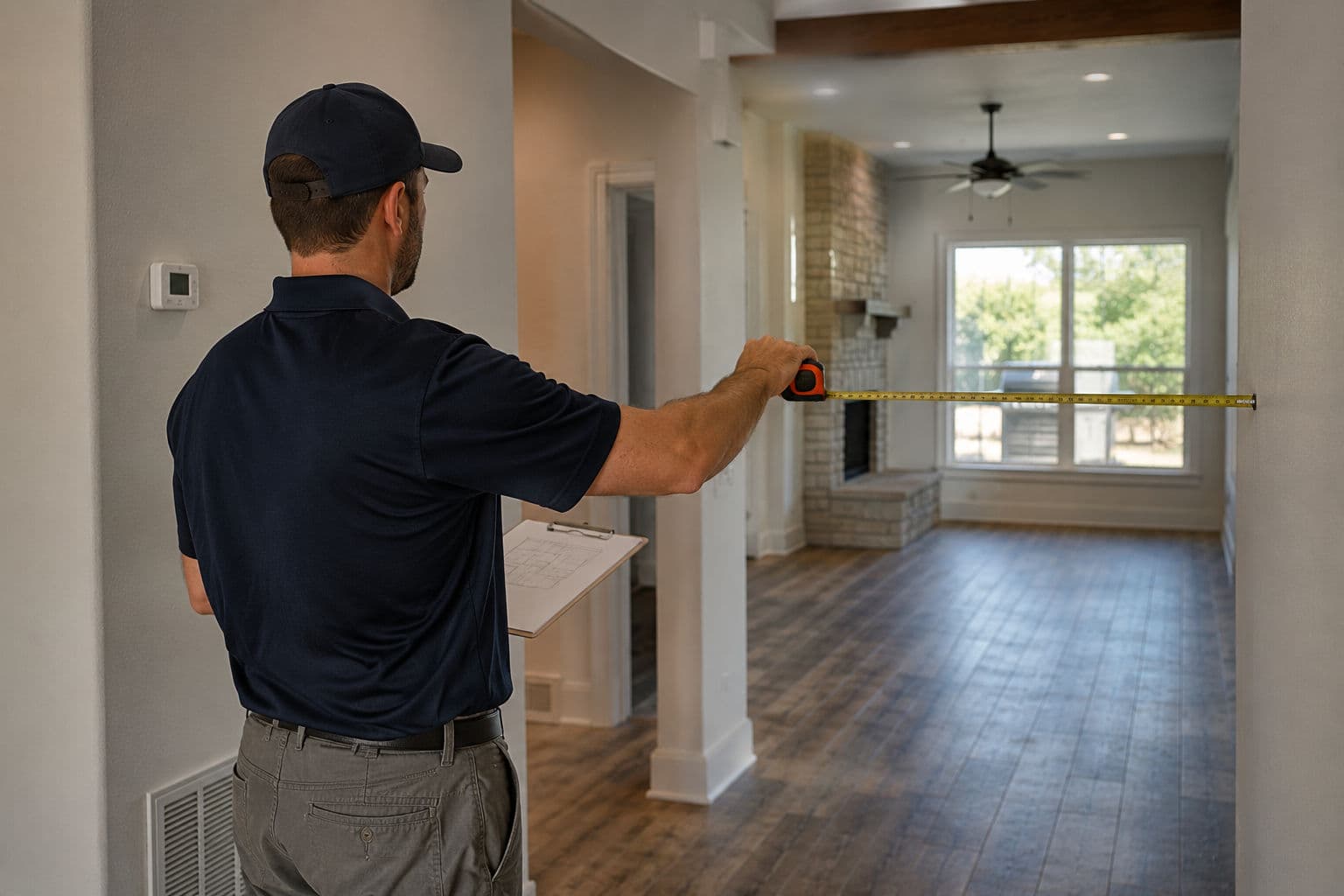
If you've gotten quotes for a new air conditioning system in the Greater Houston area, you may have noticed that some contractors ask detailed questions about your home and take measurements before recommending equipment, while others simply ask how many square feet the house is and quote based on what's currently installed. The difference between those two approaches is the load calculation — and it's the single most important factor in whether your new system actually performs the way it should in Houston's climate.
WHAT A LOAD CALCULATION IS
A load calculation — formally called a Manual J calculation, named after the ACCA standard methodology — is a structured engineering calculation that determines how much heating and cooling capacity your specific home actually requires. It accounts for every factor that affects how much heat your home gains in summer and loses in winter, producing a precise cooling and heating load number that the selected equipment needs to match.
The factors that go into a proper load calculation include the total conditioned square footage of the home, ceiling height in each area of the home, the insulation levels in the attic, walls, and floor, the type, size, orientation, and shading of every window in the home, the local climate data for the specific location — outdoor design temperatures and humidity levels for the Houston area, the construction type of the walls and roof, the number of occupants and their heat contribution, internal heat sources like appliances and lighting, and the infiltration rate of the home based on how tightly it's constructed.
Each of these factors contributes to the total heating and cooling load, and the calculation combines them to produce a specific BTU per hour requirement for the home. The selected HVAC equipment should be sized to match that requirement as closely as the available equipment options allow.
WHY SQUARE FOOTAGE ALONE IS NOT ENOUGH
The most common shortcut in HVAC sizing is the rules of thumb approach — typically expressed as a certain number of tons of cooling per square foot of conditioned space, with the specific ratio varying by region. A contractor using this approach quotes a 3-ton system for a 1,800 square foot home and a 4-ton system for a 2,400 square foot home without further analysis.
The problem is that two homes with identical square footage can have dramatically different actual cooling loads depending on every other factor that a load calculation accounts for. A 2,000 square foot home with a well-insulated attic at R-38, good window shading, and tight construction has a significantly lower cooling load than a 2,000 square foot home with inadequate attic insulation, large unshaded south and west-facing windows, and an older building envelope that allows significant air infiltration. Giving both homes the same size system produces an incorrect result for at least one of them — and in most cases, the rules of thumb approach results in oversizing rather than undersizing, because contractors err toward larger equipment to avoid callbacks from homeowners who feel the system isn't keeping up.
In Houston's climate, that tendency toward oversizing produces some of the most common and persistent comfort complaints in the market.
THE OVERSIZING PROBLEM IN HOUSTON
Oversizing is the most consequential HVAC installation mistake in the Greater Houston area, and it's more common than most homeowners realize. An oversized system cools the air temperature in your home quickly — often too quickly. It reaches the thermostat setpoint in a short cycle and shuts off before it has run long enough to remove adequate moisture from the air.
In Houston's humidity environment, this short-cycle behavior produces a home that reads the correct temperature on the thermostat but never feels comfortable. The air is cool but heavy — sticky, damp, and uncomfortable in a way that lowering the thermostat doesn't fix because the problem isn't temperature, it's humidity. Homeowners in this situation often set their thermostat progressively lower trying to achieve comfort that the temperature alone can't produce, driving energy bills up without solving the underlying problem.
Beyond the comfort issue, the repeated start-stop cycle of an oversized system is harder on the compressor than the longer, steadier cycles of a correctly sized system. Every compressor startup draws significantly more electrical current than steady-state operation and puts more mechanical stress on the compressor than continuous running. An oversized system that short cycles through a Houston summer is wearing out its compressor faster than a correctly sized system would.
An oversized system also costs more to purchase. A 4-ton system costs more than a 3-ton system. If your home's actual cooling load requires 3 tons, you're paying for equipment capacity you can't use and that's actively making your home less comfortable.
WHAT HAPPENS WHEN A SYSTEM IS UNDERSIZED
Undersizing is less common than oversizing but has its own consequences. An undersized system runs continuously on the hottest Houston afternoons without ever reaching the thermostat setpoint. It provides maximum cooling output at all times, which actually does a reasonable job of dehumidification since it's always running, but it can't maintain the set temperature when outdoor conditions are at their peak, and the continuous operation accelerates wear on the compressor and other components.
An undersized system in Houston also runs at full capacity during every mild day of the cooling season — not just the hottest days — because its capacity is insufficient to match the load even under moderate conditions. The energy consumption of running at full capacity continuously throughout a nine-month Houston cooling season is substantially higher than a correctly sized system that modulates its output to match the actual load.
WHY HOUSTON SPECIFICALLY NEEDS A PROPER LOAD CALCULATION
The case for a load calculation is stronger in Houston than in most other markets for several reasons specific to the climate and the housing stock.
Houston's humidity makes oversizing more painful here than anywhere else. The dehumidification failure that results from an oversized system's short cycling is a minor inconvenience in a dry climate where indoor humidity is rarely a problem. In Houston, where humidity management is as important as temperature management, it's the difference between a home that's genuinely comfortable and one that never feels right regardless of what the thermostat says.
Houston's housing stock is enormously varied. The Greater Houston metro encompasses everything from tight new construction in Fulshear and The Woodlands' newest sections to poorly insulated mid-century homes in established inner-loop communities, from single-story ranch homes in Fort Bend County's agricultural corridor to large two-story homes in Kingwood and Atascocita. Each of these home types has a genuinely different cooling load, and a sizing approach that ignores those differences produces incorrect equipment selection for a large portion of the homes it's applied to.
Houston homes frequently have modifications, additions, and renovations that change the cooling load from what the original design assumed. An addition that wasn't incorporated into the original HVAC system, new windows installed during a renovation, improved attic insulation that reduced the cooling load significantly — all of these change what the system needs to be. Replacing equipment based on the previous system's size assumes the previous system was correctly sized, which in many Houston homes it wasn't.
WHAT A CONTRACTOR DOING A LOAD CALCULATION ACTUALLY DOES
A contractor performing a proper load calculation measures the home's dimensions, notes the ceiling heights in different areas, evaluates the attic insulation level by measuring its depth or reviewing documentation, records the window characteristics including size, orientation, type, and shading, assesses the building envelope's tightness, and enters all of this data into a Manual J software program that performs the calculation.
The process typically takes 30 to 60 minutes for a residential home. It can be done during the initial consultation visit before quoting, or it can be done as a separate pre-installation step. Either way, the load calculation should happen before equipment is selected — not after.
The output of the calculation is a specific cooling load in BTU per hour and a specific heating load in BTU per hour, which the contractor then uses to select the appropriate equipment size from the available product options. The goal is to match the load as closely as possible rather than defaulting to the next size up.
HOW TO KNOW IF YOUR CONTRACTOR IS DOING A LOAD CALCULATION
The simplest approach is to ask directly: do you perform a Manual J load calculation before recommending equipment? A contractor who does will say yes and be able to describe their process. A contractor who doesn't will either say no or give a vague answer about experience and rules of thumb.
A contractor who quotes replacement equipment based entirely on what was installed previously, without any measurement or calculation, is not performing a load calculation. The fact that the previous system was a specific size is useful information but it's not a load calculation — the previous system may have been incorrectly sized, and replicating an incorrect size produces the same problems the previous system may have been causing.
You can also assess the thoroughness of a contractor's sizing approach by the questions they ask during a site visit. A contractor who's doing a load calculation asks about insulation levels, window types, and ceiling heights in different parts of the home. A contractor who's going by square footage and existing equipment doesn't need to ask those questions.
THE LOAD CALCULATION AND DUCTWORK
A proper load calculation doesn't just determine the equipment size — it also informs whether the existing ductwork is adequate to support the selected equipment. A system that's being replaced with different-sized equipment may have ductwork that was designed for the previous system's airflow requirements and doesn't match the new system's needs.
This is particularly relevant when a replacement system is being correctly sized down from an oversized previous system. A home that had a 4-ton system installed when 3 tons was the correct size has ductwork that was designed around 4-ton airflow. Installing a correctly sized 3-ton replacement without evaluating the ductwork may result in a system that's correctly sized for the cooling load but operating through a duct system that's oversized for it — which has its own airflow distribution implications.
A contractor who performs a load calculation and then reviews ductwork adequacy alongside equipment selection is doing the full job. A contractor who replaces equipment without any evaluation of ductwork compatibility is leaving a potential performance limitation in place.
WHAT TO DO IF YOUR CURRENT SYSTEM MAY HAVE BEEN INCORRECTLY SIZED
If your home has always had humidity problems despite a functioning AC system, if the system short cycles frequently on mild days, or if certain rooms have always been significantly harder to condition than others, incorrect system sizing from the original installation or a previous replacement may be the root cause.
A load calculation on your existing home identifies what the correct size actually is. If the calculation reveals significant oversizing, a whole-home dehumidifier can address the humidity management gap in the near term while the current system finishes its service life — at which point the replacement can be correctly sized based on the calculation results.
Multipoint AC & Heating performs proper load calculations for every system installation throughout Greater Houston, including Harris County, Fort Bend County, Montgomery County, and Austin County. If you're considering a system replacement and want equipment that's correctly sized for your home rather than matched to whatever was there before, contact us to schedule a consultation.