What Happens During a Houston Summer When Your AC Goes Out for Days
Discover practical tips to manage a Texas summer without AC — from keeping your home cool to recognizing heat-related illnesses.
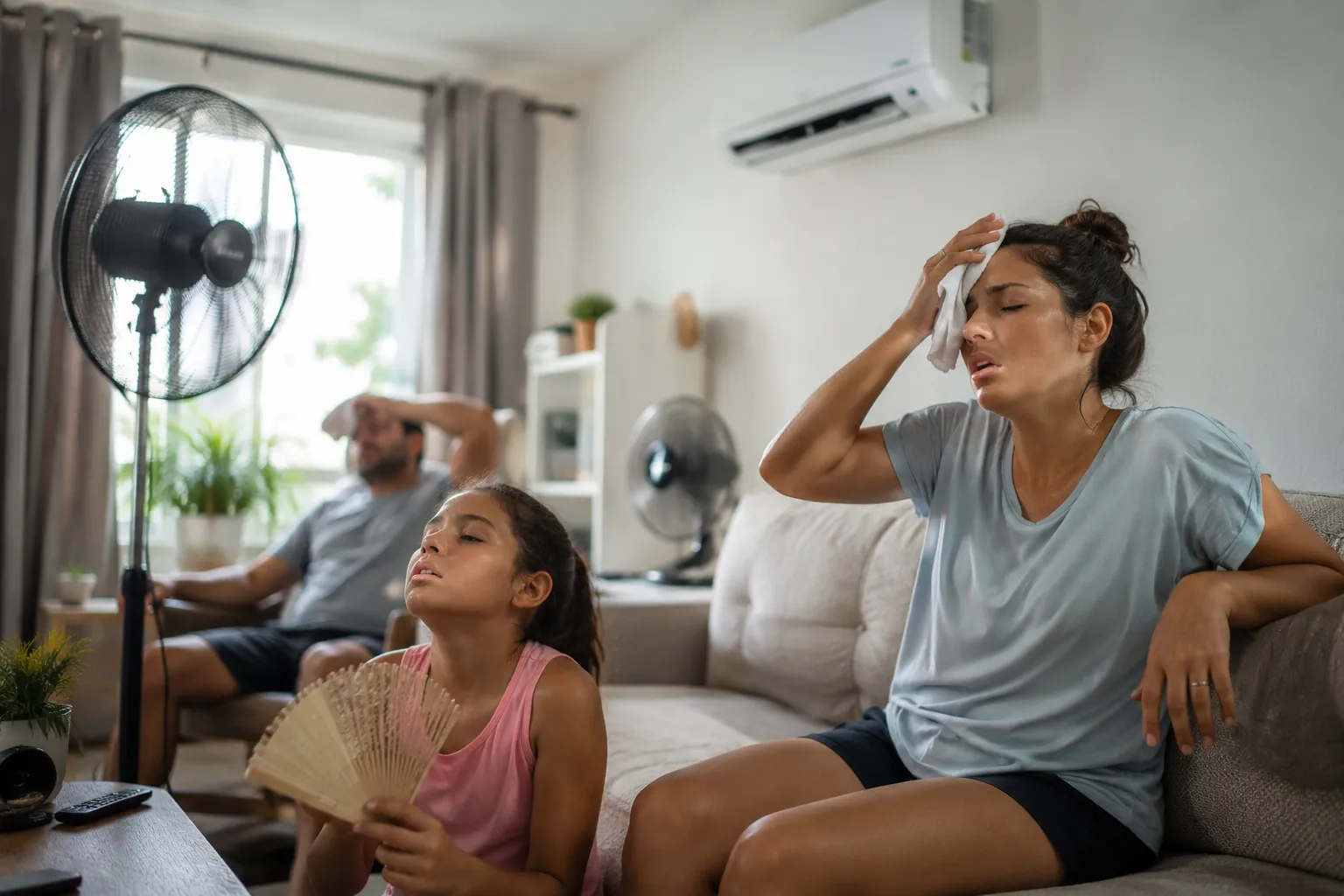
A Houston summer without air conditioning for a few hours is uncomfortable. Without AC for days — from a major component failure during peak season when parts aren't immediately available, from a post-storm outage affecting the whole neighborhood, or from a system that failed completely and needs full replacement rather than a quick repair — the situation moves from uncomfortable to genuinely serious across several dimensions simultaneously.
Most Houston homeowners have experienced a short AC outage and managed it. Fewer have experienced a multi-day outage in July or August and understand what actually happens to a home, to the people in it, and to the belongings inside it when Houston summer heat operates without restraint for an extended period. Understanding what you're dealing with in that scenario — and what to do about it — is preparation worth having.
WHAT HAPPENS TO INDOOR TEMPERATURE DURING AN EXTENDED HOUSTON OUTAGE
The rate at which a Houston home heats up after the AC stops depends on how well insulated it is, how much solar exposure it gets, how many people are inside generating heat, and what the outdoor temperature is. In general terms, a typical Houston home loses its cool relatively quickly.
Within the first two to three hours of an AC outage on a peak summer day, indoor temperatures in most Houston homes have climbed from a comfortable 74 to 76 degrees to somewhere in the low to mid 80s. The thermal mass of the home's walls, flooring, and furnishings absorbs heat and delays the initial rise, but once those surfaces have warmed to match the rising indoor temperature, they stop acting as a buffer and start acting as additional heat radiators.
By the end of the first day without AC in Houston's July or August heat, most homes have reached indoor temperatures in the high 80s to low 90s. Homes with poor attic insulation, significant western or southern sun exposure, or multiple stories where heat stratifies to the upper levels reach higher temperatures faster. Homes in the evenings when outdoor temperatures have dropped slightly may stabilize somewhat, but Houston's summer nights rarely cool enough to allow meaningful ventilation-driven temperature reduction in a home that's accumulated a full day of heat.
By the second day, the home's thermal mass has warmed fully, the overnight temperature reduction is minimal, and the home wakes up to a starting temperature that's already at or above the previous day's high. Each successive day of an extended outage begins from a higher baseline, and the indoor temperature ceiling climbs progressively.
By the third or fourth day of an extended outage in Houston's peak summer, interior temperatures in many homes have reached 95 to 100 degrees or above. At these temperatures the home has effectively become the same thermal environment as the outdoors, and the shade it provides is the primary remaining benefit of being inside versus outside.
WHAT EXTENDED HEAT DOES TO THE PEOPLE INSIDE
Heat-related illness exists on a spectrum from mild heat cramps at one end to heat stroke — a life-threatening medical emergency — at the other. Understanding where you and your household members are on that spectrum at any given point during an extended outage is what drives the decision to stay or leave.
Heat exhaustion develops when the body is working to cool itself through sweating but losing fluids and electrolytes faster than they're being replaced, or when the ambient temperature and humidity prevent sweating from cooling the body effectively. In Houston's summer — where the humidity level means that sweat doesn't evaporate efficiently even when it's produced — conditions for heat exhaustion develop faster than in drier heat. Symptoms include heavy sweating, weakness, cool and pale skin despite the ambient heat, rapid and weak pulse, nausea, and headache. Treatment is moving to a cooler environment, hydrating with water and electrolytes, and resting. Heat exhaustion that doesn't respond to these measures or that progresses to more severe symptoms requires medical evaluation.
Heat stroke is the severe end of the spectrum and is a medical emergency requiring immediate 911 contact. Heat stroke occurs when the body's temperature regulation fails and core temperature rises to dangerous levels — typically above 104 degrees Fahrenheit. The skin becomes hot and red rather than cool and pale, the pulse is rapid and strong rather than weak, and the person may stop sweating entirely as the body's cooling mechanism fails. Confusion, loss of consciousness, and seizures can occur. Heat stroke can be fatal without prompt medical treatment and is not a condition that can be managed at home.
The populations most vulnerable to heat-related illness during an extended outage include infants and young children whose thermoregulation is immature, elderly individuals whose thermoregulation becomes less efficient with age, people with chronic health conditions including heart disease, respiratory conditions, diabetes, and kidney disease, people taking medications that affect the body's ability to regulate temperature — certain antihistamines, diuretics, beta-blockers, and antipsychotics fall in this category — and people who are unaware that they're becoming heat stressed, including those with cognitive impairment or who are sleeping.
For any household member in one of these vulnerable categories, the threshold for leaving an overheating Houston home is significantly lower than for healthy adults. An indoor temperature above 85 degrees for any extended period is concerning for vulnerable individuals. An indoor temperature approaching 90 degrees is a situation requiring action — either getting cooling into the home or moving the vulnerable person to an air-conditioned location.
WHAT EXTENDED HEAT DOES TO YOUR HOME
The home itself is affected by extended heat exposure in ways that matter beyond the immediate discomfort and health concerns.
Wood flooring, cabinetry, and furniture expand in heat and can warp, crack, or develop gaps when exposed to sustained high temperatures, particularly when the combination of heat and lack of humidity control allows the wood to dry beyond its normal moisture content. Houston's ambient outdoor humidity doesn't always benefit wood components inside a hot home — while outdoor humidity is high, a home without AC in summer can develop uneven humidity distribution where some areas are very humid from outdoor air infiltration and others are drier from solar heat radiating through the building envelope.
Musical instruments — particularly stringed instruments with wood bodies and necks — are among the most heat-sensitive belongings in most households. A guitar, violin, or similar instrument left in a home reaching 95 degrees for multiple days can sustain permanent damage from heat-induced wood movement, glue joint failure, and finish cracking.
Electronics generate heat during operation and require ambient cooling to prevent damage from overheating. A home reaching 90 to 95 degrees provides an environment where electronics operating normally are working against a much higher ambient temperature than they were designed for. Computers, televisions, gaming consoles, and other electronics left powered on in a very hot home can experience overheating damage. Reducing electronic usage to the minimum necessary during an extended outage reduces internal heat generation from these sources and reduces overheating risk.
Medications that require refrigeration are obviously affected by a failing refrigerator in a power outage, but some medications that are normally stored at room temperature have storage temperature maximums that are exceeded by the temperatures a Houston home reaches during an extended summer outage. Insulin, certain liquid medications, and other temperature-sensitive pharmaceuticals that are normally kept in a medicine cabinet at room temperature may be affected by sustained ambient temperatures above 77 to 85 degrees — check the storage requirements for any critical medications and move them to a cooler location or cooler if temperatures rise above their storage maximum.
Candles and wax-based items soften and can melt in the heat of a Houston home during a summer outage — obvious in retrospect but worth addressing proactively by moving candles to a container before they drip onto whatever surface they're on.
Food safety follows the same principles during an extended power-outage-related AC failure as during any power outage — a refrigerator maintains safe food temperatures for approximately four hours without power, a full freezer for about 48 hours, a half-full freezer for about 24 hours. During an AC outage that doesn't affect power, the refrigerator and freezer are still functioning, but a kitchen reaching 95 degrees affects the efficiency of the refrigerator and may compromise food stored outside of refrigeration faster than normal room temperatures would.
Aerosol cans and pressurized containers have temperature limits — most should not be stored above 120 degrees Fahrenheit. In a Houston home reaching extreme temperatures during an extended outage, checking for pressurized containers in areas with high heat exposure — near south or west-facing windows, in vehicles, in spaces with limited ventilation — is worth doing to avoid any risk from pressurized containers at extreme temperatures.
MANAGING AN EXTENDED OUTAGE — WHAT ACTUALLY HELPS
For an outage that extends beyond the first afternoon — whether from a repair that's waiting on parts, a post-storm neighborhood outage, or a system that needs full replacement — a set of practical management strategies reduces the rate at which indoor conditions deteriorate and extends the time period during which the home remains safely habitable.
Concentrate life in the lowest and most shaded parts of the home. The coolest space in most Houston homes during a summer outage is a below-grade basement where one exists — Houston's geology means most homes don't have basements, but for those that do, the below-grade temperature advantage is significant. In homes without basements, the ground floor away from direct sun exposure is the coolest available space. Closing off upper floors and concentrating occupants on the ground floor reduces the effective heat load being managed by the people in the home.
Create a sleep space in the coolest available location. Sleep quality deteriorates significantly above 80 degrees for most adults, and restoring sleep in an extended outage is important for maintaining cognitive function and physical resilience during a stressful situation. Sleeping on the ground floor, as close to the floor as possible where cooler air settles, with a battery-powered fan creating airflow, is the most effective approach for sleeping in a hot home without AC.
Use strategic window management. Opening windows at night when outdoor temperatures drop — which in Houston's summer means after midnight, when temperatures sometimes reach the low to mid 80s — creates natural ventilation that slows the overnight temperature rise. Closing all windows and blinds before outdoor temperatures climb in the morning — typically before 8am — traps the overnight cooler air inside and delays the daily temperature peak. This approach won't keep a Houston home comfortable during a summer outage, but it meaningfully extends the time before indoor conditions become serious.
Wet cooling for individuals. In the absence of AC, evaporative cooling from wet skin is the body's primary cooling mechanism — and in Houston's humidity, it's less efficient than in drier climates but still effective with enough airflow. Wet towels applied to the neck, wrists, and ankles — where blood vessels are close to the skin surface — combined with a fan creating airflow over the wet surfaces provides meaningful personal cooling. Cool — not cold — showers or baths provide temporary cooling and reset the body's thermal state. A spray bottle of cool water misted on the skin with a fan creating airflow is a simple, continuously available cooling technique.
Minimize heat generation inside the home. Cooking, running appliances, and having multiple electronics powered on all generate heat that adds to the indoor heat load. During an extended outage, shifting to cold foods that require no cooking, reducing electronic device usage, and limiting any activity that generates significant body heat reduces the rate at which indoor temperatures climb.
Manage hydration actively. In a hot environment, particularly one with Houston's ambient humidity, fluid loss through sweating is significant even at rest. Drinking water before thirst signals the need — thirst is a late indicator of dehydration, not an early one — and including electrolytes for extended periods of sweating prevents the hyponatremia that can result from drinking large volumes of plain water without electrolyte replacement.
WHEN TO LEAVE AND WHERE TO GO
The decision to leave a home during an extended AC outage is one that many Houston homeowners resist — the disruption is significant, particularly for households with children, pets, elderly family members, or routines that depend on being home. But there are clear thresholds where staying is the wrong choice.
Leave when indoor temperatures rise above 85 to 90 degrees for healthy adults. Above these temperatures, the human body is working continuously to maintain its core temperature, and that work has physiological costs that compound over days rather than hours. A healthy adult can manage 85 to 90 degrees for a day with appropriate hydration and rest. Managing it for three to four days accumulates thermal stress that matters for health even when it doesn't produce acute heat illness.
Leave immediately when any vulnerable household member — infants, elderly individuals, anyone with a chronic health condition — is present and indoor temperatures exceed 80 to 82 degrees for an extended period. The lower vulnerability threshold for these individuals means the acceptable duration at elevated temperatures is shorter, and the consequences of staying too long are more serious.
Leave when the projected repair timeline extends beyond what's safely manageable. If the repair requires a part that isn't available for three days, and it's currently July and the house is already 88 degrees at the end of day one, the projected conditions at the end of day three are not safely manageable for most households. Getting ahead of the decision to leave — before conditions deteriorate to the point where it's urgent rather than prudent — is the right approach.
Options for extended displacement during a Houston summer outage include staying with family or friends, booking a hotel — most Houston hotels are fully air-conditioned and many are pet-friendly, which matters for households that can't leave pets in an overheating home — and in the case of widespread storm-related outages, the emergency shelter options that Harris County and the city of Houston operate during declared emergencies.
GETTING THE REPAIR DONE FASTER DURING AN EXTENDED OUTAGE
The urgency of a multi-day outage in Houston summer changes the service prioritization conversation with HVAC companies. Communicating that the outage has extended for multiple days, that household members are vulnerable, or that you've been displaced from your home is information that affects how emergency dispatch prioritizes your call relative to other service requests.
If a repair is waiting on a specific part that's not in the technician's truck stock, asking about alternative sources for the part — HVAC parts distributors that may have same-day availability, or whether a slightly different but compatible part can be used to restore function while the exact replacement is ordered — is reasonable when an extended outage is creating safety concerns.
For situations where the repair has been confirmed to require full system replacement, asking whether a temporary solution — a window AC unit for a critical space, a portable AC unit that can bridge the gap between failure and installation — is feasible while the replacement is being scheduled gives you an option that makes the displacement period more manageable.
Multipoint AC & Heating provides 24/7 emergency AC service and full system installation throughout Greater Houston, including Harris County, Fort Bend County, Montgomery County, and Austin County. For extended AC outages that have moved beyond inconvenience to a genuine safety concern, contact us at 832-963-3789 at any time.