How Much Does It Cost to Run Your AC All Summer in Houston?
Understand the factors affecting your AC costs in Houston and learn practical ways to reduce your summer energy bills.
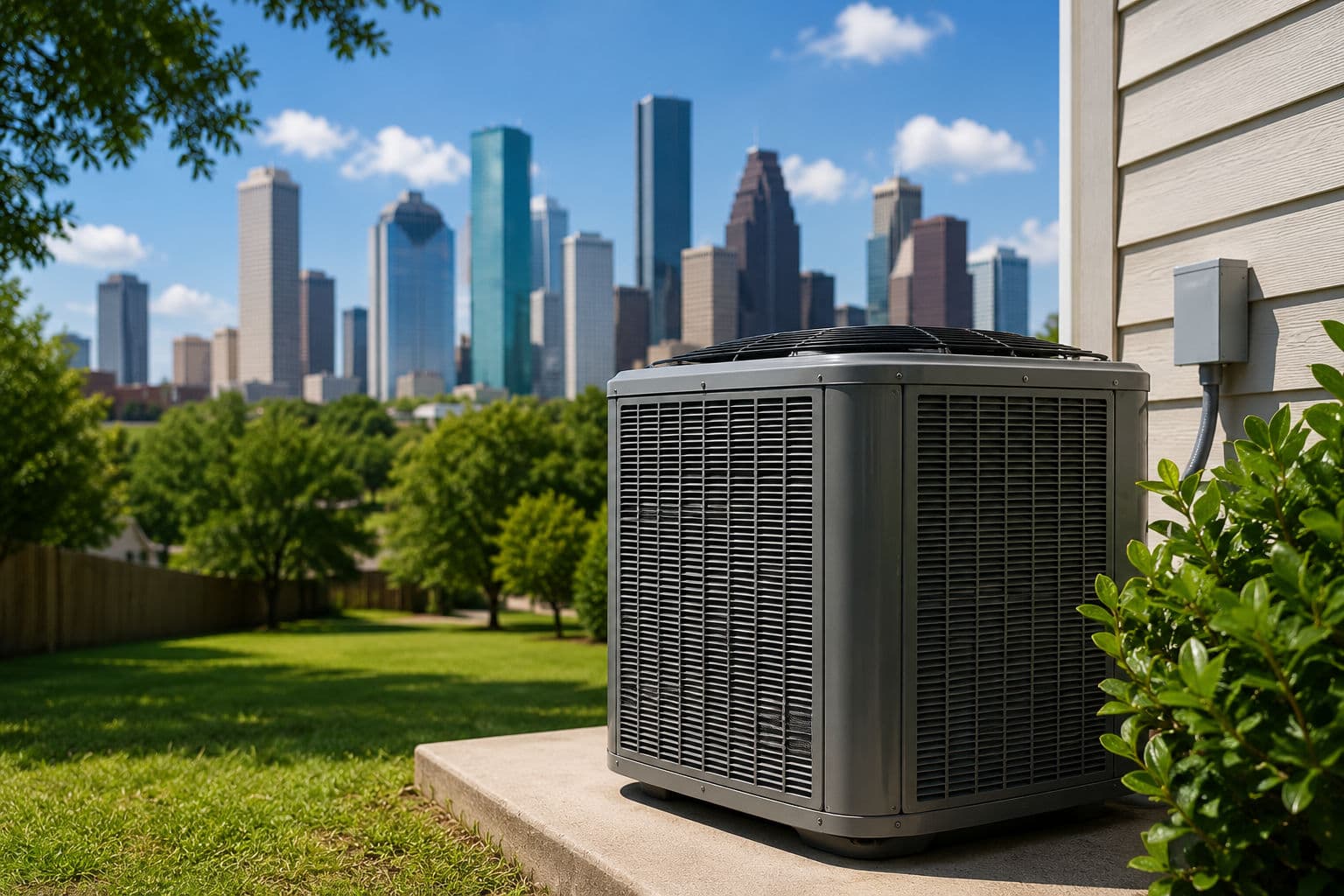
If your electric bill has climbed steadily since June and you're bracing for it to climb further through August, you're not imagining it. Houston's summer cooling season runs roughly six months out of the year, and air conditioning typically accounts for 40 to 60 percent of a Houston home's total electric bill during peak season. Understanding what actually drives that cost — and what's within your control — can help you separate a normal summer bill from a sign that something with your system needs attention.
WHAT DETERMINES YOUR AC'S SUMMER ENERGY COST
A few factors do most of the work in determining how much you'll spend running your AC through a Houston summer.
System efficiency rating. A system's SEER rating measures how much cooling it produces per unit of electricity. Older systems installed before 2006 often run as low as 8 to 10 SEER. Current minimum efficiency standards in Texas start at 14 SEER, and high-efficiency systems reach 20 SEER or higher. The difference between a 10 SEER system and a 16 SEER system can mean 30 to 40 percent lower cooling costs for the same size home.
System age and condition. A well-maintained five-year-old system runs close to its rated efficiency. A neglected ten-year-old system with dirty coils, low refrigerant, or worn components can lose 20 percent or more of its original efficiency, meaning it costs significantly more to deliver the same cooling.
Home size and insulation. Larger homes and homes with poor attic insulation require more cooling capacity to maintain the same temperature, which translates directly into higher run time and higher cost.
Thermostat setting and habits. Every degree lower than 78°F during occupied hours increases cooling costs by roughly 3 to 5 percent. A thermostat left at 72°F all summer costs meaningfully more than one set to 78°F with smart scheduling.
Humidity levels. This is the factor most Houston homeowners underestimate. Your AC isn't just cooling air — it's removing moisture from it. Houston's humidity means your system works significantly harder per degree of cooling than the same system would in a drier climate, which is part of why Houston AC bills tend to run higher than equivalent-sized homes in places like Phoenix or Denver, even when temperatures are similar.
WHAT A TYPICAL HOUSTON HOME SPENDS COOLING IN SUMMER
For a typical 2,000 to 2,500 square foot Houston home with a mid-efficiency system in reasonable condition, summer electric bills with AC running daily typically range from $250 to $450 per month during peak months (July and August), with lower costs in the shoulder months of May, June, and September. Homes with older, less efficient systems, poor insulation, or oversized equipment that's short cycling can see bills well above that range.
If your bill is significantly higher than this without a clear explanation — like a longer heat wave or more people home during the day — it's worth having the system checked rather than assuming it's just "Houston being Houston."
SIGNS YOUR AC IS COSTING YOU MORE THAN IT SHOULD
A few patterns point to a system that's costing more than necessary to run:
Your bill has climbed but your usage habits haven't changed. This often points to declining refrigerant levels, dirty coils, or a failing component making the system work harder for the same result.
The system runs constantly without ever fully cooling the home. This is a sign of short cycling, an undersized or oversized system, or a capacity problem — and it means you're paying for runtime that isn't producing comfort.
Your home feels humid even when the temperature is right. This usually means the system isn't running long enough per cycle to remove adequate moisture, which often points to oversizing — a surprisingly common installation mistake in Houston homes.
Your system is more than ten years old and hasn't had a tune-up this year. Efficiency naturally declines with age and neglect, and a system that hasn't been serviced is very likely running well below its rated performance.
HOW TO LOWER YOUR HOUSTON AC COSTS WITHOUT SACRIFICING COMFORT
A few of the most effective, practical steps include setting your thermostat to 78°F when home and using a programmable or smart thermostat to adjust automatically when you're away, replacing your air filter every 30 to 60 days during peak season since a clogged filter forces the system to work harder, scheduling annual maintenance before summer begins to catch efficiency losses before they show up on your bill, sealing duct leaks that allow conditioned air to escape into the attic before reaching your living space, and considering a whole-home dehumidifier if your home feels humid even with the AC running, since a dehumidifier handles moisture removal more efficiently than the AC cycle alone.
For homeowners with systems approaching ten to fifteen years of age, it's also worth running the numbers on replacement. A new high-efficiency system costs more upfront but can pay back a meaningful portion of that cost in lower summer energy bills over its service life, particularly in a climate that runs the system as hard as Houston does.
If your summer energy bills feel out of line with what your home should be costing to cool, Multipoint AC & Heating can run a full system diagnostic, check your equipment's actual operating efficiency, and give you a straightforward answer on whether the issue is your system, your home, or just the realities of a Houston summer.