How Houston's Humidity Affects Your HVAC System and What to Do About It
Learn how Houston's humidity impacts your HVAC system and find effective strategies to maintain comfort and system longevity.
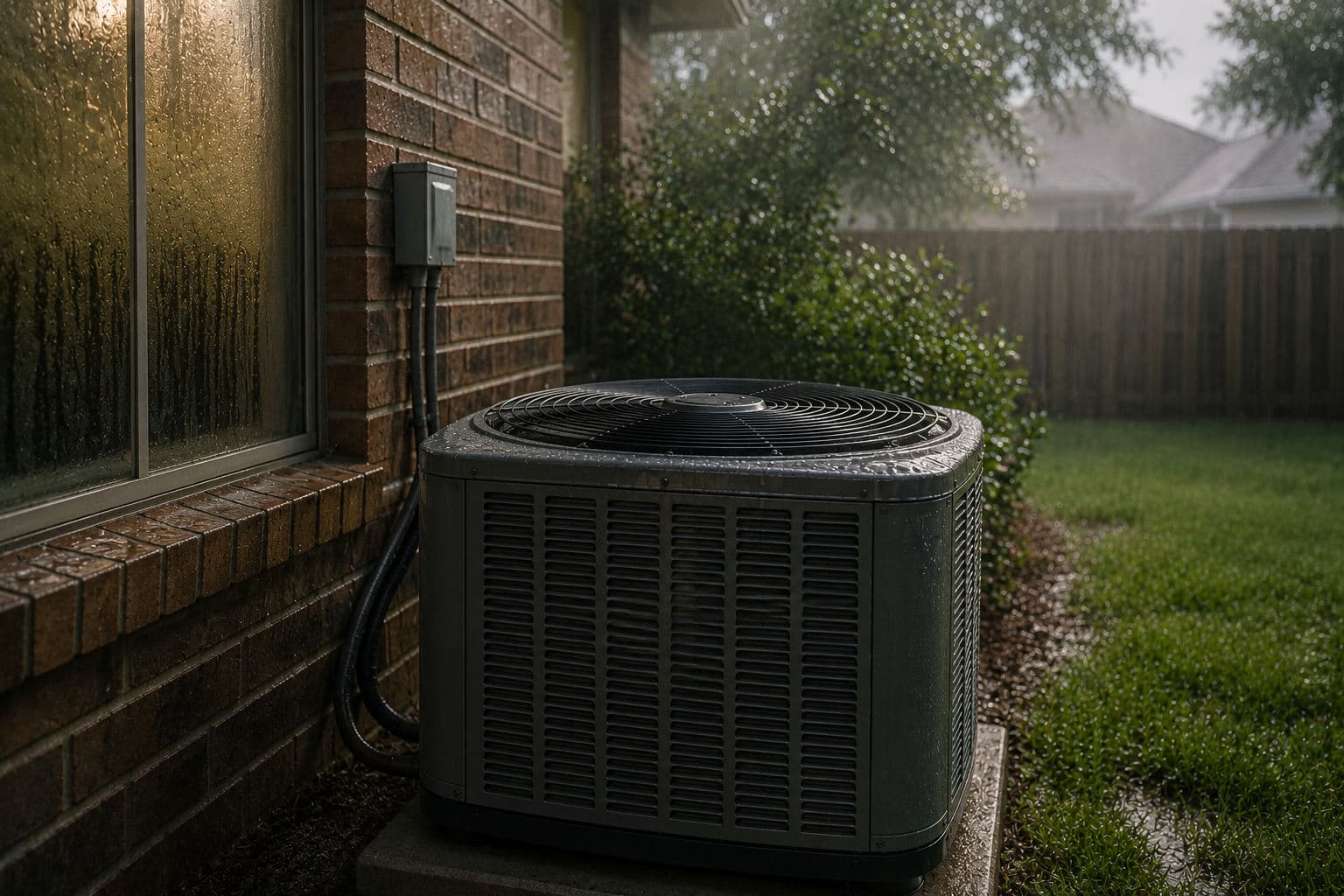
Temperature gets most of the attention when Houston homeowners talk about their air conditioning. The heat is obvious, measurable, and the primary thing people think about when they consider what their AC system is working against. But in Houston's climate, humidity is just as significant a factor in how hard your system works, how long its components last, and whether your home actually feels comfortable — and it's the factor that's most often overlooked until something goes wrong.
Understanding how Houston's Gulf humidity affects your HVAC system explains a lot about why systems here wear out faster than in other climates, why certain problems are more common in Houston than elsewhere, and what you can do to manage the moisture dimension of your home's climate alongside the temperature dimension.
WHAT HOUSTON'S HUMIDITY ACTUALLY MEANS FOR YOUR AC SYSTEM
Relative humidity in the Greater Houston area stays elevated for the vast majority of the year. During peak summer months — June through September — outdoor relative humidity regularly ranges from 70 to 90 percent during morning and evening hours and stays above 60 percent even during the hottest part of the afternoon when evaporation is highest. During the shoulder months of spring and fall, humidity remains elevated even as temperatures moderate, which creates a situation where outdoor conditions feel uncomfortable at temperatures that would be perfectly pleasant in a drier climate.
Your air conditioning system manages both temperature and humidity inside the home, but it does so as a byproduct of the cooling process rather than through a dedicated humidity control mechanism. As warm, humid air passes over the cold evaporator coil, moisture in the air condenses on the coil surface — the same way a cold glass sweats on a humid day — and drains out through the condensate system. This moisture removal is what makes a properly functioning AC system feel comfortable in Houston, not just cooler.
The volume of moisture a Houston AC system removes from the air is substantial. On a humid Houston summer day, a properly sized residential AC system can remove several gallons of water from the home's air over the course of a day. That's gallons of water moving through your condensate system, collecting on your evaporator coil, and draining through the condensate line every single day the system runs — which in Houston means for most of the year.
HOW HUMIDITY AFFECTS INDIVIDUAL SYSTEM COMPONENTS
Evaporator coil. The evaporator coil operates in the most moisture-intensive environment of any component in the system. It's continuously wet during operation as condensation forms on its surface, and in Houston's humidity levels it's wet more hours per year than a comparable coil in a drier climate would be. This persistent moisture environment promotes biological growth — mold, mildew, and bacteria — on the coil surface. The biological growth forms an insulating layer that reduces the coil's heat and moisture transfer efficiency, makes the system less effective at dehumidifying the air, and produces the musty odors that Houston homeowners commonly notice from their vents.
Annual professional coil cleaning removes this biological material and restores heat transfer efficiency. UV germicidal systems installed at the air handler address biological growth on an ongoing basis between maintenance visits. In Houston's humidity, both are more valuable than they would be in a drier climate.
Condensate drain system. The condensate drain line, drain pan, and associated components handle the water removed from the air by the evaporator coil. In a climate where the AC removes several gallons of water per day for eight or more months per year, these components handle an enormous cumulative volume of water over the system's life. Algae and biological growth thrive in the consistently wet environment of a condensate drain line, and clogs develop faster in Houston's humidity than in drier climates.
A clogged condensate drain overflows the drain pan and sends water into the surrounding structure — ceiling tiles, drywall, insulation, and flooring can all be damaged before the overflow is noticed. We inspect and clear the condensate drain on every maintenance visit, and for Houston homes we treat this as one of the highest-priority maintenance items rather than a secondary check.
Electrical components in the outdoor unit. The outdoor condenser unit is exposed to Houston's ambient humidity year-round. Electrical components in the outdoor cabinet — capacitors, contactors, wiring connections, and control boards on systems with outdoor electronics — are exposed to a persistent moisture environment that accelerates corrosion on terminals, contacts, and metal surfaces. This corrosion contributes to electrical component failure beyond the normal degradation from heat and electrical load that affects all systems.
In communities with additional moisture influence beyond standard Houston ambient humidity — waterway-adjacent areas like Kingwood, Atascocita, Baytown, Crosby, Highlands, and communities along the Galveston Bay corridor — this corrosive moisture environment on outdoor components is more significant and requires closer attention during maintenance visits.
Ductwork and insulation. Ductwork in Houston homes operates in attic spaces that cycle between extremely hot and dry during the peak of the day and somewhat cooler and more humid during evening and overnight hours. This thermal cycling, combined with the humidity environment, causes duct insulation to degrade faster than in more moderate climates. Flexible duct outer jackets become brittle and develop small cracks. Insulation that has absorbed moisture loses thermal performance. And biological growth can establish itself inside ductwork that has experienced moisture infiltration — either from leaky duct connections that allow humid attic air into the duct interior or from condensation that forms when the duct surface temperature drops below the dew point of the surrounding attic air.
The blower motor and air handler cabinet. Components inside the air handler cabinet — blower motor, motor capacitor, control board — operate in an environment where condensation from the evaporator coil keeps the cabinet interior at elevated humidity even when outdoor conditions are dry. In Houston's climate, where the AC runs for most of the year, this is a nearly constant humidity exposure for the blower motor and associated components. Motor windings, electrical connections, and control board components all experience corrosion in this environment at a rate that contributes to earlier-than-expected component failure compared to systems in drier climates.
HOW HUMIDITY AFFECTS INDOOR COMFORT AND WHAT FEELS WRONG
High indoor humidity is responsible for many of the comfort complaints that Houston homeowners experience even when their AC system is technically functioning. The relationship between temperature and humidity in determining perceived comfort is well established — the heat index that Houston residents are familiar with from weather forecasts is exactly this relationship applied to outdoor conditions, and the same physics apply indoors.
A home at 76 degrees and 65 percent relative humidity feels significantly more uncomfortable than a home at 76 degrees and 45 percent relative humidity. The higher humidity environment inhibits the evaporation of perspiration from the skin, which is the body's primary cooling mechanism, making the air feel warmer and more oppressive than the temperature alone would suggest. This is why Houston homeowners in homes with humidity problems often describe their home as never feeling cool enough even when the thermostat is at a reasonable setting — the temperature may be right, but the humidity is preventing the body from perceiving that temperature as comfortable.
The causes of elevated indoor humidity despite a functioning AC system include an oversized system that short cycles and doesn't run long enough per cycle to remove adequate moisture, a system losing refrigerant capacity and therefore losing dehumidification efficiency, a system that's been shut off for periods that allow indoor humidity to climb, and the simple reality that in some Houston environments the ambient moisture load exceeds what the AC cycle alone can consistently manage.
HOW TO MANAGE HOUSTON'S HUMIDITY MORE EFFECTIVELY
Maintain your AC system consistently. A well-maintained system with clean coils, correct refrigerant charge, and clear condensate drainage removes moisture from the air at its designed capacity. A neglected system removes less moisture even when it appears to be functioning. Annual maintenance is the foundation of humidity management in a Houston home.
Ensure your system is correctly sized. An oversized system is the most common cause of persistent indoor humidity problems in Houston. If your home has always felt humid despite a functioning AC, and particularly if the system short cycles frequently, having the system's sizing evaluated relative to a proper load calculation for your home is worth doing.
Consider a whole-home dehumidifier. For Houston homeowners whose humidity problems persist despite a well-maintained, correctly sized AC system, a whole-home dehumidifier is the most effective additional measure. It operates independently of the AC cycle, maintains indoor relative humidity within a controlled range at all times, and addresses the moisture load that the AC system alone can't consistently manage in Houston's climate — particularly during shoulder seasons, evenings, and mild-weather periods when the AC runs infrequently.
Address duct leaks. Leaky return ducts that pull humid attic air into the system's airstream increase the indoor humidity load the AC has to manage. Sealing duct leaks reduces the volume of outdoor humidity entering the home through the HVAC system and improves both comfort and energy efficiency simultaneously.
Use exhaust fans consistently. Cooking, showering, and other moisture-generating activities inside the home add to the indoor humidity load. Using kitchen and bathroom exhaust fans during and after these activities removes moisture-laden air from the home before it distributes through the living space and adds to what the AC system has to manage.
Keep interior doors open during the day. Closed interior doors prevent conditioned air from circulating through the home and can cause humidity to accumulate in areas that the supply air isn't reaching effectively. Open interior doors improve air circulation and help the system manage humidity more evenly throughout the home.
CHECK HUMIDITY LEVELS IN YOUR HOME
A basic hygrometer — an inexpensive device available at hardware stores — measures indoor relative humidity and gives you an objective reading rather than relying on how the air feels. Indoor relative humidity between 40 and 50 percent is the generally recommended range for comfort and to limit conditions favorable to biological growth. Above 60 percent, mold growth risk increases meaningfully. Above 70 percent, biological growth in building materials and ductwork can develop relatively quickly in Houston's warm indoor temperatures.
If your home is consistently reading above 55 to 60 percent relative humidity despite the AC running normally, that's the objective signal that humidity management in your home deserves specific attention rather than a thermostat adjustment.
Multipoint AC & Heating provides AC maintenance, repair, installation, and whole-home dehumidification solutions throughout Greater Houston, including Harris County, Fort Bend County, Montgomery County, and Austin County. Contact us to discuss humidity management options for your home.