- Home
- Blog
- Why Houston Homeowners Should Care About Their Home's Duct Design — Not Just Their AC Equipment
Why Houston Homeowners Should Care About Their Home's Duct Design — Not Just Their AC Equipment
Learn why your home's duct design impacts energy efficiency and comfort. Discover common problems and solutions for Houston homeowners.
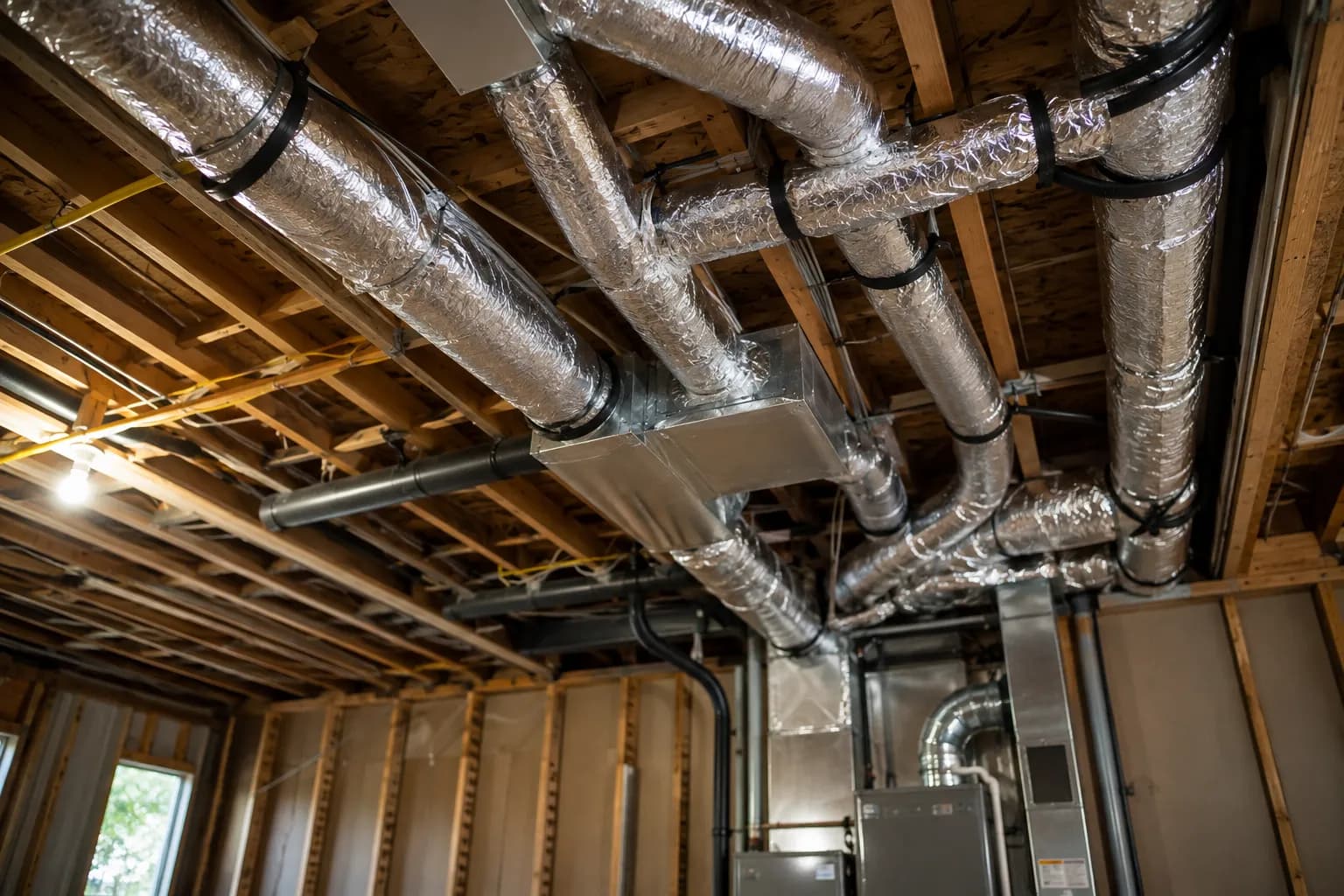
When Houston homeowners think about their HVAC system, they think about the equipment — the outdoor unit, the air handler, the thermostat. The duct system that connects all of that equipment to the living space is an afterthought at best and invisible at worst. Most homeowners have never seen their ductwork, don't know what condition it's in, and have never had it evaluated by a qualified technician.
That gap matters because the duct system determines what fraction of the AC system's output actually reaches the living space in a useful form. A system with an efficient, well-designed, properly sealed duct system delivers most of what it produces to the rooms it's supposed to serve. A system with a poorly designed, leaky, or inadequately balanced duct system may be delivering considerably less — with the difference lost to the attic, distributed unevenly across the home, or simply never reaching the rooms with the highest heat load.
In Houston's climate, where the AC runs for eight or more months per year and where every percentage point of system efficiency translates into real annual energy cost, the duct system deserves the same level of attention as the equipment it serves. Here's what most Houston homeowners don't know about their duct design and why it matters.
THE DUCT SYSTEM'S JOB AND WHY IT'S MORE COMPLEX THAN IT LOOKS
The duct system has two sides — supply and return — and both matter for how the system performs.
The supply side distributes conditioned air from the air handler to each room in the home through a network of ducts that branch from a central trunk or plenum. Each room receives supply air through one or more supply registers, and the volume of air each room receives should be proportional to that room's cooling and heating load. A small interior room with no windows needs less supply air than a large room with west-facing windows in Houston's afternoon sun. Getting this distribution right — delivering the right volume of air to each space — is the fundamental challenge of supply duct design.
The return side pulls air back from the living space to the air handler for reconditioning and recirculation. Adequate return air is essential for maintaining the airflow the system needs to function correctly — without sufficient return air, the air handler creates negative pressure in the living space, the system can't move the volume of air it's designed to move, and a cascade of performance problems follows.
The balance between supply and return — between the air being pushed into each room and the air being pulled back out of the home overall — determines whether individual rooms and the home as a whole are at the correct pressure relative to each other and relative to the outdoors. Pressure imbalances in a Houston home create conditions where outdoor humid air is drawn in through every gap in the building envelope to equalize pressure — increasing both the cooling load and the indoor humidity load in ways that make the AC work harder without any change to the equipment.
This supply-return balance, and the sizing and routing decisions that determine it, is duct design. And it's something that's largely invisible to homeowners, often underappreciated by contractors who focus on equipment rather than distribution, and frequently compromised in Houston's housing stock across a wide range of development eras.
WHAT POOR DUCT DESIGN LOOKS LIKE IN HOUSTON HOMES
Several duct design problems are common enough in Greater Houston that they represent a pattern rather than occasional exceptions.
Undersized return air. This is perhaps the most pervasive duct design problem in Houston residential construction. Many homes — particularly those built in the 1970s through 1990s when duct design practices were less rigorous — have return air systems that are undersized for the equipment they serve. A single central return grille pulling from one location in the home, serving a system that's designed to move 1,200 cubic feet per minute of air, may be physically incapable of pulling that volume of air back to the air handler. The system compensates by creating negative pressure in the home, which pulls outdoor air through every available infiltration pathway.
In Houston's summer, outdoor air that's being pulled into the home through infiltration pathways is hot and humid — the opposite of what the AC is working to produce. A home with undersized return air is simultaneously making the system work harder by restricting its airflow and adding to the heat and humidity load by drawing in outdoor air to make up the return air deficit.
The symptom of undersized return air includes a home that never quite feels as comfortable as it should despite the system running normally, humidity levels that seem elevated relative to what the system should be managing, doors that slam or are hard to close when the system is running — a sign of pressure differentials between rooms — and a slight whistling sound from the return grille when the system runs at full speed.
Supply duct runs that are too long or too restrictive. Every foot of duct run between the air handler and a supply register adds resistance to airflow and allows some heat transfer to occur as the conditioned air travels through the duct. In Houston's attic environment, where duct temperatures on the exterior of the insulation can reach extreme levels, a long duct run through the attic loses more of the conditioning it's carrying than a short run does. Rooms that are at the end of long duct runs — bedrooms at the far end of the home from the air handler, additions that were connected to the existing duct system through extended runs — consistently receive less supply air and less effective cooling than rooms closer to the air handler.
Unbalanced supply distribution. The volume of air each room receives should match that room's load. When it doesn't — when a large sun-exposed room receives the same supply air as a small interior room, or when upper-floor rooms receive less supply than their greater heat load warrants — the result is comfort that varies significantly between rooms regardless of what the thermostat reads. This is a design problem, not an equipment problem, and it's not resolved by replacing the equipment.
Ductwork that was designed for a different system. When HVAC equipment is replaced — which in Houston's established neighborhoods has happened at least once for many homes — the replacement equipment may have different airflow requirements than what the duct system was designed for. A system replacement that increases or decreases the equipment's airflow output without evaluating whether the existing ductwork can support that change may result in a correctly specified system performing poorly because it's working through a duct system that wasn't sized for it.
Ductwork modified without proper design. Additions, renovations, and remodels in Houston homes frequently involve modifications to the duct system — extending existing runs to serve a new room, connecting an addition to the existing distribution, or rerouting ducts around new construction elements. These modifications are sometimes done by contractors who aren't HVAC specialists and who don't evaluate how the modification affects the overall duct system balance. A duct extension that seems straightforward — connect the new room to the existing trunk — can unbalance the whole system if it changes the effective resistance of the supply network in a way that starves other rooms of their supply air.
RETURN AIR IN INDIVIDUAL ROOMS — A HOUSTON-SPECIFIC CONVERSATION
The question of whether individual rooms need dedicated return air paths or whether a central return system is adequate is one that affects comfort in specific room configurations that are common in Houston's residential market.
In a home where all interior doors are typically open during the day, a central return system can pull air from throughout the home relatively effectively — air circulates from supply registers in individual rooms, through the open doorways, to the central return location. This works because the open doors provide a low-resistance path for air to flow from each room back to the return.
When interior doors are closed — during sleep, during remote work in a home office, or when rooms are occupied for extended periods with the door closed — the central return can no longer pull air effectively from the room with the closed door. The system pushes supply air into the closed room, pressure builds in that room because the air has nowhere to go, and the room becomes slightly pressurized relative to the rest of the home. This pressurization causes air to leak out of the room through every available pathway — under the door, through electrical outlets, through gaps in the building envelope — rather than returning through the duct system.
The result for a Houston home is that rooms used with closed doors — bedrooms at night, home offices during the day — are simultaneously less comfortable and contributing to the infiltration problem. The slight pressurization in the closed room pushes conditioned air out of the home rather than returning it through the duct system, and the rest of the home develops slight negative pressure that pulls outdoor air in to compensate.
Solutions for this problem include installing transfer grilles or jump ducts — short duct connections between closed rooms and adjacent spaces or hallways that allow air to return from closed rooms without requiring the door to be open — or installing dedicated return air paths from the rooms that are commonly used with closed doors. These are duct design solutions that don't require equipment changes and that can meaningfully improve both comfort and efficiency in Houston homes where this pattern exists.
HOW DUCT DESIGN CONNECTS TO HOUSTON'S HUMIDITY MANAGEMENT CHALLENGE
The connection between duct design and indoor humidity management in Houston is tighter than most homeowners realize.
An AC system removes humidity from the air as a byproduct of the cooling process — moisture condenses on the cold evaporator coil and drains through the condensate system. The rate of humidity removal depends on how much air passes across the evaporator coil per unit of time, how cold the coil surface is, and how long the system runs per cycle.
Duct design problems that restrict total system airflow — undersized return air being the primary example — reduce the volume of air crossing the evaporator coil per minute of operation. Less airflow means less humidity removal per hour of runtime. A system that's supposed to move 1,200 cubic feet per minute across the evaporator coil but is only moving 900 cubic feet per minute because of return air restriction is removing significantly less moisture from the home's air than it should be for the number of hours it's running.
The outdoor air infiltration that results from the negative pressure created by undersized return air adds directly to the indoor humidity load — every cubic foot of outdoor Houston air that enters the home through infiltration is air that the AC has to both cool and dehumidify before it can be considered conditioned.
The combination of reduced dehumidification capacity from restricted airflow and increased humidity load from infiltration explains why homes with poor duct design often feel more humid than they should despite the AC running — and why addressing duct design problems often improves perceived comfort more than equipment changes do.
HOW TO KNOW IF YOUR DUCT SYSTEM HAS DESIGN PROBLEMS
Several observable conditions in a Houston home point toward duct design issues rather than or in addition to equipment problems.
Consistent room-to-room temperature variation that doesn't improve when the system runs longer. If specific rooms are always harder to cool or heat than others regardless of how long the system runs, and the variation doesn't change with outdoor conditions, the cause is more likely duct distribution than equipment capacity.
Doors that move, slam, or feel pressurized when the system is running. Any perceptible door movement from the HVAC system operating is a sign of pressure differentials between rooms that indicate a supply-return imbalance.
A home that always feels more humid than the thermostat temperature would suggest, particularly after the AC has been running for several hours. This can indicate both a system sizing issue and a duct problem — the two often coexist and compound each other's effects.
Supply registers that produce noticeably different airflow volumes despite being similar in size and supposed to serve rooms with similar loads. You can roughly evaluate this by holding your hand near different supply registers with the system running — dramatic differences in the airflow you feel at different registers in similar rooms suggest the duct distribution isn't balanced.
A home that was comfortable before and is now less comfortable following a renovation, addition, or HVAC system replacement without duct evaluation. If comfort complaints appeared or worsened following a specific change to the home, that change may have introduced a duct design problem.
WHAT DUCT DESIGN EVALUATION AND IMPROVEMENT INVOLVES
Evaluating duct design in an existing Houston home begins with a physical assessment of the duct system — documenting what's there, measuring supply air volumes at each register, measuring return air capacity, and comparing the actual distribution to what the home's load profile requires.
Supply air measurement at each register uses a flow hood or anemometer to measure the actual cubic feet per minute of air the register is delivering. Comparing this to the calculated supply requirement for that room identifies where the distribution is oversupplied and undersupplied.
Return air measurement evaluates whether the return system has adequate capacity for the air handler it serves. A return system that's undersized for the system shows up as elevated static pressure on the return side — measurable with appropriate equipment and compared against the manufacturer's specification for the system.
Duct leakage testing — blower door or duct pressurization testing — quantifies how much supply air is being lost to the attic before reaching the living space. Results are expressed as a percentage of system airflow, and the test identifies both that a leakage problem exists and approximately where in the duct system the leakage is occurring.
Based on these measurements, a qualified technician can identify whether the duct system's problems are design-related — wrong sizes, wrong distribution, inadequate return — or condition-related — leakage, deterioration, blockage — and recommend appropriate solutions. Design problems require duct modifications, additions, or redesign. Condition problems require repair and sealing.
The solutions for common duct design problems in Houston homes include adding dedicated return air paths or transfer grilles for rooms used with closed doors, resizing undersized trunk ducts or adding additional supply branches to serve undersupplied areas, balancing supply distribution through damper adjustment or duct modification, and adding or relocating return grilles to improve return air access from different areas of the home.
These aren't small projects in every case, but they're targeted interventions that address specific, identified problems rather than shotgun approaches. And in Houston's climate, where the duct system is carrying conditioned air through a 140-degree attic for eight or more months per year, getting that distribution right delivers benefits that persist for the life of the system.
Multipoint AC & Heating provides duct evaluation, duct sealing, duct repair, and full duct system assessment throughout Greater Houston, including Harris County, Fort Bend County, Montgomery County, and Austin County. If comfort complaints in your Houston home don't seem to be resolving with equipment maintenance and repair, the duct system is worth evaluating. Contact us to schedule a comprehensive assessment.