What Houston Homeowners Need to Know Before the First Cold Front of 2026
Get your HVAC systems ready now—avoid a heating crisis when Houston's first 2026 cold front hits. Schedule inspections and ensure smooth heating transitions.
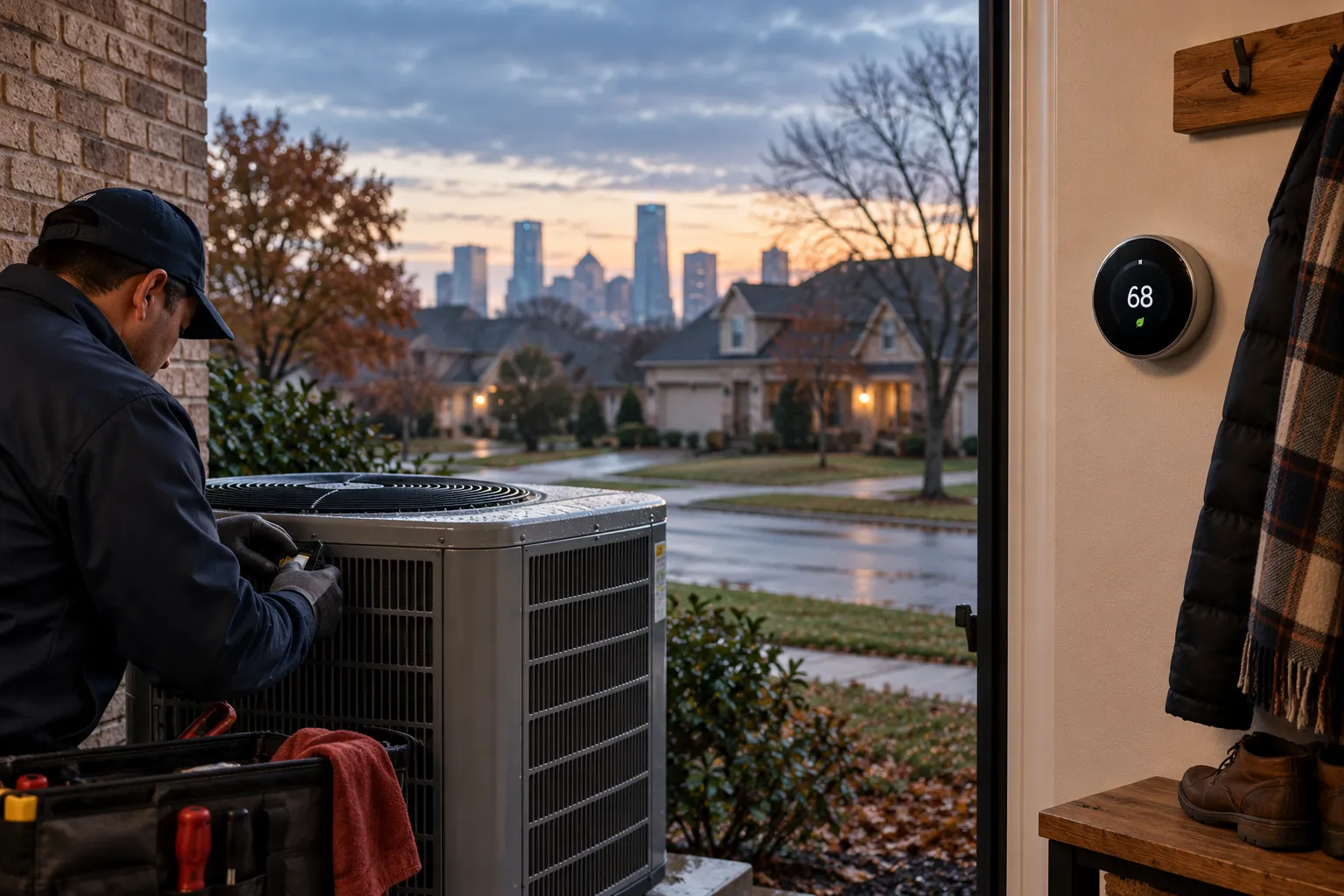
It's September, and if you've lived in Houston for more than a year you know what this time of year means. The calendar says fall is approaching. The weather hasn't fully committed yet — temperatures are still in the upper 80s and the AC is still running — but the first cold front of the 2026 fall season is out there somewhere in the forecast future, and in Houston it will arrive with the kind of abruptness that this climate is known for. One afternoon it's 90 degrees. The next morning it's 55 and dropping.
That transition is coming whether you're ready for it or not. The question is whether your heating system is ready for it — and the honest answer for many Houston households is that nobody knows, because nobody has checked.
HERE IS WHAT HAPPENS EVERY OCTOBER IN GREATER HOUSTON
The pattern repeats every year across Harris County, Fort Bend County, Montgomery County, and surrounding areas. The first significant cold front of the fall arrives — sometimes in early October, sometimes mid-October, occasionally as late as November — and a large percentage of Houston homeowners switch their thermostats from cool to heat for the first time since February or March. Many of those systems respond correctly. A meaningful percentage do not.
The ones that don't respond have something in common — a problem that developed during the seven to eight months the system sat idle while the AC ran continuously through the summer. Flame sensors that oxidized over the offseason. Ignitors that aged past their functional threshold during the months they weren't being used. Control board connections that corroded in Houston's persistent summer humidity. Blower motor capacitors that degraded during the long idle period. None of these problems produced any symptoms during the summer because the heating system wasn't running. All of them announce themselves the first time someone turns the thermostat to heat.
By the time that cold front arrives and those announcements are being made simultaneously across the metro, every HVAC company in Houston is fielding calls at the same time. Response times extend. Emergency rates apply. The furnace repair that would have been a scheduled morning appointment in September becomes a same-day emergency call in October — with all the scheduling pressure and premium pricing that entails.
The month between now and the first cold front is the window that changes that outcome. September 7th is the right day to start using it.
THE SPECIFIC HEATING SYSTEM RISKS IN HOUSTON'S CLIMATE
Houston's heating system vulnerability is specific to the idle season pattern that the climate creates. Unlike furnaces in Chicago or Denver that run continuously through the winter and develop problems gradually under active use, Houston furnaces sit completely dormant for the better part of a year. That dormancy in Houston's humidity environment creates conditions that don't exist in drier or colder climates.
The flame sensor is the most common first-cold-front failure in Houston. The flame sensor is a thin metal rod that the furnace's control board uses to verify that the burner has lit. When the furnace attempts to start, gas opens, the ignitor fires, and the burner lights — but the control board doesn't accept that the flame is present unless the flame sensor generates the specific electrical signal that indicates flame contact. A flame sensor that's been sitting in a humid Houston environment for seven months accumulates oxidation on its surface that prevents it from generating a clean signal. The furnace lights, runs for two to four seconds, and shuts off on a safety fault — because the oxidized flame sensor can't confirm the flame is there. This cycle repeats two or three times and the furnace goes into lockout.
This is one of the most straightforward furnace repairs — the flame sensor is cleaned or replaced and the furnace operates normally — but it's also one of the most common causes of a household discovering on a cold October morning that the furnace isn't working. A fall inspection in September catches it before that morning arrives.
The ignitor is the second most common vulnerability. Electronic ignitors are ceramic components that heat to ignition temperature when the furnace attempts to start. They're fragile and have a defined service life — typically three to five years in normal use. An ignitor that's been in service for four years in a Houston home has run through four summer idle periods, four fall restart cycles, and four winter heating seasons. In Houston's humidity environment, the thermal cycling combined with ambient moisture exposure can age an ignitor faster than the same component would age in a drier climate. A fall inspection that catches an ignitor reading at the edge of its functional range — or that identifies one that's already failed — prevents the scenario where the ignitor fails on the first cold night rather than during a scheduled service visit.
The heat exchanger deserves specific mention because it's the safety-critical component in the heating system. The heat exchanger separates combustion gases from the air circulating through the home. A crack or breach in the heat exchanger allows combustion byproducts — including carbon monoxide — to enter the home's supply airstream. In Houston's climate, where the heat exchanger is exposed to the humidity and thermal cycling of long idle periods, the corrosive conditions that develop during the offseason can accelerate heat exchanger deterioration beyond what age alone would produce. Annual inspection of the heat exchanger by a qualified technician is the way this condition is caught — it is not detectable by the homeowner without specialized equipment.
A carbon monoxide detector is not a substitute for heat exchanger inspection — it's a last-resort safety device that alerts you when CO has already entered the living space. The goal is heat exchanger inspection that catches problems before CO ever enters the home. Both the detector and the inspection are necessary, but they serve different functions.
Call to schedule the fall heating inspection now. Not this month, not when you get around to it — this week. HVAC company calendars for fall inspections in the Greater Houston area fill progressively through September and October. A call made today secures a date in late September or early October before that date is taken by someone who called yesterday. A call made in three weeks may find late September fully booked and early October filling quickly.
When you call, specifically request a heating system inspection rather than just a standard tune-up. Ask that the visit include heat exchanger inspection, flame sensor evaluation and cleaning, ignitor testing, gas pressure and burner operation verification, blower motor assessment for heating mode, flue and venting inspection, and safety control testing. These are the specific items that matter for a Houston furnace heading into its first cold front, and being specific about what you want ensures the visit covers them.
If you are in The Woodlands, Conroe, Shenandoah, Oak Ridge North, Willis, or any upper Montgomery County community — call today and ask for the earliest available appointment. Upper Montgomery County communities see the first meaningful cold fronts of the fall season earlier than Fort Bend County or inner Houston, and the gap between now and the first cold front that matters in your area is shorter than it is further south. An inspection in the third week of September in Conroe is well-timed. An inspection in the third week of October in Conroe may be coming after the first cold night.
Test your carbon monoxide detectors this week. Press the test button on every CO detector in your home. If the detector responds with an alarm, the alert circuitry is functional. If it doesn't respond or responds weakly, replace the detector before the heating season begins. CO detectors have a sensor lifespan of five to seven years — the date of manufacture is typically printed on the back of the unit. A detector manufactured in 2018 or earlier is at or past its sensor replacement threshold regardless of whether it responds to the test button, because the test button tests the alarm circuitry rather than the sensor's actual detection capability.
Locate your furnace or air handler and confirm access for the technician. If the heating system is in an attic, a utility closet that's become a storage space over the summer, or another location where access may be restricted, clearing the path now saves time during the service visit and ensures the technician can reach everything that needs to be inspected without improvising around obstacles.
THE HEAT PUMP CONSIDERATION FOR SEPTEMBER 7TH
Homes in Greater Houston with heat pump systems rather than gas furnaces have a slightly different fall preparation conversation than gas furnace homes, but the urgency is the same.
Heat pumps handle both cooling and heating from a single system, which means the components that serve the cooling season are the same ones that serve the heating season — the compressor, the refrigerant circuit, the blower, and the electrical components. A heat pump that had any issues during the 2026 cooling season — comfort complaints, higher than expected energy bills, unusual sounds — carries those issues directly into the heating season without the seasonal reset that a separate furnace would provide.
The reversing valve — the component that's specific to heat pumps and that switches the system between cooling and heating mode — is worth testing specifically before the first cold front arrives. A reversing valve that's been operating in cooling mode for six months without being switched to heating mode may be stiff or slow to respond when it's first called on. A reversing valve that fails to shift fully leaves the system locked in cooling mode when heating is needed — producing cold air from the vents during a cold front rather than heat.
Testing the heat pump in heating mode before the first cold front requires switching the thermostat to heat at a temperature above the current indoor temperature and confirming that the system produces warm air. On a mild September morning when the indoor temperature is in the mid to upper 70s, setting the thermostat to 80 degrees in heat mode allows the system to run a brief heating cycle that confirms the reversing valve is shifting correctly and the system is producing heat. This test takes fifteen minutes and provides specific confirmation that the heating function is working before it's urgently needed.
For heat pumps that are ten or more years old, the fall service visit should specifically include reversing valve assessment and defrost system testing alongside the standard component checks that apply to all HVAC systems.
WHAT THE FIRST COLD FRONT ACTUALLY LOOKS LIKE IN HOUSTON IN 2026
For context on why September preparation timing is specifically right, here's what the first significant cold front of the Houston fall season typically looks like in terms of its impact on HVAC demand.
A front that drops temperatures from the upper 80s to the upper 40s overnight — a 40-degree swing that is within the normal range for early October Houston cold fronts — produces an immediate spike in furnace start demand across the entire Greater Houston metro simultaneously. Harris County has approximately 1.8 million housing units. A cold front that triggers heating demand in a significant percentage of those units on the same night creates a service demand environment that no regional HVAC service infrastructure can fully satisfy in real time.
The households that experience heating failures on that night fall into two categories — those whose system had a problem that could have been caught with a fall inspection, and those whose system failed from a problem that the inspection wouldn't have prevented. The first category is entirely avoidable. The second category is the minority.
A fall inspection completed in September in a Houston household moves that household from potential first-category status to a known position — either the system is ready and the cold front is a non-event, or the inspection found something that was addressed before the cold front arrived. Either way, the household is not the one calling at 11pm on a cold October night competing for next-day service with thousands of other households in the same situation.
BEYOND THE FURNACE — THE WHOLE-HOME READINESS CHECK FOR SEPTEMBER 7TH
The fall heating system readiness check is the primary September 7th HVAC task, but a few related items are worth addressing at the same time.
Attic insulation assessment before the heating season. If the summer produced comfort complaints — upper floors that stayed too warm, energy bills that climbed year over year — September is the right time to evaluate whether attic insulation improvements should happen before next summer. An insulation contractor can assess the current insulation depth and condition, quote the cost of bringing it to current Houston climate zone recommendations, and complete the work during September when attic access is more comfortable than July and the improvement applies to both the remaining cooling weeks and the upcoming heating season.
Weatherstripping and air sealing check before the heating season. Cold fronts that drop temperatures dramatically in Houston also produce wind-driven infiltration of cold outdoor air through every gap in the building envelope. Weatherstripping on exterior doors that was adequate in Houston's mild shoulder season may show its limitations on a cold windy October night. Checking the condition of door weatherstripping and window seals before the first cold front ensures the heating system isn't fighting against avoidable air infiltration.
Programmable thermostat heating season programming. Smart thermostats that learned your summer cooling preferences and schedule should be allowed to start developing heating season data from the first heating calls of the fall. Manually programmed thermostats should be reviewed to confirm that heating season setpoints — lower temperatures during the day when the home is unoccupied, comfortable temperatures in the morning and evening — are programmed before the first cold front makes them relevant.
THE TAKEAWAY FOR SEPTEMBER 2026
Today is the right day to make the call. Not because anything is wrong — it probably isn't. Not because the cold front is imminent — it probably isn't yet for most of the Greater Houston area. But because the gap between today and the first cold front that matters is measured in weeks rather than months, because the actions required are simple and brief, and because the outcome of skipping them — discovering on a cold October night that the furnace that sat unused all summer isn't working — is entirely avoidable.
HVAC company phones are open. Scheduling calendars have late September and early October availability that will be reduced by next week and further reduced the week after. The heating inspection that takes an hour in late September is the same hour that prevents the emergency call, the premium rate, the cold household, and the furnace that fails its first test of the season because nobody looked at it before the test began.
Make the call today.
Multipoint AC & Heating provides fall heating inspections, furnace repair, heat pump service, and full HVAC maintenance throughout Greater Houston, including Harris County, Fort Bend County, Montgomery County, and Austin County. Contact us today at 832-963-3789 to schedule your fall heating inspection before the first cold front of 2026 arrives without warning.