What Every Houston Homeowner Should Know About Attic Insulation and AC Performance
Discover how proper attic insulation improves AC performance in Houston's heat. Save energy and enhance comfort today.
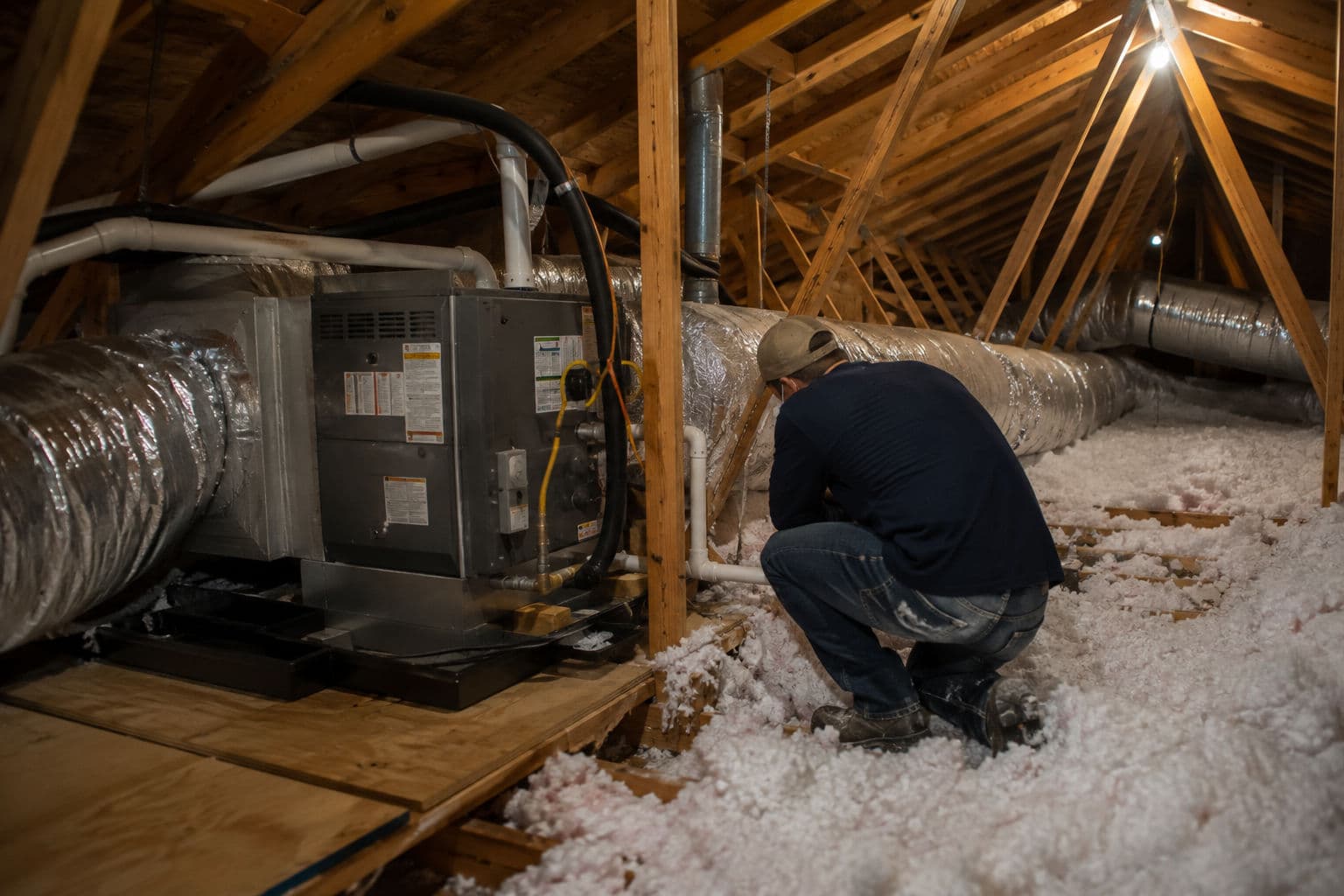
If you asked most Houston homeowners what affects their AC system's performance most, they'd say the equipment itself — the brand, the age, whether it's been maintained. What most don't fully appreciate is that the attic directly above their living space may be doing more to determine how hard the AC works, how much electricity it consumes, and how long the equipment lasts than any single equipment factor.
In Houston's summer, attic temperatures reach 130 to 150 degrees Fahrenheit on peak afternoons. Everything separating that environment from your living space — the insulation, the air sealing, the ductwork — determines how much of that heat load transfers into the home and becomes the AC system's problem. A home with adequate attic insulation and effective air sealing is fundamentally easier for the AC system to serve than one without it, and the difference shows up in energy bills, comfort, and equipment longevity in ways that are measurable and significant.
Here's what Houston homeowners need to understand about the attic-AC relationship and what to do about it.
WHY HOUSTON'S ATTIC IS DIFFERENT FROM MOST CITIES
Attic temperature extremes in Houston are more severe than in most other major American cities, and the duration of those extremes is longer. A city like Chicago has hot summer attics for three or four months. Houston has attics hitting 130 to 150 degrees for six or more months, and even in the shoulder months of spring and fall, attic temperatures on sunny days significantly exceed outdoor ambient temperatures.
The physics are straightforward. The dark roof surface absorbs solar radiation and heats up dramatically — in direct sun, a dark asphalt shingle roof can reach 160 to 180 degrees on a Houston summer afternoon. The attic beneath it traps that heat, which radiates downward through the ceiling into the living space. The insulation in the attic floor — between the attic and the living space — is the primary resistance to that heat transfer. More insulation means more resistance, which means less heat entering the home, which means the AC has less heat to remove.
But attic temperature in Houston also affects something that most homeowners don't consider — the ductwork. In most Houston homes, the supply and return ducts that carry conditioned air between the air handler and the living spaces run through the attic. Ducts in a 140-degree attic are exposed to an extreme thermal environment. Even well-insulated duct systems lose some of the cooling capacity of the air flowing through them to the surrounding attic heat. Duct systems with inadequate insulation or significant leakage lose substantially more — conditioned air that was 55 degrees when it left the air handler can reach 65 or 70 degrees by the time it exits the supply vent in a room, after traveling through inadequately insulated ductwork in a 140-degree attic.
WHAT THE CURRENT INSULATION STANDARDS RECOMMEND FOR HOUSTON
The Department of Energy and ASHRAE establish insulation recommendations by climate zone, and Houston's climate zone — Zone 2 — has among the highest attic insulation recommendations in the country. The current recommendation for Houston is R-38 to R-60 for attic insulation, with R-49 often cited as the practical target for most Houston homes balancing performance and cost.
R-value is the measure of insulation's resistance to heat flow. A higher R-value means more resistance to heat transfer. The difference between R-13 and R-38 in a Houston attic isn't incremental — it's the difference between an attic that barely slows the heat transfer from a 140-degree space and one that substantially resists it.
Many Houston homes built before the 1990s were insulated to standards that are significantly below the current recommendations — often R-11 to R-19 at the time of construction. Insulation that was installed thirty or forty years ago in homes in Katy, Sugar Land, Missouri City, Humble, Spring, Pearland, and other established Greater Houston communities has also settled and degraded over time. Settled fiberglass batts that have compressed to a fraction of their original thickness are providing a fraction of their original R-value. The actual thermal performance of the attic insulation in many older Houston homes is significantly lower than what was installed and substantially below current recommendations.
HOW INADEQUATE ATTIC INSULATION AFFECTS YOUR AC SYSTEM
The connection between attic insulation and AC performance runs through several mechanisms, each of which has a real cost.
Increased cooling load. Every BTU of heat that transfers through the inadequately insulated attic floor into the living space is a BTU the AC has to remove. In a Houston home with R-13 attic insulation when R-38 is recommended, the additional heat entering the home through the ceiling is substantial — hundreds of thousands of BTUs per day during peak summer. The AC system runs more hours to remove that heat, which increases energy consumption and accelerates component wear.
Higher peak demand. On the hottest Houston afternoons, when attic temperatures are at their maximum and the sun angle is creating the highest solar heat gain through the roof, the additional heat load from inadequate insulation is at its peak simultaneously with the highest outdoor temperatures the AC is already fighting. A system that was correctly sized for a well-insulated home may be effectively undersized for the same home with inadequate insulation — it runs continuously on the hottest days without fully reaching the set temperature because the heat load exceeds what it was designed to handle.
Duct performance degradation. Ducts in a 140-degree attic that are inadequately insulated or have leakage at connections are losing conditioning capacity before the air reaches the living space. This makes the system less efficient at delivering what it produces — the air handler is generating appropriately conditioned air, but it's arriving at the vents warmer and less dehumidified than it left. The solution to this problem isn't more cooling capacity from the equipment — it's better duct insulation and sealing.
Comfort inconsistency between rooms. Rooms directly below the attic — all upper-floor rooms in a two-story home, and rooms with significant roof exposure on single-story homes — experience the highest heat load from attic thermal transfer. With inadequate insulation, these rooms are consistently harder to cool than rooms with less attic exposure, producing the uneven comfort complaints that are common across Houston's housing stock.
Equipment runtime and longevity. A system running more hours per day to overcome inadequate attic insulation accumulates wear faster than a system serving a well-insulated home. More runtime means more compressor cycles, more operating hours on blower motors and capacitors, and faster depletion of the system's useful life. A Houston system in a poorly insulated home may need replacement years earlier than the same system in a well-insulated home — not because of anything wrong with the system, but because of how many more hours it had to run.
HOW TO ASSESS YOUR ATTIC INSULATION
A visual inspection of your attic provides a basic assessment that any homeowner can do. With a flashlight and appropriate caution about attic access — staying on the framing members rather than stepping on the drywall ceiling below — look at the depth of insulation on the attic floor.
Fiberglass batt insulation that's been in place for many years in a Houston attic often looks compressed, yellowed, and settled — a far cry from the fluffy material it was when installed. Blown-in fiberglass or cellulose insulation that's settled over time may appear thin relative to the depth that current recommendations call for.
A rough measurement of insulation depth provides context. A depth of three to four inches of settled fiberglass batts represents perhaps R-10 to R-13 of actual performance — significantly below the R-38 to R-49 that Houston's climate warrants. A depth of twelve to fourteen inches of blown-in cellulose insulation approaches the R-38 to R-49 range. If the attic joists are fully visible above the insulation surface — joists that are typically 3.5 inches for 2x4 framing or 5.5 inches for 2x6 framing — the insulation is definitely below current recommendations regardless of its original installation thickness.
A professional energy audit provides a more rigorous assessment that includes blower door testing to measure actual air infiltration, thermal imaging that can show heat transfer pathways through the building envelope, and a comprehensive analysis of the home's energy performance. For homeowners who want a data-driven basis for insulation and air sealing decisions, a professional energy audit is the appropriate starting point.
WHAT ATTIC IMPROVEMENT LOOKS LIKE AND WHAT IT COSTS
Adding insulation to bring an existing Houston attic up to current recommendations is one of the most cost-effective home improvements available in this climate. The process typically involves clearing any existing insulation that's severely degraded, air sealing the ceiling penetrations before adding insulation — this step is critical and often skipped — and then blowing in additional insulation to bring the total depth to the target level.
Air sealing the ceiling penetrations before adding insulation deserves specific emphasis because it addresses the air infiltration pathway that insulation alone doesn't stop. Every gap around a recessed light fixture, every opening where plumbing or electrical penetrations pass through the ceiling, every connection between wall cavities and the attic is a pathway for hot attic air to enter the living space directly — bypassing the insulation entirely. Sealing these openings with appropriate fire-rated caulk or foam before adding insulation overhead captures the full benefit of the insulation upgrade.
The cost of adding blown-in insulation to bring a Houston attic from inadequate levels to R-38 to R-49 typically ranges from $1,500 to $4,000 depending on the home's square footage, the current insulation condition, and whether significant air sealing work is needed alongside the insulation addition. For a typical 2,000 square foot Houston home, the investment is often in the $1,500 to $2,500 range for insulation addition with basic air sealing.
The energy savings from this investment in Houston's climate are meaningful. A home that reduces its cooling load by 15 to 25 percent through attic insulation improvement is reducing its cooling energy consumption by a corresponding amount — in a market where the AC runs for eight or more months per year. A Houston home spending $1,800 per year on cooling energy that achieves a 20 percent cooling load reduction saves $360 per year. The payback period on a $2,000 insulation investment at that savings rate is approximately five to six years — after which the savings continue for the remaining life of the insulation, which in a properly installed and protected Houston attic is measured in decades.
RADIANT BARRIER AS A COMPLEMENT TO INSULATION
A radiant barrier is a reflective material — typically a foil-faced product — installed on the underside of the roof decking or the top surface of the attic floor insulation. It works by reflecting the radiant heat that radiates from the hot roof decking before that heat can warm the attic air. Rather than absorbing the radiation and transferring it to the attic air like a conventional roof does, the radiant barrier reflects it back out through the roof.
Studies on radiant barrier performance in Houston's climate have shown attic temperature reductions of 20 to 30 degrees Fahrenheit on peak summer afternoons compared to identical attics without radiant barriers. This temperature reduction affects both the heat transfer through the ceiling into the living space and the operating environment for the ductwork running through the attic.
Radiant barrier and insulation work together rather than substituting for each other. A radiant barrier reduces the temperature of the attic environment, which reduces the heat transfer rate through whatever insulation is in place. Adequate insulation provides the actual thermal resistance that limits heat flow into the living space. A Houston attic with both a radiant barrier and adequate insulation is performing substantially better than one with either alone.
Radiant barrier installation typically costs $1,000 to $2,500 for a standard Houston home and can be done at the same time as insulation improvement or as a separate project. It's particularly effective in Houston's climate because the high solar radiation levels create the large roof surface temperature differentials that radiant barriers are designed to address.
HOW ATTIC IMPROVEMENT AFFECTS HVAC EQUIPMENT DECISIONS
The connection between attic condition and AC system performance has practical implications for HVAC decisions that go beyond simple energy savings.
Before replacing an AC system that isn't keeping up, evaluating attic insulation is worth doing. A system that's running continuously without reaching the set temperature on hot afternoons may be undersized for the actual heat load — but the actual heat load may be elevated by inadequate attic insulation rather than by the home's design load. Replacing the system with a larger one addresses the symptom while leaving the insulation problem in place, and the result is an oversized system that short cycles and manages humidity poorly while still running longer than it should on peak days because the attic heat load is still elevated. Addressing the attic first — or simultaneously — allows the replacement system to be correctly sized for the home's design load rather than the inflated load that inadequate insulation is producing.
When replacing an aging system, attic condition evaluation should be part of the process. A new system installed in a home with inadequate attic insulation will run more hours per day, accumulate wear faster, and reach the replacement decision point earlier than the same system in a well-insulated home. Addressing the attic at the same time as the system replacement is an investment in the new system's longevity alongside the immediate energy savings.
For homeowners in established Houston communities who are experiencing comfort problems — upper floors that stay too warm, rooms that never quite cool properly, systems that run constantly without fully satisfying the load — attic inspection is one of the first evaluation steps worth taking rather than immediately assuming the HVAC system needs to be replaced or upgraded.
Multipoint AC & Heating provides HVAC maintenance, repair, and installation throughout Greater Houston, including Harris County, Fort Bend County, Montgomery County, and Austin County. If your system is working harder than it should and you're not sure whether the issue is the equipment or the home envelope, contact us to schedule a diagnostic visit that looks at the full picture.