Why Does My House Feel Humid Even With the AC Running in Houston?
Houston homes often feel humid despite AC use. Learn why this happens and explore effective solutions like proper AC sizing and dehumidification.
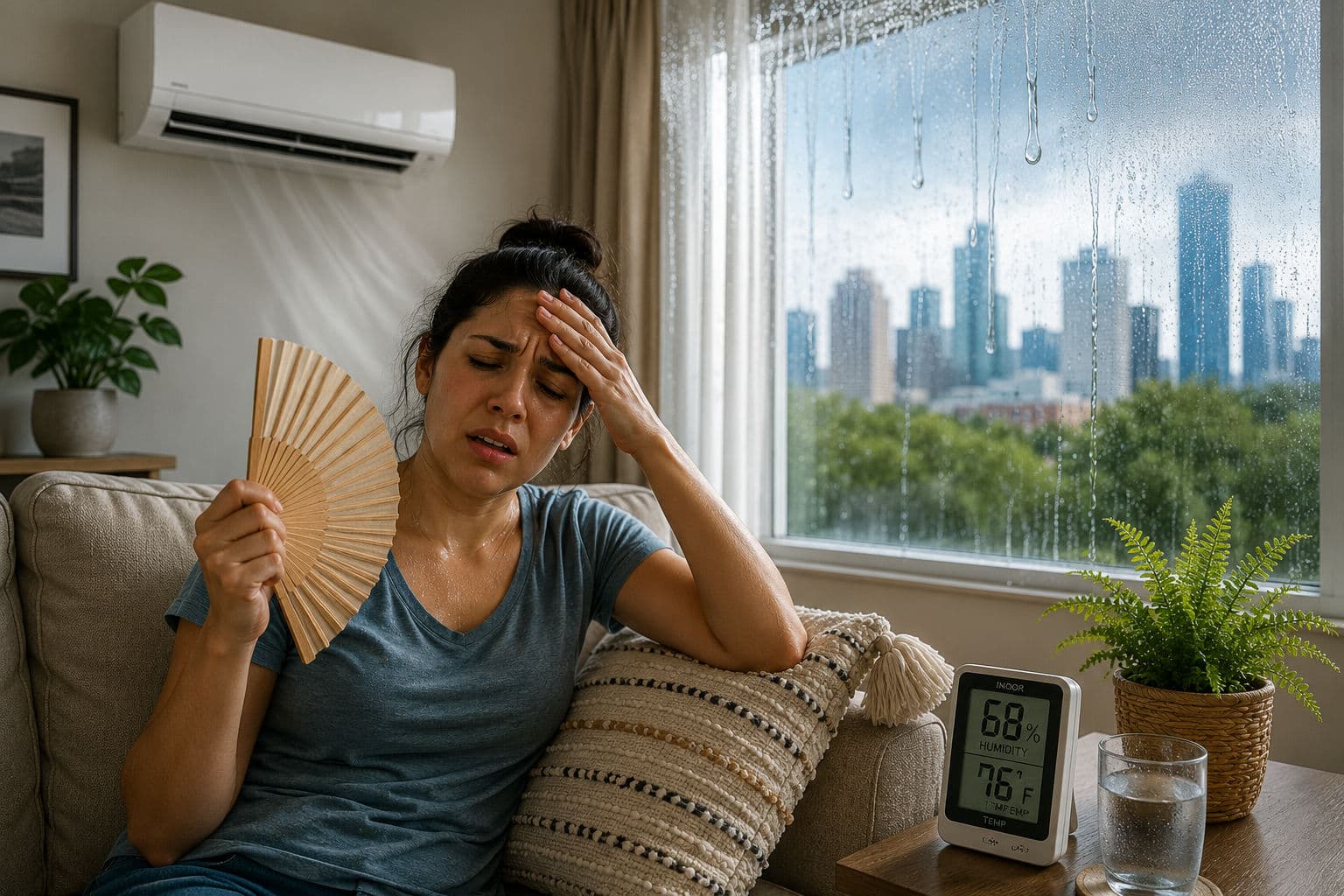
This is one of the most common comfort complaints we hear from Houston homeowners during summer. The AC is running, the thermostat reads 74 degrees, but the house still feels sticky, heavy, and uncomfortable. You turn the thermostat down another degree and it doesn't help. The temperature drops but the clammy feeling stays.
This isn't just a comfort problem. Elevated indoor humidity promotes mold growth in wall cavities, ductwork, and building materials, accelerates dust mite populations, and makes the home feel warmer than it actually is — which means most homeowners respond by lowering the thermostat further, driving up energy costs without actually fixing what's wrong.
Understanding why this happens is the first step to fixing it permanently.
YOUR AC REMOVES HUMIDITY AS A SIDE EFFECT, NOT ITS PRIMARY JOB
This is the most important thing to understand about air conditioning and humidity in Houston. Your AC system cools the air primarily by pulling warm air across a cold evaporator coil. As a side effect of that process, moisture in the air condenses on the coil and drains out through the condensate line. The system dehumidifies your home, but only while it's running and only as a byproduct of cooling.
The problem in Houston is that the humidity load — the amount of moisture your home needs to have removed from its air — is among the highest in the country for much of the year. An AC system that's working correctly removes humidity effectively during its cooling cycles. A system that has any of the issues below does not.
THE MOST COMMON REASONS YOUR HOME FEELS HUMID WITH THE AC ON
Your system is oversized for your home. This is the single most common cause of indoor humidity complaints in Houston, and it's a direct result of a mistake made at installation. An oversized AC system cools the air temperature in your home very quickly — faster than it removes moisture from the air. The system reaches the thermostat setpoint, shuts off, and the humidity stays elevated because the cooling cycle wasn't long enough to do the dehumidification work. Then the indoor temperature climbs again, the system kicks on, cools quickly again, shuts off again — and the pattern repeats. The house stays at the right temperature but never feels dry and comfortable.
Oversizing is an extremely common installation mistake in the Houston area, where contractors sometimes add extra capacity thinking it will help with the heat. The opposite is true. A correctly sized system runs longer cycles and removes far more moisture per hour of operation than an oversized system that short cycles constantly.
Your system is low on refrigerant. When refrigerant charge drops below the correct level, the evaporator coil operates at a warmer temperature than it should. A warmer coil removes less moisture from the air even when the system is running normally in every other way. Low refrigerant is caused by a leak somewhere in the system — refrigerant doesn't deplete on its own. The leak needs to be found and repaired before the system is recharged, and after the repair the dehumidification performance should return to normal.
Your evaporator coil is dirty or partially frozen. A coil that's coated with dust and biological growth — which happens faster in Houston's humidity than in drier climates — loses its ability to transfer heat and moisture efficiently. A partially frozen coil has ice blocking the surface where condensation should be forming. Both conditions reduce the system's dehumidification capacity while the system continues to run and cool the air temperature. You end up with a home that reaches the set temperature but retains far more moisture than it should.
Your system is old and losing capacity. As AC systems age, their ability to remove heat and moisture from the air declines. An aging system past twelve to fifteen years of service may still cool the air to the setpoint, particularly in the evening when the outdoor temperature drops, but struggle to keep up with both the cooling and dehumidification demands of a Houston afternoon. If humidity complaints are worse in the afternoon and better in the morning or evening, system capacity decline is a likely factor.
Your ductwork is leaking. Leaky supply ducts in your attic allow conditioned dry air to escape into the attic before it reaches your living space. At the same time, leaky return ducts can pull hot, humid attic air into your system's airstream. Both effects reduce the system's ability to maintain comfortable indoor humidity levels even when the equipment is performing correctly. Duct leaks are extremely common in Houston's established communities — homes in Katy, Sugar Land, Missouri City, Humble, Spring, and Pearland with ductwork dating to the 1980s and 1990s frequently have significant leakage that affects both comfort and energy costs.
Your home's humidity load exceeds what the AC cycle can manage alone. This is particularly common in waterway-adjacent communities throughout the Greater Houston area — Kingwood, Atascocita, Baytown, Crosby, Highlands, and Mont Belvieu, where ambient humidity from Lake Houston, the San Jacinto River, Galveston Bay, and other waterway systems keeps outdoor moisture levels elevated beyond what the rest of the metro experiences. In these communities, a correctly sized, properly functioning AC system still may not be enough to maintain comfortable indoor humidity levels on its own during the most humid periods of the year.
THE ACTUAL SOLUTION TO EACH CAUSE
If your system is oversized, the long-term solution is replacement with a correctly sized unit when the current system reaches end of life. In the near term, running the fan on a longer schedule and using a portable or whole-home dehumidifier helps manage the humidity that short cycling leaves behind.
If your system is low on refrigerant, a technician needs to locate and repair the leak and restore the charge to the manufacturer's specification. This is not a DIY repair — refrigerant handling requires EPA certification and specialized equipment.
If your evaporator coil is dirty or frozen, a professional cleaning and a diagnostic to determine why the coil froze in the first place — typically a refrigerant issue or severe airflow restriction from a clogged filter — resolves the problem. Changing your filter every 30 to 60 days during peak cooling season is the most effective preventive step.
If your system is aging and losing capacity, an honest assessment of repair versus replacement is worth having. A system that's struggling to maintain comfort in July in Houston is a system that's working harder than it should, burning more electricity, and shortening its own remaining service life.
If your ductwork is leaking, sealing the leaks at joints and connections addresses both the humidity problem and the energy efficiency loss simultaneously. This is one of the highest-return improvements available to Houston homeowners with older homes.
THE MOST EFFECTIVE LONG-TERM SOLUTION — WHOLE-HOME DEHUMIDIFICATION
For Houston homeowners whose humidity problems persist even after the AC system is in good condition and correctly sized, a whole-home dehumidifier is the most effective permanent solution. It installs directly into your HVAC system and operates independently of the AC cycle — running whenever the humidity sensor calls for it regardless of whether the cooling system is on.
This addresses the fundamental gap that every AC system has in Houston's climate: the AC only removes humidity when it's actively cooling. A whole-home dehumidifier removes humidity around the clock, including on mild days when the AC doesn't run, in the evenings when the system cycles down, and during shoulder season months when the temperature is comfortable but the Gulf humidity remains elevated. Maintaining indoor relative humidity between 40 and 50 percent makes the home feel dramatically more comfortable at any temperature, reduces biological growth conditions in the structure and ductwork, and typically allows homeowners to raise their thermostat setting by a degree or two without any reduction in comfort.
For communities near Houston's waterways — Kingwood, Atascocita, Crosby, Baytown, and similar areas — whole-home dehumidification moves from a comfort upgrade to a practical home protection measure.
If your Houston home feels humid with the AC running and you're not sure which of these causes applies to your situation, a diagnostic visit will identify it. Multipoint AC & Heating serves homeowners throughout Greater Houston, including Harris County, Fort Bend County, Montgomery County, and Austin County. Contact us to schedule a diagnostic visit or to discuss whole-home dehumidification options for your home.