- Home
- Blog
- Heat Pump Installation in Houston, TX — Should You Get a Heat Pump or a Furnace? Multipoint AC & Heating Explains
Heat Pump Installation in Houston, TX — Should You Get a Heat Pump or a Furnace? Multipoint AC & Heating Explains
Considering a heat pump or furnace for your Houston home? Discover why heat pumps might be the best choice for energy efficiency and cost savings.
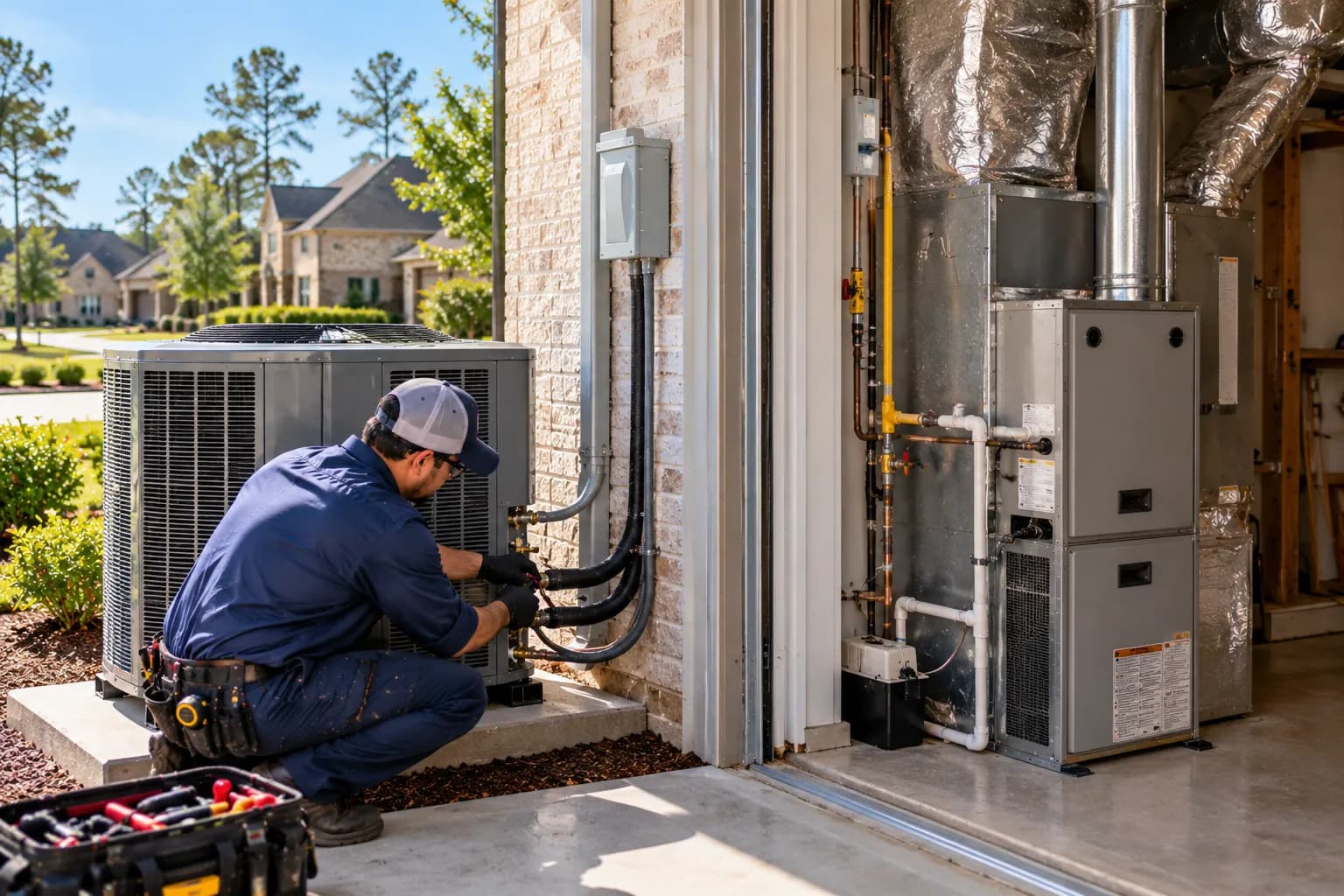
Heat pump searches have surged across Greater Houston in 2026, driven by a combination of federal energy efficiency incentives under the Inflation Reduction Act, rising natural gas prices that have made all-electric heating more financially competitive than it used to be, and a growing awareness among Houston homeowners that the city’s climate is one of the best in the country for heat pump performance.
If you’re replacing an aging HVAC system and researching whether to install a heat pump or stick with a conventional split system and furnace — or if you’re building new construction and evaluating your options — this post gives you the honest information you need to make the right decision for your specific Houston home.
And if you’ve already decided and you’re ready to get it installed, call Multipoint AC & Heating at 832-963-3789. We install heat pump systems throughout Greater Houston and we’ll size it correctly, install it right, and walk you through every rebate and incentive that applies to your purchase.
WHAT A HEAT PUMP IS AND WHY HOUSTON’S CLIMATE IS IDEAL FOR IT
A heat pump is an HVAC system that handles both heating and cooling from a single outdoor unit. In cooling mode, it operates exactly like a conventional AC system — extracting heat from indoor air and releasing it outdoors. In heating mode, it reverses the process — extracting heat from outdoor air and transferring it indoors.
The physics that makes heat pumps highly efficient in mild climates is the same physics that makes Houston an ideal heat pump market. Heat pumps don’t generate heat by burning fuel — they move existing heat from one place to another. Moving heat requires significantly less energy than generating it, which is why heat pumps can deliver three to four units of heating energy for every one unit of electrical energy consumed — a coefficient of performance that no combustion furnace can match.
The limitation of this efficiency advantage is that it diminishes as outdoor temperatures drop. At very low outdoor temperatures — below 25 to 30 degrees Fahrenheit — the heat available in outdoor air becomes limited enough that heat pump efficiency declines and supplemental heat backup becomes necessary. This is why heat pumps have historically been less popular in cold northern climates than in mild southern ones.
Houston’s winter climate is near-perfect for heat pump performance. Average January lows in the Greater Houston area are in the mid-40s Fahrenheit. Below-freezing temperatures occur but are typically brief — measured in hours to a day or two — rather than the sustained below-freezing periods that northern cities experience. In Houston’s heating temperature range, which is almost entirely above freezing and frequently well above it, a heat pump operates at its highest efficiency level throughout virtually the entire heating season.
The result is that a heat pump replacing a gas furnace in a Houston home typically reduces heating energy costs significantly — because the heat pump delivers heating at a much lower energy cost per BTU than a gas furnace burning fuel to generate heat, even when current Texas natural gas prices are factored in.
HEAT PUMP VS FURNACE IN HOUSTON — THE DIRECT COMPARISON
The question Houston homeowners are searching for in 2026 is increasingly “heat pump vs furnace Houston” — and the answer is more nuanced than a simple recommendation either way. Here’s the specific comparison for the Greater Houston market.
Efficiency and energy cost. A heat pump in Houston’s climate typically delivers a seasonal heating efficiency of 200 to 300 percent — meaning two to three units of heating energy delivered per unit of electrical energy consumed. A gas furnace at 80 percent AFUE delivers 0.8 units of heating energy per unit of gas energy consumed. Whether the heat pump or the furnace has a lower total energy cost depends on the relative price of electricity versus natural gas in your specific area and on your home’s heating load. At current Houston-area electricity and natural gas prices in October 2026, many homeowners find heat pumps cost-competitive or better for heating on an operating cost basis — particularly at the higher efficiency tiers of current variable-speed heat pump equipment.
Cooling performance. Both a heat pump and a conventional split system with a gas furnace use essentially the same refrigerant-based cooling technology for the cooling season. The cooling performance difference between a heat pump and a conventional AC system of the same efficiency rating is minimal from the homeowner’s perspective. Where the difference appears is in how cooling efficiency affects the system selection economics — for Houston’s nine-month cooling season, the cooling efficiency of the heat pump matters as much as the heating efficiency, and current high-SEER2 heat pump equipment competes well with conventional AC on cooling efficiency.
Humidity management. This is where system selection gets Houston-specific. As covered in multiple posts in this blog series, Houston’s Gulf humidity requires that the HVAC system provide meaningful dehumidification alongside cooling. Variable-speed heat pump systems, which can run at low speeds for extended cycles during the shoulder seasons, provide significantly better humidity management than single-stage equipment of either type. The key variable for humidity management isn’t heat pump versus conventional system — it’s variable-speed versus single-stage equipment. Both system types can be specified with variable-speed equipment, and both benefit equally from the humidity management advantage that variable-speed operation provides.
Cold weather performance. During Houston’s occasional hard freezes — events like the extended February 2021 cold snap that affected the entire region — heat pump performance is reduced compared to milder cold weather conditions. A heat pump loses efficiency as temperatures approach and drop below freezing, and during extended below-freezing periods, a heat pump without adequate backup heat may struggle to maintain indoor temperatures. For most Greater Houston homes, the backup heating provided by the electric resistance auxiliary heat built into most heat pump systems is adequate for the brief cold periods that Houston’s climate produces. For homes in upper Montgomery County communities — Conroe, Willis, New Caney — where below-freezing temperatures are somewhat more frequent and severe than in inner Houston, discussing backup heat capacity specifically with your installer is worth doing.
Upfront cost. Heat pump systems typically cost $500 to $1,500 more than a comparable conventional split system with a gas furnace at the same efficiency tier and capacity. This upfront premium is the primary reason some Houston homeowners choose conventional systems even when the heat pump’s operating economics are favorable — the payback period on the premium depends on the energy cost savings achieved, which in turn depends on the relative electricity and gas prices over the system’s service life.
Rebates and incentives available in 2026 change this upfront cost comparison meaningfully, as described below.
THE 2026 REBATES AND INCENTIVES FOR HEAT PUMP INSTALLATION IN HOUSTON
Federal tax credits and utility incentives have made heat pump installation significantly more financially attractive in 2026 than in previous years, and for Houston homeowners evaluating the heat pump versus furnace decision, understanding these incentives is essential before making a final determination.
Federal tax credit under the Inflation Reduction Act. Qualifying heat pump installations receive a federal tax credit of 30 percent of the installed cost, up to a maximum of $2,000 per year under the current IRA provisions. This credit applies directly against your federal tax liability — not as a deduction, but as a dollar-for-dollar reduction of what you owe. On a $8,000 heat pump installation, a $2,000 federal tax credit reduces the net cost to $6,000 — closing or eliminating the premium over a comparable conventional system.
The specific equipment requirements for the federal credit include efficiency thresholds that the equipment must meet — consult current IRS guidance or a tax professional for the specific qualifying requirements, as these have been subject to regulatory updates since the IRA’s passage.
Utility rebates. Some retail electricity providers serving the Greater Houston area offer rebates for the installation of qualifying heat pump equipment. These vary by provider, have specific equipment eligibility requirements, and may have annual funding caps. Contact your specific retail electricity provider before finalizing equipment selection to determine whether a rebate applies to your purchase.
The combination of the federal tax credit and any applicable utility rebates can reduce the net installed cost of a heat pump system enough that the upfront premium over a conventional system is minimal or eliminated entirely — making the operating cost advantage of the heat pump over a conventional furnace a straightforward financial win rather than a break-even proposition.
WHAT HEAT PUMP INSTALLATION COSTS IN HOUSTON IN 2026
A complete heat pump system installation in Greater Houston in 2026 ranges from approximately $5,000 to $14,000 installed depending on system size, efficiency tier, and installation complexity. This is comparable to the range for a conventional split system plus gas furnace combination, with heat pump systems typically at the upper end of the range for equivalent efficiency tiers.
Standard efficiency heat pump — 15 to 16 SEER2, single-stage equipment. Installed cost for a 3-ton system in this tier runs approximately $5,500 to $7,500. Single-stage heat pumps provide adequate heating and cooling but have limited humidity management capability due to the on-off cycling pattern.
Mid-efficiency heat pump — 17 to 18 SEER2, two-stage equipment. Installed cost for a 3-ton system runs approximately $7,500 to $10,000. Two-stage systems can run at lower capacity for mild conditions, providing better humidity management and efficiency in Houston’s shoulder seasons.
High-efficiency heat pump — 19 SEER2 and above, variable-speed equipment. Installed cost for a 3-ton system runs approximately $9,500 to $14,000. Variable-speed heat pumps deliver the best performance in Houston’s climate across both cooling and heating seasons — extended low-speed operation provides superior dehumidification, better temperature precision, and maximum efficiency throughout the system’s operation range. For Houston homeowners, the variable-speed tier’s humidity management advantage is particularly significant.
After federal tax credits and applicable utility rebates, the net installed cost of heat pump equipment is lower than these ranges suggest — factor in the incentives that apply to your specific situation when evaluating the cost comparison.
THE DUCTLESS MINI SPLIT HEAT PUMP OPTION
Houston homeowners who aren’t replacing a whole-home central system but are looking at specific heating and cooling challenges — a room addition, a garage conversion, a bonus room above the garage that’s always been too hot or too cold, a two-story home where upper floor comfort has been chronically problematic — should know that ductless mini split heat pumps are an increasingly practical option for targeted heating and cooling that conventional central systems don’t address well.
A ductless mini split consists of a small outdoor unit connected by refrigerant lines to one or more indoor air handlers that can be mounted on walls, ceilings, or floors in the specific spaces being conditioned. Each indoor unit has its own thermostat control and operates independently. There’s no ductwork required — the refrigerant lines run directly from the outdoor unit to the indoor handlers.
For Houston homeowners, mini split heat pumps are particularly useful for the upper-floor comfort problems that two-story homes experience — installing a mini split in the master bedroom provides independent temperature and humidity control for that specific space without affecting the central system’s operation elsewhere in the home. They’re equally useful for additions and garage conversions where extending the central duct system would be expensive and disruptive.
Mini split heat pump installation costs in Greater Houston range from approximately $2,500 to $5,000 for a single-zone system depending on the equipment and installation complexity.
WHY MULTIPOINT AC & HEATING IS THE RIGHT COMPANY FOR HEAT PUMP INSTALLATION IN HOUSTON
Installing a heat pump correctly requires specific knowledge that not all Houston HVAC contractors have with equal depth. The load calculation for a heat pump system must account for both heating and cooling loads — not just the cooling load that a conventional system installation focuses on. The refrigerant charge verification for a heat pump in heating mode involves different operating parameters than cooling mode verification. The reversing valve, the defrost system, and the specific control logic of a heat pump communicating thermostat setup require technician experience that’s distinct from conventional split system installation experience.
Multipoint AC & Heating installs heat pump systems throughout Greater Houston. Our installation process starts with a proper Manual J load calculation for the specific home — correctly sizing the heat pump for both the cooling and heating loads. We specify equipment that makes sense for your home’s characteristics and for Houston’s specific climate conditions — including the humidity management dimension that Houston homeowners care about as much as temperature control. We install with the quality that protects the manufacturer warranty and the system’s service life. And we walk you through the rebate and incentive landscape so you’re not leaving money on the table from incentives you weren’t aware of.
After installation, Multipoint’s maintenance plan covers heat pump systems with the dual-season service that heat pumps require — spring cooling season verification that includes heat pump-specific commissioning checks, and fall heating inspection that includes reversing valve testing, defrost system verification, and heating-mode performance assessment. We’re the company you call when the heat pump is installed and the company you call for the annual service that keeps it performing optimally through Houston’s demanding dual-season climate.
WHICH HOUSTON HOMEOWNERS SHOULD CHOOSE A HEAT PUMP — AND WHICH SHOULD CHOOSE A CONVENTIONAL SYSTEM
Heat pumps make the most financial and practical sense for Houston homeowners who are replacing an aging system on a home that currently uses electric resistance heating rather than gas — because heat pump efficiency compared to electric resistance heating is dramatic and the operating cost savings are immediate and substantial.
Heat pumps also make strong sense for homeowners building new construction or replacing systems in homes without existing gas infrastructure — all-electric homes that don’t have a gas meter eliminate the gas utility connection cost and the ongoing gas utility fee that conventional furnace homes carry regardless of how much gas they use.
Heat pumps make sense for homeowners who prioritize reducing carbon emissions from their home — eliminating gas combustion for heating while using electricity from a grid that contains increasing renewable generation reduces the carbon footprint of home heating relative to a gas furnace.
Heat pumps are worth careful evaluation for homeowners who currently have gas heating and are replacing an aging system — the operating economics depend on current and projected electricity and gas price relationships and on the specific system’s efficiency tier. Multipoint’s honest assessment of these economics for your specific home and situation is worth the conversation before making the decision.
Conventional split systems with gas furnaces continue to make sense for homeowners who have existing gas infrastructure and who have concerns about heat pump performance during Houston’s occasional severe cold snaps, who have specific installation situations where a heat pump creates complexity that a conventional system doesn’t, or who have been given an honest economic analysis that shows the heat pump premium doesn’t pay back quickly enough given their specific usage pattern.
The right answer for your specific Houston home depends on factors specific to your home — and Multipoint AC & Heating will give you the honest analysis, not the recommendation that maximizes our equipment margin.
CALL MULTIPOINT AC & HEATING FOR HEAT PUMP INSTALLATION IN HOUSTON
Whether you’re replacing an aging system and evaluating heat pump versus conventional equipment, adding a mini split for a specific problem space, or simply want an honest conversation about what makes sense for your Houston home — call Multipoint AC & Heating at 832-963-3789.
We serve homeowners throughout Greater Houston — Harris County, Fort Bend County, Montgomery County, and Austin County. We install heat pump systems, conventional split systems, and ductless mini splits. We provide honest equipment selection guidance, proper load calculations, quality installation, and the annual maintenance service that keeps your system performing through Houston’s demanding climate.
The 2026 rebate window for federal heat pump tax credits is active now. If you’re planning a system replacement in the next six to twelve months, scheduling a consultation today means you have the full picture of what the incentives look like and how they affect the economics of your specific decision — before the calendar year closes and you have to wait until 2027 to capture the credit.
Call 832-963-3789 today. Multipoint AC & Heating — Greater Houston’s honest HVAC company.