Heat Pump vs. Central AC and Furnace: Which Is the Better Choice for a Houston Home?
Decide between heat pumps and central AC for a Houston home. Weigh cost, climate fit, and energy efficiency factors.
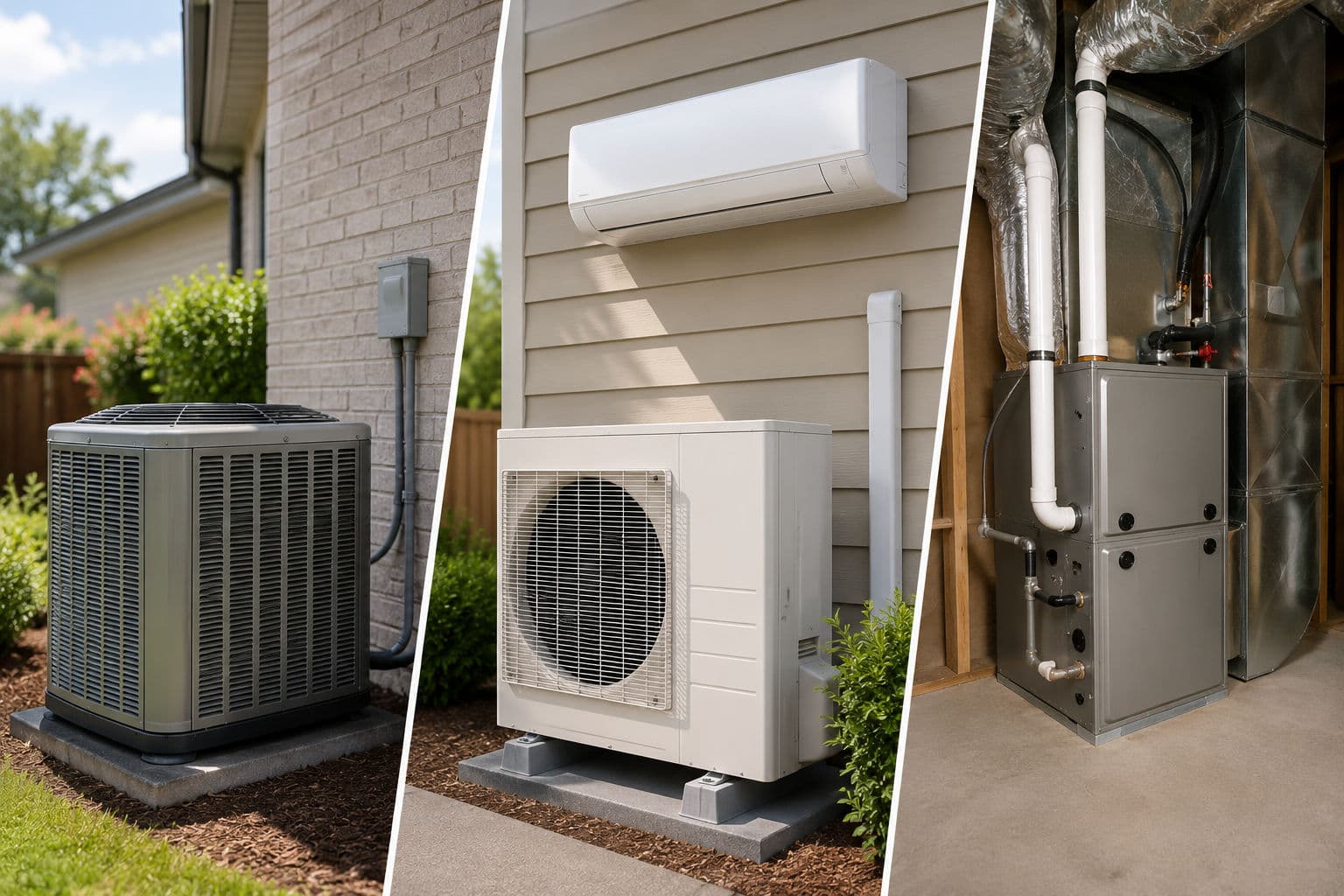
If you're replacing an aging HVAC system in the Greater Houston area, you've likely come across heat pumps as an option and wondered whether they make more sense than a conventional central AC and gas furnace setup. It's a legitimate question and one worth thinking through carefully, because the right answer depends on your specific home, your existing infrastructure, and how you weigh upfront cost against long-term operating expense.
This isn't a post that's going to tell you heat pumps are always better or that a conventional system is always the safer choice. Both are valid options for Houston homes and each has situations where it's the more practical decision. Here's an honest breakdown of how they compare in this specific climate.
HOW EACH SYSTEM WORKS
A conventional split system pairs a central air conditioner — which handles all of your cooling — with a gas furnace that handles all of your heating. The two systems operate independently, use separate fuel sources, and are optimized for their respective seasons. In Houston, the AC does the vast majority of the work given the length of the cooling season.
A heat pump is a single system that handles both heating and cooling by moving heat rather than generating it. In cooling mode it operates identically to a conventional AC, removing heat from indoor air and releasing it outside. In heating mode it reverses the process, extracting heat energy from the outdoor air and moving it inside. The same equipment, the same refrigerant circuit, and the same ductwork handle both functions. A gas furnace is not required.
THE CASE FOR A HEAT PUMP IN HOUSTON
Houston's climate is genuinely well-suited to heat pump performance, and here's why. Heat pumps extract heat from outdoor air even when that air is cold — but their efficiency declines as temperatures drop. At 47 degrees Fahrenheit, a heat pump operates at roughly three times the efficiency of electric resistance heating. At 17 degrees, that efficiency advantage shrinks considerably, and below that point many heat pumps struggle to maintain output without a supplemental heat source.
In Greater Houston, temperatures below 32 degrees are relatively infrequent. Fort Bend County and Harris County communities — Sugar Land, Katy, Missouri City, Pearland, Humble, Spring, and the inner Houston suburbs — see below-freezing temperatures on only a handful of nights per year in most winters. That means a heat pump in these communities operates in its efficiency sweet spot for essentially the entire heating season, which translates directly into lower heating costs compared to a gas furnace if electricity rates are favorable.
For homes without an existing gas line — properties currently using electric resistance heating, propane, or no central heating at all — a heat pump is almost always the right choice. It delivers dramatically better heating efficiency than electric resistance heating at minimal additional installation cost, handles cooling as well as a conventional AC system, and eliminates the need to run a gas line to the property.
For homeowners who prioritize energy efficiency and whose electricity rate makes the economics work, a high-efficiency variable-speed heat pump can deliver measurably lower combined heating and cooling costs over the life of the system compared to a conventional split system, particularly in a climate where the heating season is short and mild.
THE CASE FOR A CONVENTIONAL AC AND FURNACE IN HOUSTON
The conventional split system still makes sense in a number of situations that are common in the Houston area.
Homes with an existing gas line and an aging furnace that needs replacement alongside the AC are often better served by a like-for-like replacement of both systems. The infrastructure is already there, natural gas in Texas tends to be less expensive per BTU of heat produced than electricity in many rate scenarios, and a high-efficiency gas furnace in Houston's mild winters costs relatively little to operate given how few hours per year it runs.
Larger Houston homes with significant heating loads — properties over 3,000 square feet with high ceilings, large window areas, or less insulation — may benefit from the higher peak heating output that a gas furnace provides compared to a heat pump of equivalent size. Heat pumps deliver heating output efficiently but at a lower peak capacity than a gas furnace, which can matter on the coldest nights in a large, less-insulated home.
Homeowners in upper Montgomery County communities — Willis, Conroe, New Caney, and surrounding areas — where below-freezing temperatures are more frequent and stay lower longer than in Fort Bend County or inner Harris County may find that a conventional system with a gas furnace provides more reliable cold-weather performance without the concern about heat pump efficiency degradation on the coldest nights of the year.
Budget considerations also factor in. Heat pump systems, particularly variable-speed and high-efficiency models, carry a higher upfront cost than conventional split systems at similar capacity. For homeowners whose primary concern is installation cost rather than long-term operating cost, a conventional system may be the more accessible option.
WHAT ABOUT COLD CLIMATE HEAT PUMPS
Modern cold-climate heat pumps have significantly expanded the temperature range where heat pumps deliver efficient performance. Current cold-climate models from major manufacturers maintain effective heating output at temperatures well below zero degrees Fahrenheit — performance that wasn't available in heat pump technology a decade ago. For Houston-area homeowners, this means cold-weather performance concerns are less of a factor in equipment selection than they used to be. Even on the coldest nights the Greater Houston area experiences, a current-generation heat pump handles the load without needing supplemental electric resistance backup heat.
If heat pump performance in cold weather has been a concern that's kept you from considering the option, the current generation of equipment has addressed most of those limitations in a climate like Houston's.
THE HUMIDITY FACTOR
One consideration that's specific to Houston's climate deserves mention. In cooling mode, heat pumps and conventional AC systems perform identically from a humidity removal standpoint — both remove moisture as a byproduct of the cooling process, and both are subject to the same oversizing pitfall where a system that's too large short cycles and fails to adequately dehumidify the air.
The difference is in heating mode. A heat pump in heating mode does not remove humidity from the air the way the AC cycle does. During Houston's mild but humid winters — the kind of weather where it's 55 degrees outside and the air still feels damp — a heat pump running in heating mode maintains indoor temperature but doesn't address indoor humidity. For most Houston homes this isn't a significant issue because the humidity load during winter is much lower than during summer, but for homes near waterways or in areas with chronically elevated humidity, it's worth noting.
SIDE BY SIDE — THE KEY DIFFERENCES FOR HOUSTON HOMEOWNERS
Upfront cost: conventional split system is typically less expensive to install at comparable capacity. Heat pump premium varies by efficiency tier and brand.
Heating efficiency: heat pump is more efficient in mild temperatures, which describes most of Houston's heating season. Gas furnace provides higher peak output at lower temperatures.
Cooling performance: identical between the two systems in cooling mode. Both are subject to the same sizing and maintenance requirements.
Fuel flexibility: heat pump runs entirely on electricity. Conventional system uses electricity for cooling and gas for heating. Natural gas prices in Texas have historically favored gas furnaces for heating cost, but the efficiency gap between a heat pump and a furnace narrows that advantage.
System complexity: heat pump has additional components — reversing valve, defrost board, defrost cycle — that require specific diagnostic experience to service. Conventional system separates heating and cooling into two distinct systems that can be serviced and replaced independently.
Lifespan: similar for both. Well-maintained heat pumps and conventional split systems typically last 15 to 18 years in Houston's climate with regular maintenance.
HOW TO MAKE THE DECISION FOR YOUR HOME
The most practical approach is to start with your existing infrastructure and your specific circumstances. If you have a gas line, a gas furnace that needs replacement, and a conventional AC that needs replacement at the same time, a like-for-like replacement with current-efficiency equipment is often the most cost-effective path. If you don't have a gas line, are replacing only the cooling system, or are interested in moving to an all-electric home for any reason, a heat pump is worth serious consideration.
For Houston-area homeowners in Fort Bend County, inner Harris County, and Montgomery County communities south of Conroe, heat pumps are a well-matched technology choice for the climate. The mild winters, long cooling seasons, and relatively infrequent below-freezing temperatures all favor heat pump performance. The decision ultimately comes down to your specific home, your current infrastructure, your budget, and your long-term energy cost priorities.
We give homeowners a straightforward comparison of both paths based on their specific situation — equipment costs, estimated operating costs, and the practical considerations for their home — rather than defaulting to one recommendation for everyone.
Multipoint AC & Heating provides heat pump installation, conventional system installation, and full HVAC replacement throughout Greater Houston, including Harris County, Fort Bend County, Montgomery County, and Austin County. Contact us to discuss which system makes the most sense for your home.