Why Is My Furnace Not Working in Houston? Common Causes and What to Do
Explore common furnace issues in Houston and practical solutions to troubleshoot problems before consulting a professional technician.
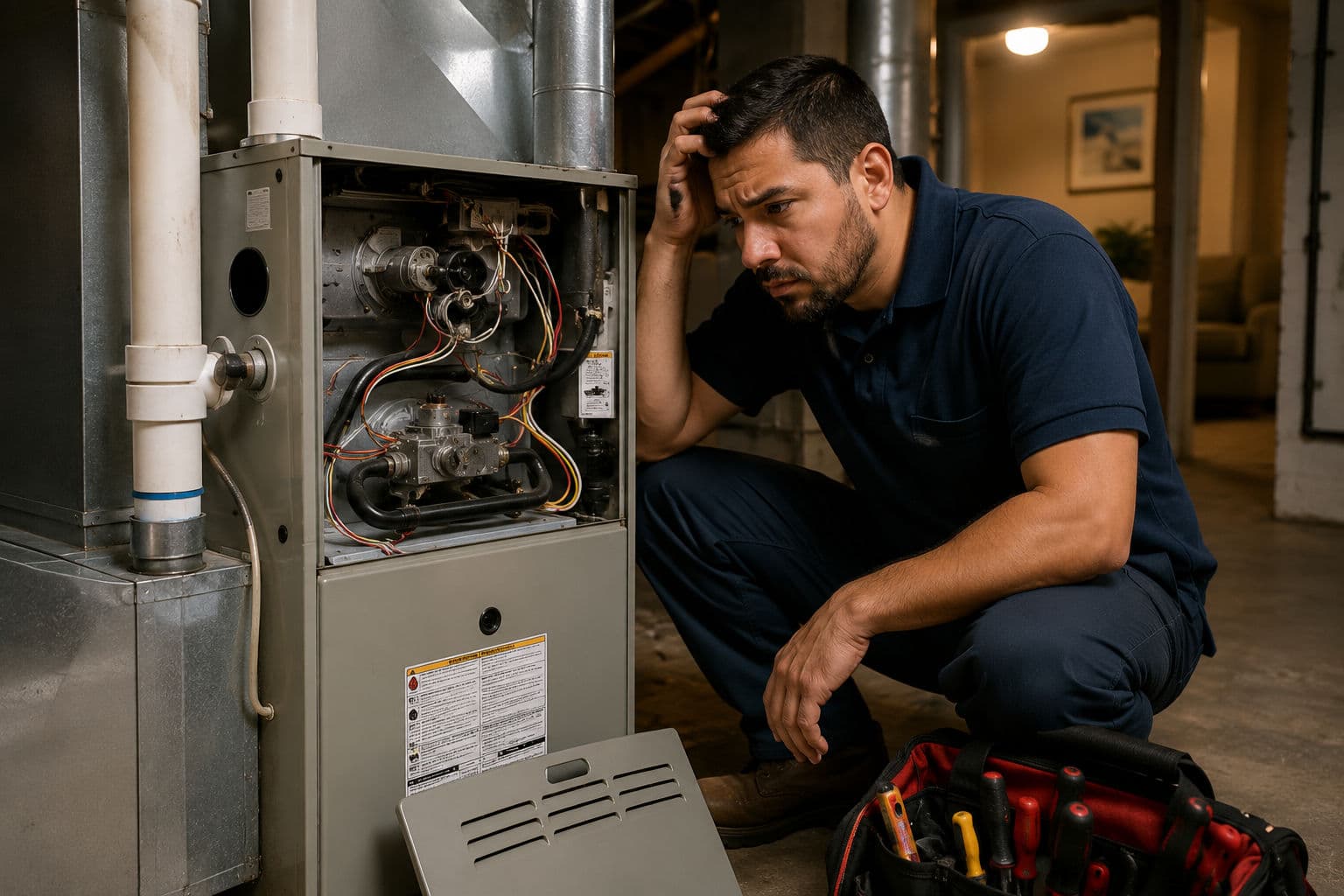
Houston winters are mild enough that most homeowners don't think much about their furnace for eight or nine months out of the year. That's exactly why furnace failures in this part of Texas tend to catch people off guard. The system sits idle through spring, summer, and fall, a problem develops quietly, and then the first cold front of the season arrives and the furnace doesn't respond. You're left troubleshooting a heating system you haven't thought about since February while the temperature inside the house drops.
Most furnace failures in Houston trace back to a handful of causes. Here's how to identify which one you're dealing with and what to do about it.
START WITH THE BASICS BEFORE ASSUMING THE WORST
Before calling a technician, check a few things that account for a surprising number of furnace calls in Houston every winter.
Check your thermostat first. Make sure it's set to heat mode rather than cool or fan only, that the set temperature is actually above the current indoor temperature, and that the batteries aren't dead. A thermostat that's lost battery power or been accidentally switched to cooling mode is the cause of more after-hours calls than most homeowners would expect.
Check the air filter. A severely clogged filter restricts airflow through the system so severely that the furnace overheats and shuts down on the high-limit safety switch — a built-in protection that prevents heat exchanger damage. If your furnace starts, runs for a few minutes, and then shuts off before reaching the set temperature, a clogged filter is one of the first things to check. In Houston, where AC systems run for most of the year and filters accumulate biological material faster than in drier climates, a filter that was fine in October may be significantly restricted by December.
Check the circuit breaker. Furnaces run on electricity even when they use gas for heat — the ignition system, blower motor, and controls all require electrical power. A tripped breaker cuts power to the system and prevents it from operating. Reset it once. If it trips again, stop — a breaker that keeps tripping indicates an electrical problem in the system that needs to be diagnosed rather than repeatedly reset.
Make sure your gas supply is on. This is rare but worth confirming, particularly if your home has been vacant or if any gas work was done recently. Check that the gas shut-off valve near the furnace is in the open position.
COMMON FURNACE PROBLEMS IN HOUSTON HOMES
Ignition system failure. This is the most frequent furnace repair we perform in the Houston area. Modern furnaces use electronic ignition rather than a standing pilot light, and the two components most likely to fail are the ignitor and the flame sensor.
A failed ignitor prevents the furnace from lighting at all — the system will attempt to start, you may hear the gas valve open, but no flame is produced. The ignitor is a fragile ceramic component that degrades over time and eventually stops producing enough heat to ignite the gas. Replacement is a straightforward repair.
A dirty or failed flame sensor causes a different problem. The flame sensor is a thin metal rod that detects whether the burner has lit. When it's coated with oxidation or residue from the combustion process, it can't confirm the presence of a flame and signals the control board to shut the gas off as a safety measure. The result is a furnace that lights, runs for a few seconds, and then shuts off — repeatedly, typically three times before it locks out and stops trying altogether. Cleaning or replacing the flame sensor resolves this, and it's one of the most common findings on furnaces that have been idle through Houston's long offseason.
High-limit switch trips. The high-limit switch is a safety device that shuts the furnace off when the heat exchanger reaches an unsafe temperature. It's designed to prevent heat exchanger damage and potential cracking, which creates a more serious problem down the road. The switch trips when airflow through the system is inadequate — most commonly from a clogged filter, closed supply vents, or a blower motor that isn't running at full capacity.
If your furnace starts, seems to run normally for five to ten minutes, and then shuts off before the house reaches the set temperature, a high-limit trip is likely. Replace the filter, make sure all supply vents in the home are open, and try again. If the problem continues, the blower motor or another airflow issue is worth having diagnosed.
Blower motor failure. The blower motor moves air through the ductwork during both heating and cooling cycles. In Houston's humidity, blower motors in older systems can develop bearing wear and electrical degradation that's accelerated by the moisture environment the system operates in during the long AC season. A blower motor that's losing efficiency causes the furnace to overheat and trip the high-limit switch. A blower motor that fails completely prevents the system from distributing heat even when the burner is operating correctly — you may hear the burner fire but no air moves through the vents.
Heat exchanger cracks. A cracked heat exchanger is the most serious furnace problem on this list because it's a health and safety concern rather than just a performance issue. The heat exchanger is the component that keeps combustion gases separated from the air that circulates through your home. When it cracks or develops a breach, combustion byproducts including carbon monoxide can enter the living space.
Symptoms that sometimes accompany a cracked heat exchanger include a strange smell when the furnace runs, visible soot around the furnace or vents, headaches or nausea that improve when you leave the home, or a carbon monoxide detector alarm. If you have any reason to suspect a heat exchanger problem, turn the furnace off and call for a professional inspection before running it again. This is not a problem to diagnose through trial and error.
Heat exchanger cracks are more common on furnaces past ten to twelve years of age, and in Houston's humidity, corrosion can accelerate the process on systems that are approaching that age range. Annual fall inspections that include a heat exchanger check are the most reliable way to catch this before it becomes a safety issue.
Gas valve failure. A failed gas valve prevents fuel from reaching the burners even when the ignition system is functioning correctly. The system will attempt to light, the ignitor will glow, but no gas arrives and no flame is produced. Gas valve replacement requires a licensed technician and is not a repair to attempt without professional training.
Control board failure. The control board is the brain of the furnace, coordinating the ignition sequence, blower operation, safety controls, and communication with the thermostat. Control board failures can produce a wide range of symptoms — a furnace that does nothing at all, one that gets stuck in a particular part of the startup sequence, or one that behaves erratically and inconsistently. Diagnosing a control board failure requires ruling out the more common component failures first, which is why a systematic diagnostic approach matters more than guessing at the cause.
WHEN A HOUSTON FURNACE FAILURE MEANS REPLACEMENT RATHER THAN REPAIR
Most furnace repairs in the Houston area are straightforward and worth doing on systems that are under fifteen years old without a history of major repairs. The calculation changes when the system is older, the repair is significant, or both.
A furnace past fifteen years of age with a cracked heat exchanger is almost always a replacement conversation. The heat exchanger is a major structural component of the furnace and replacement typically costs more than half the price of a new system, while the overall equipment is already past typical service life. A failed compressor in a combined heat pump system past twelve years raises the same question.
For any significant repair on a system in this age range, we provide a straightforward comparison of the repair cost versus replacement cost — including the efficiency gains from a new system — so the decision is based on your actual numbers rather than a default answer in either direction.
COLD FRONT PREPAREDNESS FOR HOUSTON HOMEOWNERS
The most reliable way to avoid a heating failure during a Houston cold front is a fall furnace inspection scheduled before the first cold weather of the season — ideally in October. During an inspection we check the heat exchanger, test the ignition system and flame sensor, verify gas pressure and burner operation, inspect the blower motor, clear the condensate drain on systems with it, and test all safety controls and overall system response.
For homeowners in Montgomery County communities like The Woodlands, Conroe, Willis, and Oak Ridge North, where cold fronts push temperatures lower and stay longer than in Fort Bend County or inner Houston, fall inspection scheduling earlier in October rather than November is worth prioritizing.
A furnace that's been inspected and serviced going into winter is a furnace you don't have to think about when the temperature drops. In Houston's climate, that peace of mind costs considerably less than an emergency repair call at 11pm on a January night.
Multipoint AC & Heating provides furnace repair, maintenance, and installation throughout Greater Houston, including Harris County, Fort Bend County, Montgomery County, and Austin County. For urgent heating failures, our 24/7 emergency service is available any time.