How to Find a Trustworthy HVAC Company in Houston Without Getting Burned
Discover how to choose a trustworthy HVAC company in Houston. Avoid scams and ensure quality service with our comprehensive guide.
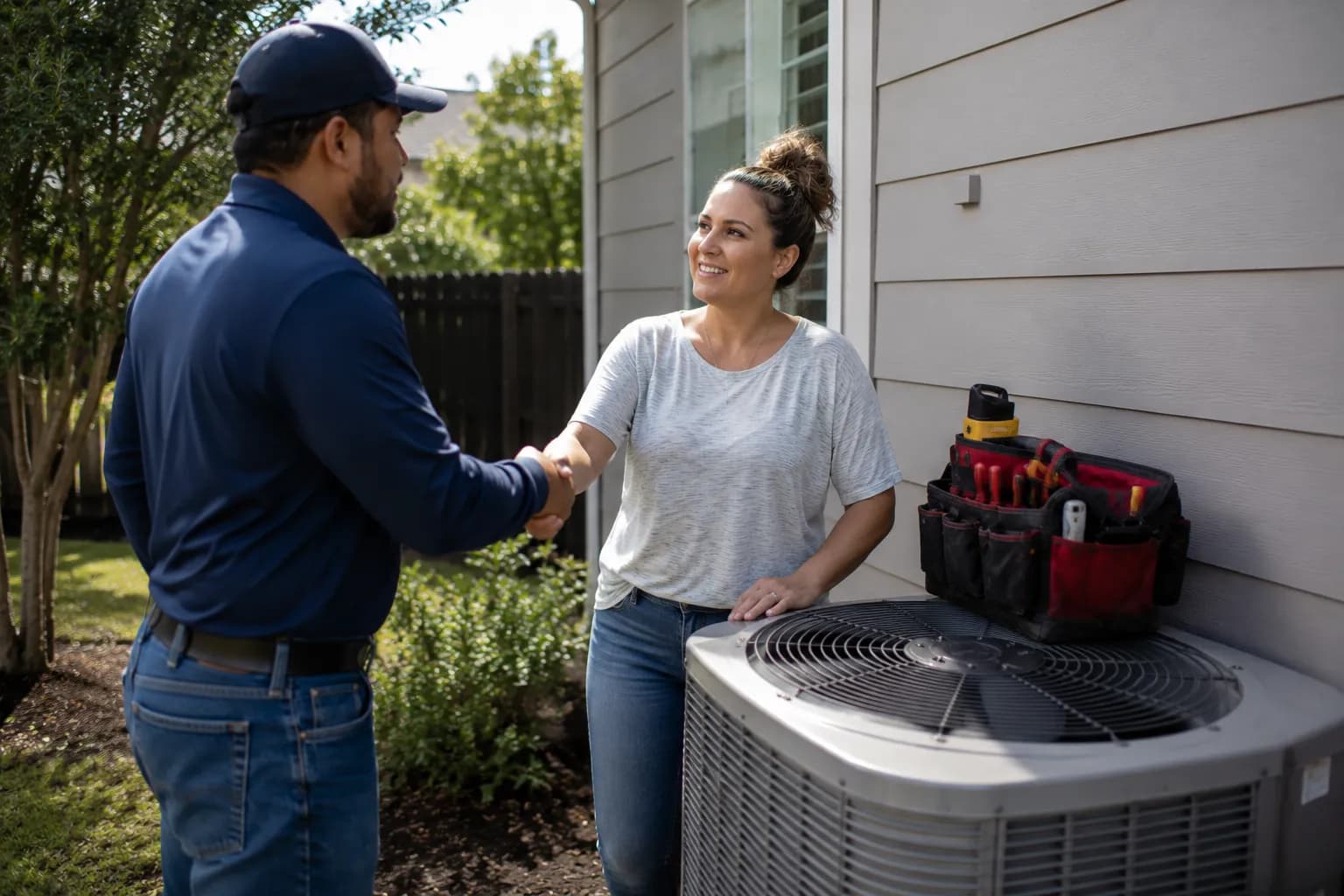
Houston has one of the largest concentrations of HVAC contractors of any city in the country. The combination of a massive metro population, a nine-month cooling season that makes AC service a year-round necessity, and a construction market that's been one of the most active in the country for two decades has produced a market with hundreds of companies competing for HVAC work throughout Harris County, Fort Bend County, Montgomery County, and surrounding areas.
That competition is generally good for consumers — it keeps prices in check and gives homeowners options. But a large, competitive market also has a wide quality distribution. The same conditions that support excellent, established local companies also support fly-by-night operators, storm chasers who appear after weather events, and contractors whose business model depends on selling work that homeowners don't need to homeowners who don't know the difference.
Finding a trustworthy HVAC company in Houston — one that will diagnose your system accurately, recommend only what's actually needed, do the work correctly, and stand behind it afterward — requires knowing what to look for and what to avoid. Here's a practical guide.
START WITH LICENSING — IT'S THE MINIMUM STANDARD, NOT A DIFFERENTIATOR
Texas requires HVAC contractors to hold a license issued by the Texas Department of Licensing and Regulation. This isn't optional, it isn't a formality, and it exists because HVAC work involves electrical systems, refrigerant handling that requires EPA certification, and in the case of gas heating systems, gas line connections with real safety implications if done incorrectly.
An unlicensed HVAC contractor in Houston is operating illegally. That fact alone tells you everything you need to know about how they're likely to approach other professional standards — safety practices, code compliance, proper refrigerant handling, and honest business dealings. Remove them from consideration regardless of price.
Verifying a Texas HVAC license takes two minutes. Go to the TDLR website, enter the company name or license number, and confirm the license is current and active. Every legitimate HVAC contractor in Houston can provide their license number without hesitation. One who can't or who becomes evasive when asked is not licensed.
Licensing is the minimum threshold for consideration — not a mark of distinction. A licensed contractor may still be mediocre, dishonest, or incompetent. What licensing tells you is that the contractor has met the state's minimum requirements. What it doesn't tell you is whether they're good at their job or honest in their business dealings — that requires additional evaluation.
INSURANCE IS NON-NEGOTIABLE
A legitimate HVAC contractor carries two types of insurance — general liability and workers' compensation. General liability protects your property if the contractor causes damage during the job. Workers' compensation protects you from liability if a technician is injured while working at your home.
A contractor without general liability insurance means that if they damage your property — break a condensate line, damage your flooring moving equipment, crack your drywall accessing the air handler — you may have no recourse beyond taking them to court. A contractor without workers' compensation means that if one of their technicians falls off your roof or is injured in your attic, you could potentially be held liable for their medical costs.
Ask for proof of insurance before any work begins. Request the insurance certificates specifically — not just confirmation that they're insured, but the actual certificate documents showing coverage amounts, policy numbers, and expiration dates. A legitimate contractor provides these without resistance. A contractor who refuses, is evasive, or provides documents that look irregular is a contractor whose coverage shouldn't be assumed.
THE DIAGNOSTIC QUALITY TEST — HOW THEY APPROACH THE PROBLEM
One of the most reliable indicators of an honest, competent HVAC company is how thoroughly they diagnose a problem before recommending a solution. A technician who arrives, spends a few minutes at the outdoor unit, and immediately recommends a compressor replacement or full system replacement without running a systematic diagnostic is either cutting corners or recommending the most profitable outcome without confirming it's necessary.
A proper HVAC diagnostic for a system that's not cooling in Houston involves measuring refrigerant pressure and comparing it to specification for the current outdoor conditions, measuring temperature differential across the evaporator coil, testing capacitor readings against rated specification, evaluating condenser coil condition and airflow, checking electrical connections and voltage, and assessing overall system performance in the context of the home's characteristics.
Each of these steps produces measurements — numbers that can be shared with the homeowner. Ask to see the actual readings when measurements are taken during a diagnostic visit. What is the refrigerant pressure reading and what's the acceptable range? What did the capacitor measure and what's the specification? A technician who can show you these numbers and explain what they mean is doing the job correctly. A technician who provides conclusions without measurements is asking you to trust a recommendation you have no way to verify.
When a significant repair is recommended — compressor replacement, full system replacement, evaporator coil replacement — ask specifically what finding supports that recommendation. A failed compressor that justifies replacement should have specific measured evidence — pressure readings that indicate compressor failure, amp draw that's outside specification, operational test results that confirm the compressor isn't pumping correctly. A recommendation to replace a compressor on the basis of the system's age or general condition without specific measured evidence of compressor failure deserves a second opinion before you approve the work.
REVIEWS — HOW TO READ THEM AND WHAT TO LOOK FOR
Online reviews on Google, Yelp, NextDoor, and the BBB provide useful signal about a contractor's actual customer experience, but they require some interpretation to use well.
Volume and recency matter together. A company with 300 Google reviews averaging 4.7 stars over three years of reviews provides meaningfully different information than a company with 15 reviews averaging 5.0 stars posted over the past three months. The former reflects sustained performance across a large customer base. The latter may reflect a burst of review solicitation from a new company or a company that has recently changed ownership.
Look for pattern rather than individual data points. A few negative reviews among many positive ones — particularly where the company has responded professionally and described how the situation was addressed — is consistent with a legitimate business that serves a large volume of customers. A pattern of complaints about the same thing — overcharging, recommending unnecessary repairs, not showing up on time, or poor quality work — is a pattern to take seriously regardless of how many positive reviews surround them.
Pay attention to reviews that describe service after the initial sale. Reviews that describe how a company handled a warranty issue, a callback when something wasn't right, or a problem that developed after an installation tell you more about how the company operates as an ongoing business partner than reviews about the initial experience.
Read the negative reviews carefully and pay attention to how the company responds. A company that responds to negative reviews defensively, dismisses the customer's concern, or becomes aggressive in their response is showing you how they'll treat you if you ever have a dispute. A company that responds professionally, acknowledges what happened, and describes how it was addressed is demonstrating customer service standards that matter when you need them.
NextDoor recommendations from verified neighbors in your specific Houston community are particularly valuable because they come from people whose homes are in the same climate and construction environment as yours and who are identifiable as actual community members rather than anonymous reviewers who may or may not have actually used the service.
THE ESTIMATE AND QUOTE PROCESS — WHAT IT SHOULD LOOK LIKE
For a repair visit, you should receive a written estimate that describes what was found, what repair is being recommended, what parts are involved, what the labor charge is, and what the warranty terms are — before you approve any work. A legitimate contractor presents this information clearly and gives you time to review it before proceeding.
For a system replacement quote, you should receive a written proposal that specifies the exact equipment being proposed — manufacturer, model number, SEER rating — the scope of the installation work including any ductwork modifications, the warranty on both the equipment and the labor, and the total installed price. A quote that says "new 3-ton system" without specifying the equipment is not a complete quote and doesn't allow meaningful comparison between proposals.
Multiple quotes for a system replacement are worth getting — typically three from qualified contractors. The comparison between quotes tells you the market price range for the work and reveals contractors whose pricing is significantly outside that range in either direction. A quote that's dramatically lower than the others is almost always lower for a reason — cheaper equipment, installation shortcuts, or a contractor who intends to add costs after the job is underway.
When comparing quotes, compare equivalent equipment at the same SEER rating, the same brand tier, and the same installation scope. A quote for a 16 SEER system from Brand A doesn't compare directly to a quote for a 14 SEER system from Brand B — you're comparing different products. Standardize the comparison to equivalent equipment and then evaluate the contractor's pricing and terms.
THE PRESSURE TACTICS THAT SIGNAL A PROBLEM
A small number of HVAC contractors in the Houston market use high-pressure sales tactics designed to generate immediate decisions from homeowners who are uncomfortable and stressed by a failed AC in summer heat. These tactics are worth recognizing because they're specifically designed to override the careful evaluation described above.
Artificial urgency — "I only have this equipment available at this price today" or "if you don't decide right now I can't guarantee availability" — is designed to prevent you from getting competing quotes or thinking carefully about the recommendation. Legitimate equipment availability changes on a timeframe of days or weeks, not hours. A contractor creating urgency around same-day decisions is creating pressure, not reflecting actual supply constraints.
Worst-case framing — describing every possible failure scenario and every potential consequence of not proceeding immediately — is designed to make the cost of inaction feel higher than the cost of action. The scenarios described may be technically possible without being probable or even likely. Ask the technician to distinguish between what they have specifically found and what might happen versus what will happen.
Refusing to provide written documentation — a verbal quote only, resistance to putting the diagnosis in writing, pressure to approve work without a written estimate — removes the record that protects you if the work doesn't match what was agreed. Insist on written documentation for any work costing more than a few hundred dollars. A contractor who resists this is a contractor who doesn't want a record of what they agreed to.
Disparaging other quotes you've received — a technician who tells you that another contractor's quote must be for inferior equipment or that you'll regret going with the other company — is a sales tactic rather than a technical assessment. The appropriate response to a lower competing quote from a legitimate company is matching the price or explaining specifically what differentiates their offering, not creating doubt about the competitor.
WHAT HONEST CONTRACTORS ACTUALLY LOOK LIKE
After describing the red flags, it's worth being specific about what an honest, qualified HVAC contractor actually looks like in practice in the Greater Houston market.
They arrive on time or communicate proactively when they're running behind. They introduce themselves by name and ask you to describe what you've been experiencing before they start work. They explain what they're doing as they do the diagnostic and share actual measurement readings when they take them. They describe what they found in plain language before recommending any work. They give you time to review the written estimate before you decide. They answer your questions directly without becoming defensive or evasive. They don't pressure you for an immediate decision on significant work. They leave the area clean when they're done. And they provide a written invoice that matches what was agreed to.
These aren't extraordinary standards — they're the baseline of professional service. An HVAC contractor who meets these standards consistently across their customer base is one worth keeping for the life of your system.
BUILDING A LONG-TERM RELATIONSHIP MATTERS IN HOUSTON
The HVAC market in Houston rewards homeowners who build a relationship with a qualified contractor over time rather than treating every service call as a fresh search for whoever is available. A contractor who has serviced your system for two or three years has context that a first-time visitor doesn't — they know your system's history, they've tracked the capacitor readings year to year, they know whether your refrigerant charge has been stable or has been trending lower from a slow developing leak, and they know which rooms in your home have the most demanding cooling loads.
That context produces better service — earlier identification of developing problems, more accurate predictions of remaining component life, and recommendations that reflect the history of your specific system rather than a generic assessment of a system of your type and age.
A maintenance plan with a company you trust is the practical mechanism for building that relationship — it creates a scheduled touchpoint twice a year, ensures the same company and ideally the same technician is seeing your system consistently, and gives you priority in the service queue when you have an urgent issue during peak season.
Multipoint AC & Heating is a licensed, insured, family-owned HVAC company serving Greater Houston, including Harris County, Fort Bend County, Montgomery County, and Austin County. We provide transparent diagnostics, written estimates before any work begins, honest repair versus replacement assessments, and the consistent service relationship that makes HVAC ownership in Houston's demanding climate manageable. Contact us at 832-963-3789 to schedule service or to discuss a maintenance plan.