How Dirty Coils Are Costing You Money This Summer in Houston
Discover how dirty AC coils in Houston impact energy costs and comfort. Learn essential maintenance tips to save money this summer.
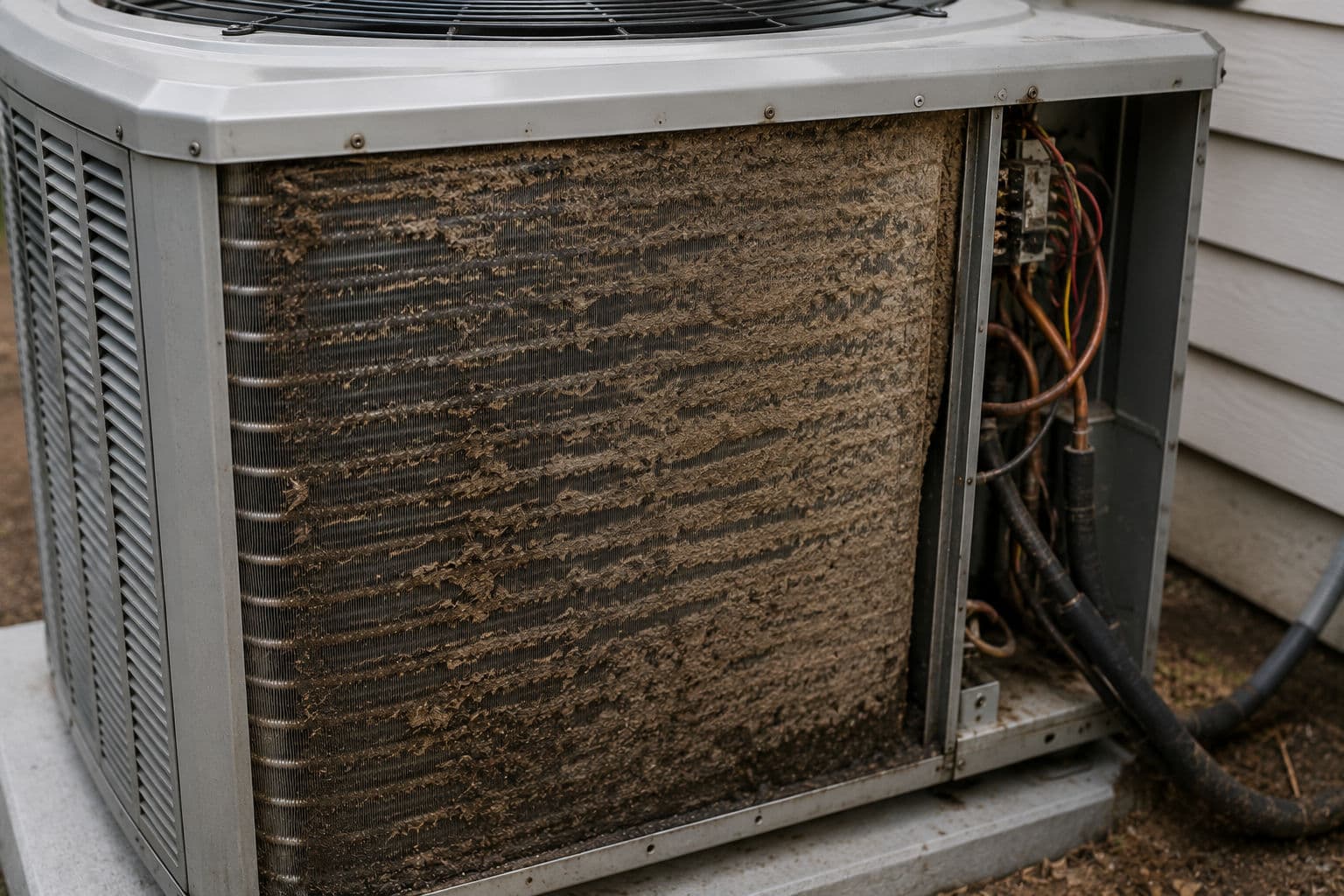
Of all the maintenance items that affect how well your air conditioning system performs during a Houston summer, dirty coils have the most direct and measurable impact on both comfort and energy cost. They're also one of the most commonly deferred maintenance items — out of sight inside the outdoor unit and inside the air handler, easy to forget about, and producing no obvious symptom until the efficiency loss has been compounding for a season or more.
By the time most Houston homeowners notice the effects of dirty coils — higher energy bills, a home that doesn't cool as well as it used to, a system that runs longer than it should — the coils have been reducing system performance for longer than they realize.
Here's what's actually happening when your AC coils are dirty, why it matters more in Houston than in most other markets, and what the fix looks like.
YOUR AC SYSTEM HAS TWO SETS OF COILS AND BOTH MATTER
Understanding why dirty coils are a problem requires understanding what the two sets of coils in your system actually do.
The evaporator coil is inside your home in the air handler. Warm indoor air passes across this coil, which is cold because refrigerant is flowing through it at low pressure. Heat and moisture transfer from the air to the refrigerant at the evaporator coil — this is where the actual cooling and dehumidification of your home's air happens. The cooled, dehumidified air then circulates back to the living space.
The condenser coil is in the outdoor unit. The refrigerant that absorbed heat from your home's air at the evaporator coil travels to the outdoor unit still carrying that heat. At the condenser coil, the refrigerant releases that heat to the outdoor air as the condenser fan moves air across the coil. The cooled refrigerant then cycles back to the evaporator to repeat the process.
Both coils need to transfer heat efficiently for the system to perform correctly. When either coil becomes fouled with debris, biological growth, or other accumulation, its ability to transfer heat is reduced — and the system loses performance and efficiency in proportion to how fouled the coils have become.
WHAT MAKES HOUSTON'S COIL FOULING PROBLEM WORSE THAN MOST MARKETS
Two factors specific to Houston's climate make coil fouling a more significant and faster-developing issue here than in most other parts of the country.
The first is the length of the cooling season. Houston AC systems run for eight to nine months per year. Every hour of operation is an hour during which debris is being pulled through the system and deposited on the evaporator coil, and during which the outdoor condenser is exposed to whatever is in the air around it. A Houston system accumulates a full season's worth of coil fouling in roughly half the calendar time that a system in a moderate climate would — because it's running nearly twice as many hours per year.
The second is the humidity environment. Houston's Gulf humidity keeps moisture levels elevated year-round, and a moist environment is exactly what biological growth needs to establish itself on coil surfaces. The evaporator coil is particularly vulnerable — it's continuously wet from condensation during operation, which makes it an ideal surface for mold, mildew, and bacterial colonies to grow. In Houston's climate, biological fouling on the evaporator coil develops faster and reaches more significant levels between maintenance visits than it would in a drier market.
The condenser coil in Houston's outdoor environment also deals with specific fouling challenges beyond standard dust and debris. In heavily wooded communities like The Woodlands, Kingwood, Conroe, and Spring, pine needles and organic debris pack into condenser coil fins in ways that are particularly resistant to being cleared by wind or rain. In agricultural communities across Fort Bend County — Sugar Land, Needville, Fairchilds, Guy, and others — crop dust and agricultural debris contribute to condenser fouling. In communities near the Ship Channel and I-10 petrochemical corridor, industrial particulates and chemical deposits add a corrosive dimension to the fouling that doesn't affect purely residential suburban settings.
WHAT DIRTY EVAPORATOR COILS DO TO YOUR SYSTEM
When the evaporator coil accumulates biological growth and debris, the fouling acts as an insulating layer between the air passing over the coil and the refrigerant flowing through it. Less heat and moisture transfers from the air to the refrigerant per unit of airflow, which means the system has to run longer to achieve the same amount of cooling and dehumidification.
The effects cascade from there. The system runs longer, which means more electricity consumed per degree of cooling achieved. The reduced heat transfer causes the refrigerant to leave the evaporator coil colder than it should, which can lower the coil surface temperature below freezing and cause ice to form on the coil — further blocking airflow and reducing cooling capacity in a self-reinforcing cycle.
In Houston's humidity environment, the dehumidification impact of a dirty evaporator coil is particularly noticeable. A fouled coil removes less moisture from the air per hour of operation than a clean one, which means homes with dirty evaporator coils feel more humid than they should even when the temperature is being somewhat maintained. The sticky, uncomfortable feeling that Houston homeowners describe when the AC seems to be running fine but the home doesn't feel right is often evaporator coil fouling expressing itself through inadequate moisture removal rather than temperature failure.
The biological growth on a dirty evaporator coil also affects indoor air quality. Every time the system runs, air passes across the fouled coil surface and carries biological material — mold spores, bacteria, and other organic particles — into the supply airstream and throughout the living space. The musty odor from AC vents that Houston homeowners commonly describe is almost always evaporator coil biological fouling introducing that material into the air that circulates through the home.
WHAT DIRTY CONDENSER COILS DO TO YOUR SYSTEM
The condenser coil's job is to release heat to the outdoor air. When the coil fins are packed with debris — dust, grass clippings, cottonwood, pine needles, agricultural dust, or industrial particulates depending on where in the Houston metro the system is located — airflow through the coil is restricted. Less outdoor air moves across the coil per unit of time, which means less heat is released from the refrigerant to the outdoor environment.
The consequence is that the refrigerant leaving the condenser coil is warmer than it should be, carrying more residual heat back to the evaporator coil than a clean system would. The overall system efficiency drops, the compressor has to work harder against higher refrigerant pressures to maintain the same cooling output, and energy consumption climbs.
In Houston's peak summer conditions — when the outdoor temperature is already 98 degrees and the heat index is pushing 108 — a condenser coil that's fighting restricted airflow is working in the worst possible conditions. The combination of extreme outdoor heat and reduced airflow through a fouled condenser pushes refrigerant pressures to the high end of the acceptable range, and if fouling is severe enough, past it — which triggers high-pressure safety controls that shut the outdoor unit down entirely.
A system that repeatedly shuts off on hot afternoons without any obvious mechanical failure, then restarts and runs normally after cooling down, is often exhibiting exactly this pattern — condenser coil fouling pushing the system into high-pressure safety shutdowns when outdoor conditions are at their most demanding.
The compressor bears the most significant long-term consequence of dirty condenser coils. Running continuously against elevated refrigerant pressures caused by inadequate condenser heat rejection puts mechanical stress on the compressor and generates internal heat that degrades the lubricating oil protecting its moving parts. Over time this accelerates compressor wear and shortens its service life — which is why dirty condenser coils on a Houston system that's running eight or more months per year are a more serious maintenance issue than they would be on a system running four months per year in a cooler climate.
HOW SIGNIFICANT IS THE EFFICIENCY LOSS FROM DIRTY COILS
Research and field experience from HVAC studies consistently show that a moderately dirty condenser coil reduces system efficiency by 10 to 30 percent compared to a clean coil. A severely fouled coil can reduce efficiency further. On a Houston home spending $1,800 per year on cooling energy, a 20 percent efficiency reduction from dirty coils costs $360 per year in additional energy consumption — year after year, compounding across every season the fouling goes unaddressed.
The efficiency loss from dirty evaporator coils is harder to quantify precisely but operates through the same mechanism and produces similar order-of-magnitude losses in system performance.
A professional coil cleaning during an annual maintenance visit addresses both coils in a single visit and restores the system to operating closer to its design efficiency. In many Houston homes, particularly those that haven't had professional maintenance in more than a year, the improvement in cooling performance and the reduction in runtime after a thorough coil cleaning is noticeable immediately — and shows up on the following month's energy bill.
WHAT PROFESSIONAL COIL CLEANING INVOLVES
Professional coil cleaning is more thorough than rinsing the outdoor unit with a garden hose, which is a useful between-visits step but not a substitute for professional service.
Condenser coil cleaning involves applying a professional-grade coil cleaner that penetrates the fin depth and loosens accumulated debris from within the coil rather than just washing the surface, then rinsing thoroughly from the inside out to push debris out through the fin openings rather than further into the coil. The technician also straightens bent coil fins that restrict airflow, inspects the coil for signs of corrosion or physical damage, and verifies that the area around the outdoor unit has adequate clearance.
Evaporator coil cleaning requires access to the indoor air handler — typically involving removing the access panel — and applying appropriate coil cleaner to the evaporator coil surface where biological growth has accumulated. No-rinse coil cleaners that drain through the condensate system are commonly used on evaporator coils where rinsing isn't practical. Severely fouled evaporator coils may require more extensive cleaning procedures.
Both coils are cleaned as part of a standard annual maintenance visit. This is not an add-on service — it's a core component of what a proper HVAC tune-up in Houston should include.
HOW TO SLOW DOWN COIL FOULING BETWEEN MAINTENANCE VISITS
While professional cleaning at least once per year is necessary in Houston's environment, a few practices slow the rate at which coils accumulate fouling between visits.
Maintaining the air filter on a consistent schedule is the most effective step for the evaporator coil. The filter is the primary defense against debris reaching the evaporator coil, and a filter that's allowed to clog lets debris bypass it and deposit directly on the coil surface. Monthly filter checks and 30 to 60 day replacement intervals during Houston's cooling season keep the filter doing its job.
Keeping the area around the outdoor unit clear of vegetation, grass clippings, and debris reduces what the condenser coil is exposed to. A two-foot clearance on all sides of the outdoor unit and keeping grass and vegetation trimmed back from the unit prevents a significant portion of the debris that would otherwise be pulled against the coil fins by the condenser fan.
Rinsing the outdoor condenser coil with a garden hose from the inside out — after turning the system off — between professional visits removes surface debris that has accumulated since the last cleaning. This is particularly worth doing in Houston's spring and fall when cottonwood and tree seeds are heaviest, and in wooded communities where pine needle accumulation on the outdoor unit is a persistent issue.
These steps reduce fouling rates between professional visits but don't eliminate the need for annual professional cleaning in Houston's operating environment.
Multipoint AC & Heating provides AC maintenance, coil cleaning, and repair throughout Greater Houston, including Harris County, Fort Bend County, Montgomery County, and Austin County. To schedule a maintenance visit that includes professional coil cleaning before coil fouling costs you another summer of reduced efficiency, contact us today.