How to Tell If Your Houston Home Has Poor Indoor Air Quality
Discover how to identify poor indoor air quality in Houston homes and explore HVAC solutions for healthier living.
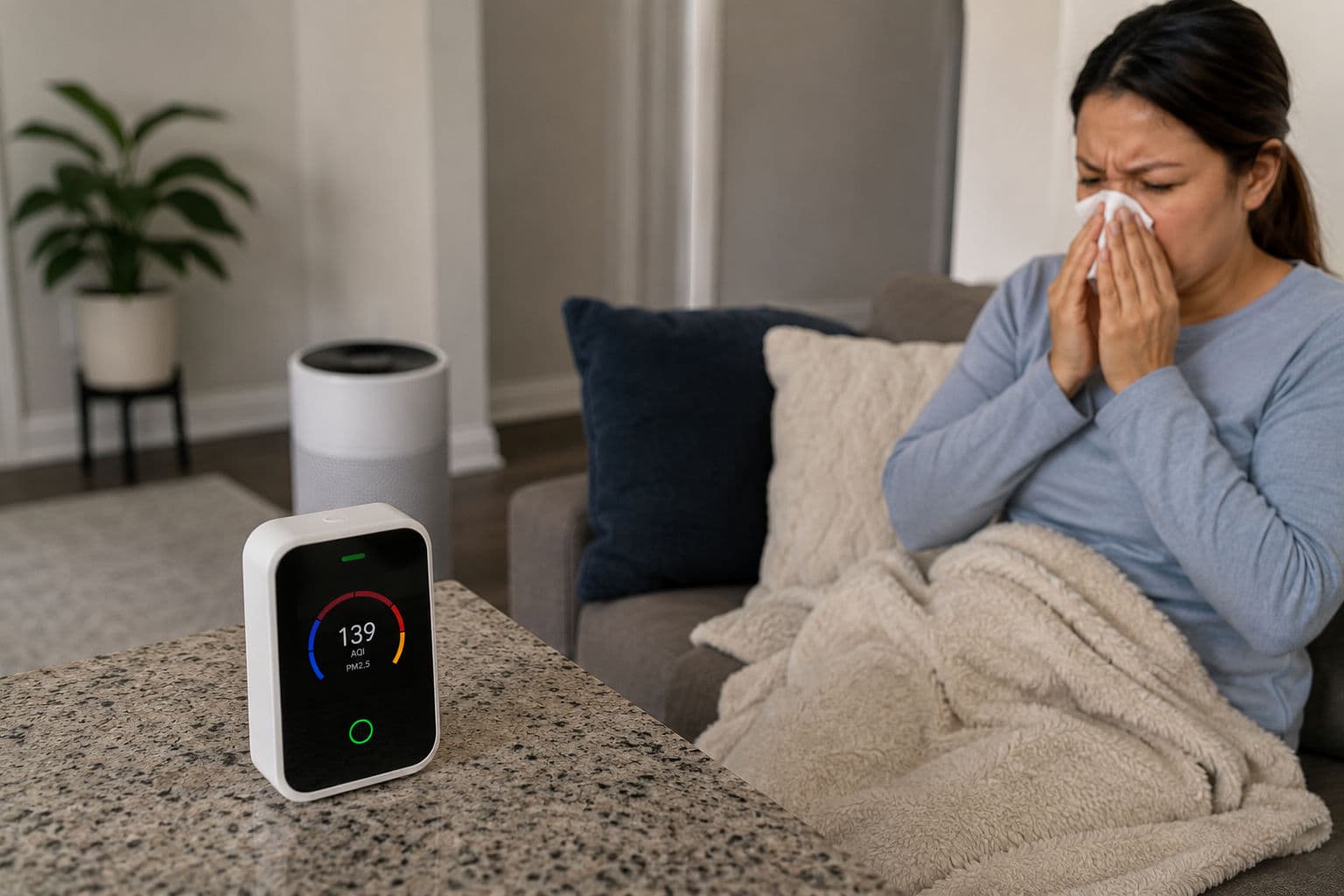
Indoor air quality is one of those topics that most Houston homeowners don't think about until something draws their attention to it — persistent allergy symptoms that don't improve at home, a musty smell that lingers despite cleaning, or a family member with respiratory issues that seem worse indoors than outdoors. By the time most people start investigating, the conditions producing the problem have been present for a while.
The EPA estimates that indoor air can be two to five times more polluted than outdoor air in many homes — a statistic that surprises most people because indoor air feels controlled and protected compared to outdoor air. In Houston's specific climate, the combination of Gulf humidity, a long season during which homes are kept closed and the AC runs continuously, aging housing stock with years of accumulated duct debris, and proximity to industrial corridors in portions of the metro creates indoor air quality conditions that are worth understanding and actively managing.
Here's how to recognize whether your home has an air quality problem and what the most effective solutions look like.
PHYSICAL SYMPTOMS THAT POINT TO INDOOR AIR QUALITY PROBLEMS
The most direct signal that something is wrong with your home's indoor air quality is how household members feel inside the home compared to outside it.
Allergy symptoms that are worse indoors than outdoors are one of the clearest indicators. Houston has a significant year-round outdoor allergen load from the area's diverse and continuously growing vegetation, and many residents have some level of seasonal allergy symptoms. But allergies that are noticeably worse when you're at home than when you're outside — or that improve when you leave for a vacation or extended trip and return when you come back — point to an indoor allergen source rather than or in addition to outdoor exposure.
The most common indoor allergen sources in Houston homes are dust mite populations that thrive in the humidity Houston's climate maintains year-round, pet dander that accumulates in carpeting, upholstery, and ductwork, mold and mildew growth on the evaporator coil, in the ductwork, and in wall cavities of homes that have experienced moisture intrusion or flooding, and biological growth in the air handler that circulates through the supply airstream every time the system runs.
Headaches that develop at home and improve when you leave are associated with elevated levels of volatile organic compounds — VOCs — from building materials, furnishings, cleaning products, and in newer construction, off-gassing from materials installed during recent renovation. Houston homes built or renovated in the past five to ten years may have elevated VOC levels if ventilation hasn't been adequate to allow these compounds to dissipate. Tighter building construction in newer Houston communities like Fulshear, The Woodlands newer sections, and Conroe's developing subdivisions reduces natural air exchange and allows VOC concentrations to build up more than they would in an older, less airtight home.
Persistent fatigue or difficulty concentrating at home without a clear explanation has been associated with elevated carbon dioxide levels from inadequate ventilation. In tightly sealed Houston homes where the AC runs continuously and windows stay closed for months at a time, carbon dioxide exhaled by occupants accumulates to levels that begin to affect alertness and cognitive function. This is distinct from carbon monoxide — a different and more immediately dangerous gas — and requires controlled ventilation rather than an emergency response, but it's worth understanding as a possible contributor to indoor air quality complaints that don't have an obvious source.
Skin irritation, eye irritation, or throat dryness that seems worse at home than elsewhere can indicate elevated particulate levels in the home's air, particularly fine particles that standard filtration doesn't capture. This is more common in homes near Houston's industrial corridors — Channelview, Pasadena, Deer Park, and communities along the Ship Channel — where outdoor particulate levels are elevated and homes pull outdoor air in through normal ventilation and infiltration.
SIGNS IN THE HOME ITSELF RATHER THAN IN HOUSEHOLD MEMBERS
Beyond how people feel, several observable conditions in the home itself indicate air quality issues worth addressing.
Visible dust accumulation that returns quickly after cleaning is one of the most common signs that the HVAC system's filtration isn't keeping pace with the particulate load in the home's air. Dust settling on horizontal surfaces within a day or two of thorough cleaning suggests that fine particles are circulating continuously through the supply airstream rather than being captured by the filter. This can indicate a filter that's allowing fine particles to pass through, duct leaks that are pulling unfiltered air from attic and wall spaces into the supply airstream, or a combination of both.
Dark staining or discoloration around supply vents is a more advanced version of the same problem. When significant particulate matter is being deposited through supply vents continuously, the particulates begin to stain the surrounding wall or ceiling surface around the vent opening. In Houston homes, this staining often has a dark, slightly fuzzy appearance from a combination of dust and biological material. This is a sign that the supply airstream is carrying a substantial particulate load and that whatever biological growth is occurring in the system has reached a level where it's visibly depositing through the vents.
A musty or stale smell that persists despite cleaning and ventilation indicates biological growth somewhere in the HVAC system or building structure that's releasing microbial volatile organic compounds into the home's air. In Houston's climate, this almost always traces to the evaporator coil, condensate drain pan, or ductwork — the locations where persistent moisture and Houston's ambient humidity create conditions favorable to mold, mildew, and bacterial growth. Cleaning the home's surfaces doesn't address the source, which is why the smell returns despite cleaning efforts.
Condensation on windows, walls, or other interior surfaces during the cooling season indicates that indoor relative humidity is higher than the AC system is managing. At elevated indoor humidity levels — consistently above 60 percent relative humidity — mold growth in wall cavities, behind baseboards, under carpeting, and in other areas with limited airflow is actively promoted. Visible surface condensation is a sign that the conditions for mold growth throughout the home's structure are present, and that the HVAC system's dehumidification capacity is insufficient for the moisture load.
Water stains on ceilings or walls that aren't traced to a visible plumbing leak may indicate moisture intrusion from duct leaks, condensate overflow from a clogged drain pan, or moisture moving through the building envelope. Any of these creates the localized high-moisture conditions that mold growth requires and the associated air quality impact from that growth.
Increased static electricity or unusual dryness during winter months in Houston is less common than the humidity-related signs above but can indicate inadequate humidity management in the opposite direction — indoor relative humidity dropping below 30 percent during dry winter periods, which is associated with increased respiratory irritation, worsening of eczema, and increased susceptibility to respiratory infections.
HOUSTON-SPECIFIC FACTORS THAT WORSEN INDOOR AIR QUALITY
Several factors specific to the Greater Houston area create indoor air quality challenges that go beyond what homeowners in moderate climates deal with.
The long season during which homes are kept closed is one of the most significant. From late March through October in most years, Houston homes are sealed against the outdoor heat and humidity, the windows are closed, and the AC circulates the same interior air continuously. Natural air exchange that would otherwise dilute indoor pollutants is minimal. VOCs, CO2, biological spores, and allergens accumulate in the sealed indoor environment at higher concentrations than they would in a home that's regularly ventilated through open windows. This is the trade-off that efficient AC makes — it maintains comfort by keeping the home sealed, but it also seals in whatever pollutants the home is generating or accumulating.
Houston's flooding history affects a significant number of homes in Harris County, Fort Bend County, and surrounding areas. Homes that have experienced flooding from Hurricane Harvey, subsequent events, or chronic waterway flooding carry residual biological contamination in wall cavities, subfloor spaces, and ductwork that may not have been fully remediated. Mold growth in these areas releases spores into the home's air continuously, and the HVAC system distributes them throughout the home every time it runs. In flood-affected homes where occupants are experiencing persistent respiratory symptoms or allergy-like conditions, residual post-flood contamination is worth investigating as a source.
Proximity to the Ship Channel, I-10 petrochemical corridor, and industrial facilities in east Harris County introduces outdoor air quality factors that enter Houston homes through normal ventilation and infiltration. Volatile organic compounds, fine particulates, and industrial compounds in the ambient outdoor air in these communities become indoor air quality concerns when that outdoor air enters the home. Standard filtration addresses particulates but doesn't capture gaseous VOCs from industrial sources — specialized carbon filtration is required for those compounds.
Older housing stock in established Houston communities — Katy, Sugar Land, Missouri City, Humble, Spring, Pearland, and others — has ductwork that has been in service for decades, accumulating dust, biological material, and debris in the duct interior that circulates through the home every time the system runs. The longer this accumulation has been building, the more significant its contribution to indoor air quality.
HOW YOUR HVAC SYSTEM CAN ADDRESS INDOOR AIR QUALITY PROBLEMS
The HVAC system is the primary vehicle through which indoor air quality can be improved in a Houston home because it moves all of the home's air through a central point where filtration, treatment, and conditioning can be applied.
Upgraded filtration captures more of the fine particles that standard filters miss. Moving from a MERV 8 to a MERV 10 or 11 filter improves capture of fine dust, pollen, mold spores, and pet dander that pass through lower-rated filters. A whole-home air cleaner installed in the duct system provides filtration that goes beyond what any standard filter achieves, capturing ultrafine particles and in some cases providing additional germicidal action.
UV germicidal systems address the biological component of indoor air quality directly. A UV-C light installed at the air handler continuously irradiates the evaporator coil and surrounding cabinet surfaces where mold, mildew, and bacteria grow in Houston's humidity environment. The biological material that would otherwise be released into the airstream is prevented from reproducing, and its concentration in the air handler environment is continuously suppressed. For Houston homes with musty odors from the vents, occupants with respiratory sensitivities, or any history of moisture intrusion or flooding, a UV system addresses the biological air quality dimension that filtration alone doesn't capture.
Whole-home dehumidification addresses the root condition that makes Houston homes particularly susceptible to biological indoor air quality problems — the persistently elevated indoor humidity that mold, mildew, dust mites, and bacteria require to thrive. Maintaining indoor relative humidity at 40 to 50 percent creates conditions that are significantly less favorable to biological growth throughout the home, reduces the conditions that promote dust mite population growth, and makes the home more comfortable at any temperature. For Houston homeowners dealing with biological indoor air quality problems, dehumidification addresses the environment that produces the problem rather than only treating the symptoms.
Controlled mechanical ventilation introduces filtered outdoor air at a controlled rate, addressing the CO2 accumulation and VOC concentration that develop in tightly sealed Houston homes during the long cooling season. Unlike simply opening windows — which in Houston's summer imports heat and humidity alongside fresh air — controlled ventilation manages the rate of outdoor air introduction and filters what comes in, providing the dilution benefit of ventilation without the comfort and humidity penalties of uncontrolled air exchange.
Duct sealing reduces the infiltration of dusty, humid, and potentially contaminated attic air into the supply airstream through leaky return ducts, and prevents conditioned air from escaping into the attic through leaky supply ducts. Both effects improve air quality in the living space — less contaminated air entering the system, and more of the filtered, conditioned air actually reaching the rooms it's intended to serve.
Duct cleaning is appropriate for homes where ductwork has accumulated significant contamination — particularly post-flood homes where biological material entered the duct system, older homes where decades of accumulation have reached levels that affect air quality, or homes where visible dark staining around supply vents indicates substantial biological deposit from the ductwork.
WHEN TO PRIORITIZE PROFESSIONAL EVALUATION
If household members are experiencing persistent unexplained health symptoms that improve away from home, if visible mold growth is present anywhere in the home, if the home has experienced flooding and hasn't had a post-flood HVAC inspection, or if the musty smell from the AC vents has been present for more than one season without resolution, professional evaluation of the HVAC system and indoor air quality is appropriate rather than deferring the issue.
An HVAC technician evaluating indoor air quality in a Houston home should inspect the evaporator coil condition and biological growth level, the condensate drain pan and drain line, the air handler cabinet interior, and provide guidance on filtration, UV treatment, and dehumidification options appropriate for the specific conditions found. This isn't a separate indoor air quality specialist engagement for most Houston homes — it's an extension of a thorough HVAC service visit.
Multipoint AC & Heating provides AC maintenance, indoor air quality solutions, and HVAC repair throughout Greater Houston, including Harris County, Fort Bend County, Montgomery County, and Austin County. Contact us to schedule a service visit that addresses both your system's mechanical performance and the indoor air quality conditions specific to your Houston home.