How to Choose the Right HVAC Contractor in Houston, TX
Learn how to hire a trustworthy HVAC contractor in Houston. Discover licensing, insurance, and quality checks for optimal home comfort.
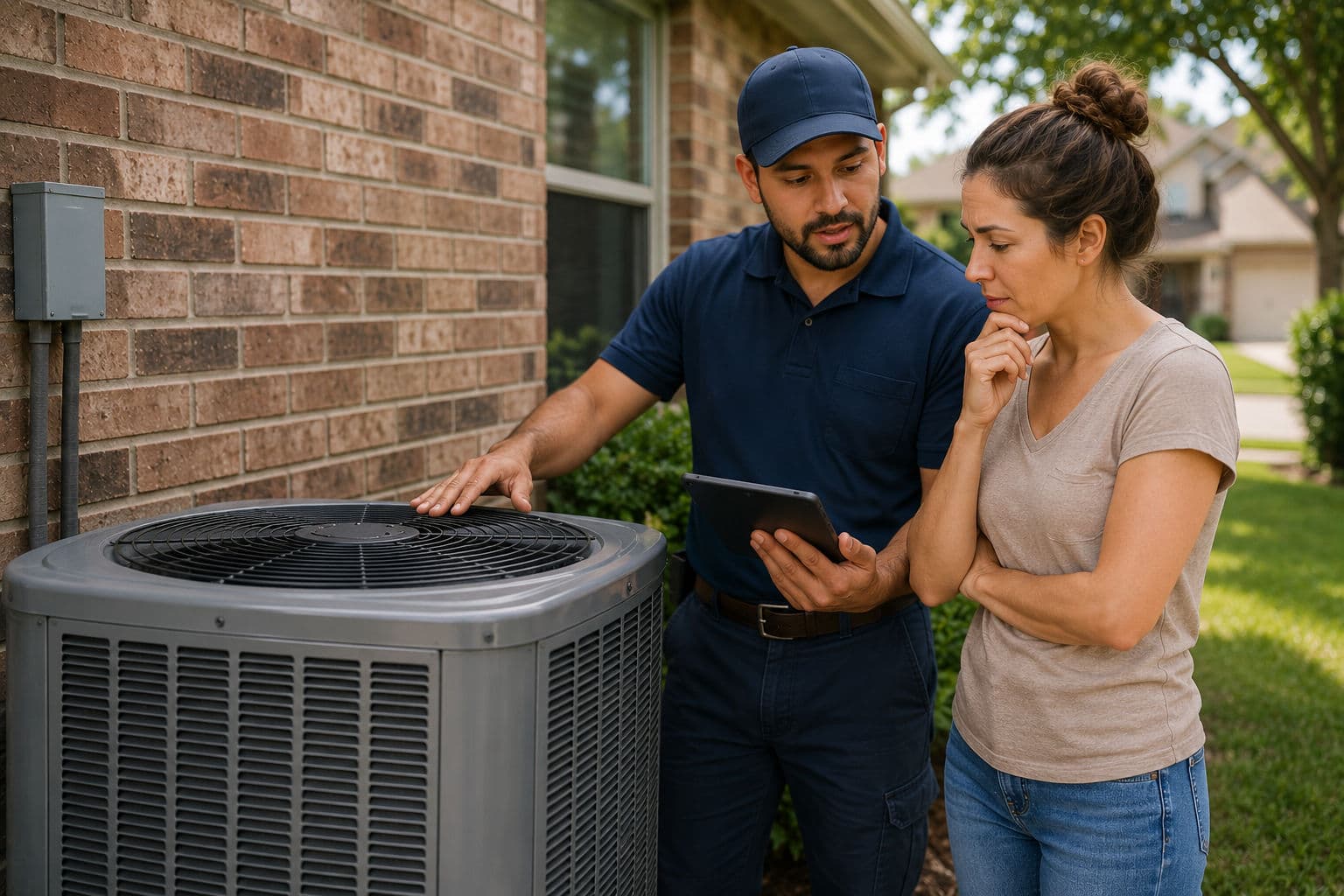
Replacing or repairing an HVAC system is one of the larger home service decisions a Houston homeowner makes. The equipment itself is a significant investment, the installation quality directly determines how well it performs and how long it lasts, and the contractor you choose affects both. A system that's correctly selected and properly installed by a qualified technician performs better, lasts longer, and costs less to operate than the same equipment installed carelessly by an underqualified contractor — and in Houston's climate, where the AC runs for most of the year, those differences compound into real money over the system's life.
The Houston HVAC market is large and competitive, which means there's no shortage of options. It also means there's significant variation in quality, licensing, experience, and business practices among the companies operating in the market. Knowing what to look for and what to avoid saves you from the contractors who will cost you more in the long run than any upfront price difference would have suggested.
VERIFY LICENSING BEFORE ANYTHING ELSE
In Texas, HVAC contractors are required to hold a license issued by the Texas Department of Licensing and Regulation. The license requirement exists because HVAC work involves electrical systems, refrigerant handling that requires EPA certification, and in the case of gas furnaces, gas line connections that carry real safety implications if done incorrectly.
An unlicensed contractor operating in Houston is doing so outside the law, which means no regulatory oversight, no required insurance verification, and no recourse through the licensing board if something goes wrong. Work performed by an unlicensed contractor may also affect your homeowner's insurance coverage and your equipment warranty, since most manufacturers require installation by a licensed contractor to honor warranty claims.
Verifying a Texas HVAC license takes two minutes on the TDLR website. Any contractor who can't provide a license number or whose license isn't current in the TDLR system should be removed from consideration regardless of price.
CONFIRM INSURANCE COVERAGE
A licensed HVAC contractor operating properly in Texas carries general liability insurance and workers' compensation coverage. General liability protects your property if the contractor causes damage during the job. Workers' compensation protects you from liability if a technician is injured while working on your property.
Ask for proof of insurance before any work begins. A contractor who can't or won't provide current insurance certificates is a contractor whose insurance coverage shouldn't be assumed.
LOOK FOR MANUFACTURER CERTIFICATIONS AND TRAINING
Beyond the state license requirement, manufacturer certifications indicate that technicians have been trained on specific equipment lines and have demonstrated competency with those systems. NATE certification — North American Technician Excellence — is the most widely recognized independent certification for HVAC technicians and indicates training and testing beyond the minimum licensing requirements.
Contractors who work with specific equipment brands — Trane, Daikin, York, Carrier, Lennox, and others — often have factory-authorized status that requires their technicians to complete manufacturer training and maintain service standards. Factory-authorized contractors sometimes have access to better warranty terms and direct manufacturer support that independent contractors don't.
GET MULTIPLE QUOTES — BUT DON'T EVALUATE ON PRICE ALONE
For a system replacement, getting three quotes from qualified contractors is a reasonable standard. Multiple quotes give you a sense of the market price range for the work and protect you from paying significantly above market without knowing it.
Where Houston homeowners make a mistake is treating the lowest quote as automatically the best choice. HVAC pricing differences between contractors reflect real differences in equipment quality, installation practices, included services, and warranty terms. A quote that's significantly lower than the others is almost always lower for a reason — cheaper equipment, a lower-efficiency system than the others quoted, installation shortcuts that don't show up until the system is running, or a contractor who intends to add costs after the job begins.
Evaluate quotes on what's actually being provided — the specific equipment model and SEER rating, what's included in the installation, what warranty is offered on parts and labor, and what the contractor's service commitment looks like after the installation is complete.
INSIST ON A LOAD CALCULATION
A contractor who quotes a replacement system for your Houston home without performing a load calculation — or who sizes the replacement based entirely on what was there before — is skipping the most important step in the replacement process.
The load calculation, also called a Manual J calculation, determines how much cooling and heating capacity your home actually requires based on its specific characteristics — square footage, ceiling height, insulation levels, window area and orientation, and other factors. A system that's correctly sized for your home performs better, lasts longer, and keeps the home more comfortable than one that's sized by rule of thumb or matched to the previous system without verification.
In Houston's climate, where an oversized system's humidity management failure is one of the most common comfort complaints, correct sizing matters more than in most markets. A contractor who skips the load calculation and installs whatever size matches the old system is setting you up for the same problems the old system may have had from the beginning.
Ask every contractor who quotes your job whether they perform a load calculation. If the answer is no or evasive, that contractor's proposal is worth less consideration regardless of price.
EVALUATE THE QUALITY OF THE DIAGNOSTIC PROCESS
For repair work rather than replacement, the quality of the diagnostic process tells you a great deal about the contractor's competence and honesty. A technician who arrives, spends two minutes looking at the outdoor unit, and immediately quotes a compressor replacement without running a systematic diagnostic is either taking a shortcut or identifying the most expensive repair without confirming it's actually necessary.
A qualified HVAC technician diagnosing a cooling problem in a Houston home checks refrigerant pressure, evaluates airflow, inspects electrical components, measures temperature differential across the evaporator coil, and tests the specific component that appears to be failing before recommending repair or replacement. A diagnosis that produces an expensive recommendation without a systematic process backing it up deserves a second opinion before you approve the work.
UNDERSTAND WHAT THE WARRANTY COVERS
HVAC warranties have two components — the equipment manufacturer's warranty on parts, and the contractor's labor warranty on the installation work. Both matter, and they're separate.
Most major manufacturers offer five to ten year parts warranties on new equipment, with some offering longer coverage on specific components like compressors. These warranties typically require registration within a specified period after installation, professional installation by a licensed contractor, and documented annual maintenance to remain valid. A contractor who doesn't mention warranty registration or maintenance requirements is leaving you with warranty exposure you don't know about.
The labor warranty covers the contractor's installation work — if something is wrong with how the system was installed, the labor warranty determines whether you pay for the fix or the contractor does. Labor warranties vary significantly between contractors, from 30 days to multiple years. A contractor who offers only a 30-day labor warranty on a system installation is telling you something about their confidence in their own work.
AVOID DOOR-TO-DOOR AND UNSOLICITED OFFERS
During Houston storm seasons and after major weather events, door-to-door HVAC contractors who weren't operating in your area before the storm appear in larger numbers. Some of these are legitimate companies from other markets who have mobilized to meet demand. Others are operators who work storm-affected areas specifically because homeowners in those situations are less likely to do the normal vetting they would in a non-emergency situation.
For post-storm HVAC work in particular, taking the time to verify licensing, confirm insurance, and check reviews before agreeing to any work is worth doing even when the urgency feels high. An unlicensed contractor doing work on storm-damaged equipment can create complications for insurance claims and leaves you with no regulatory recourse if the work is done incorrectly.
CHECK REVIEWS — BUT READ THEM CRITICALLY
Online reviews on Google, Yelp, the BBB, and NextDoor provide useful signal about a contractor's actual customer experience, but they need to be read with some discernment. A contractor with 200 reviews averaging 4.8 stars over several years is more informative than one with 20 reviews averaging 5.0 stars in the past three months. Look for patterns in the reviews rather than individual data points — recurring mentions of a specific technician's name, consistent praise for punctuality and communication, or recurring complaints about follow-through after installation.
Pay specific attention to how the contractor responds to negative reviews. A company that responds professionally, acknowledges the issue, and describes how it was resolved is demonstrating customer service standards that matter when something goes wrong with your system. A company that responds defensively or dismissively to criticism is showing you how they'll treat you if you ever have a problem.
For HVAC specifically, look for reviews that describe repair and return service experiences, not just installation. A contractor who installs well but is difficult to reach for follow-up service or warranty work is a problem you won't discover until you need them.
ASK ABOUT SERVICE AFTER THE SALE
The relationship with your HVAC contractor doesn't end at installation. You'll need maintenance visits, periodic repairs, and eventually another replacement. A contractor who is easy to reach, responsive to service calls, and offers maintenance plans that keep you on a scheduled service cadence is more valuable over the life of your equipment than a contractor who competed on price at installation and is difficult to reach afterward.
Ask any contractor you're considering how their service scheduling works, what their typical response time is for non-emergency service calls, and whether they offer maintenance plans. A contractor who doesn't offer maintenance plans or is vague about service availability after installation is one whose post-sale relationship may not match the pre-sale attention.
WHAT MAKES MULTIPOINT AC & HEATING DIFFERENT IN HOUSTON
At Multipoint AC & Heating we are a licensed, insured, family-owned HVAC contractor serving the Greater Houston area including Harris County, Fort Bend County, Montgomery County, and Austin County. Every installation begins with a proper load calculation, every repair begins with a systematic diagnostic, and our 24/7 emergency service means we're reachable when you actually need us rather than just when it's convenient for us.
We work with York, Trane, Daikin, and other leading manufacturers and back our work with honest warranty terms and a commitment to being the contractor you call for the life of your system, not just the initial installation.
Contact Multipoint AC & Heating today to schedule service, request a quote, or discuss your HVAC system with a team that will give you a straight answer.