How to Childproof Your HVAC System in Houston This Summer
Ensure your HVAC system is safe for kids with our practical childproofing tips for summer in Houston.
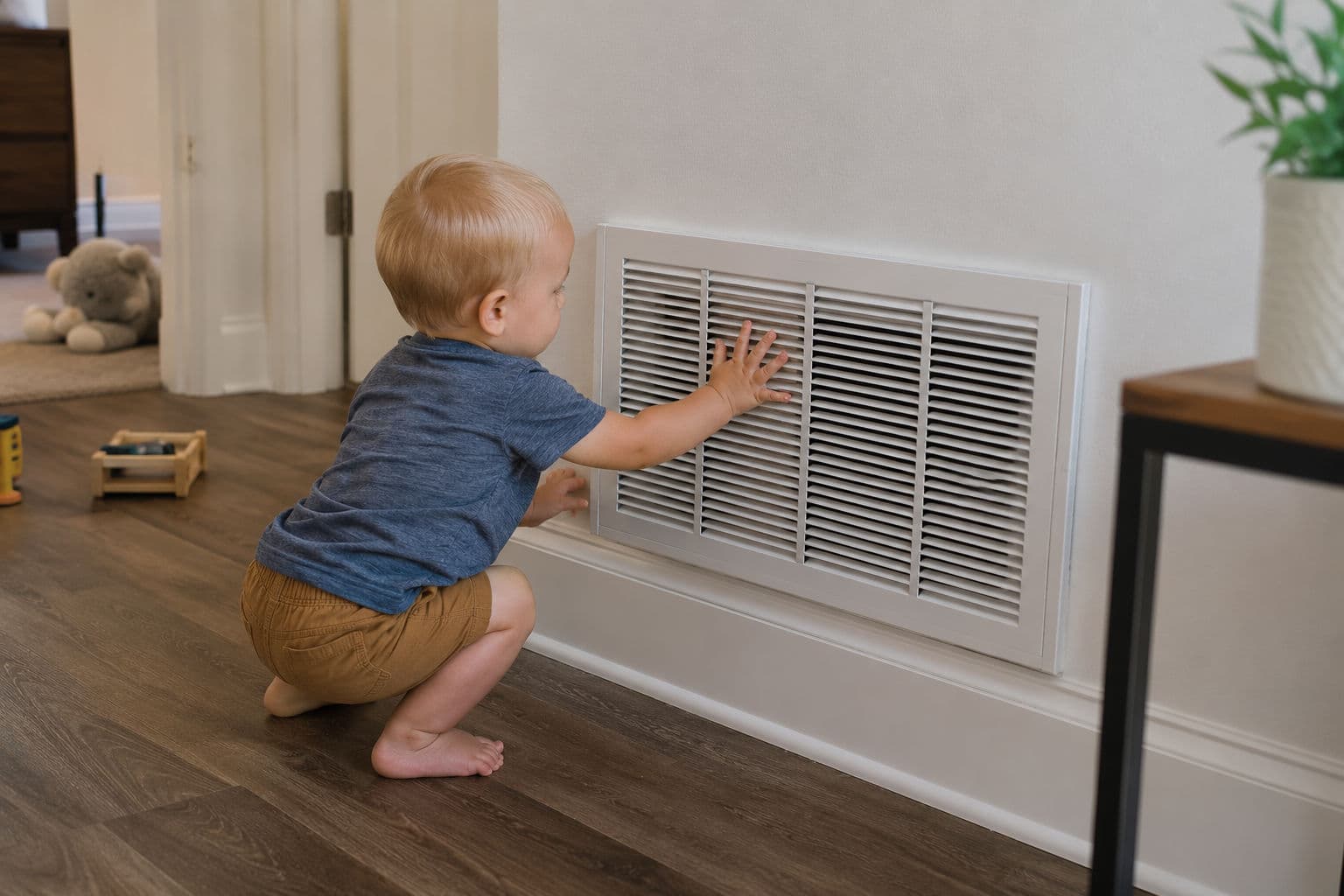
Summer in Houston means kids are home more — school is out, schedules are looser, and children spend more time in and around the house than they do during the school year. For most Houston families that means more time near the HVAC equipment that's working hardest during the year's most demanding season. Outdoor condenser units, indoor air handlers, thermostats, and supply vents are all things that children interact with in ways that parents don't always anticipate — and some of those interactions create safety risks or cause equipment damage that shows up as a service call during peak cooling season.
None of this requires an overhaul of how your home is set up. A few practical awareness points and simple steps address the most common situations.
THE OUTDOOR CONDENSER UNIT
The outdoor condenser unit is the piece of HVAC equipment children are most likely to interact with in ways that cause problems. It sits at ground level in the side or rear yard, it hums and vibrates during operation, and it has moving parts — specifically the condenser fan — that are accessible through the top grille of the unit.
The condenser fan on top of the outdoor unit moves a large volume of air and operates at significant speed during cooling cycles. The fan blades are covered by a grille that prevents accidental contact during normal circumstances, but children who climb on the unit or attempt to push objects through the grille can reach the fan or the fan motor. Beyond the physical injury risk, objects introduced into the outdoor unit through the grille — sticks, toys, rocks — can damage the fan blade, damage the condenser coil fins, or in the case of small objects, find their way into the compressor area.
The condenser coil fins that surround the outdoor unit are made of thin aluminum that bends easily. Children running toys, sticks, or other objects along the outside of the outdoor unit can damage the fin surface — bent fins restrict airflow through the coil and reduce system efficiency. A condenser unit that's had a season's worth of fin damage from curious children is working less efficiently than it should.
The electrical components inside the outdoor unit — capacitor, contactor, wiring — are accessible if the service panel on the side of the unit is removed. This panel is typically secured by screws, so accidental access is unlikely, but older outdoor units with damaged or unsecured panels present a potential electrical hazard if a child opens them.
Practical steps for the outdoor unit: if the unit is in an accessible area of the yard, a simple fence or decorative screen around the unit — maintaining the minimum two feet of clearance on all sides for airflow — keeps children from playing directly against or on the unit. Make sure the service panel on the outdoor unit is secure. Talk to children old enough to understand about not putting objects into the unit or climbing on it. If the unit is in a location that children regularly play near, periodically inspect the fin surface for damage and straighten any bent fins — a fin comb is an inexpensive tool designed specifically for this and restores airflow through damaged fin areas.
THERMOSTATS
Thermostats are the most frequently adjusted piece of HVAC equipment in any home, and in households with young children they become an adjustment target for curious hands, particularly programmable and smart thermostat touchscreens that respond to touch the same way a tablet or phone does.
A thermostat set significantly lower than the household's normal setting by a child who was experimenting with it isn't a safety risk, but it creates a situation where the AC runs for an extended period trying to achieve a setpoint it may not reach, which wastes energy and puts unnecessary runtime on the system during Houston's peak cooling season. A thermostat set to heating mode rather than cooling mode during a Houston summer is a different kind of problem — the system tries to heat an already hot home, which can trip safety controls and in some cases cause equipment to overheat.
Most programmable and smart thermostats have a screen lock or child lock feature that prevents settings from being changed without entering a PIN or disabling the lock. Enabling this feature doesn't prevent you from adjusting the thermostat — you just need to unlock it first — but it prevents a toddler from resetting the program or a curious older child from experimenting with settings.
If your thermostat doesn't have a lock feature, physical thermostat covers are available that enclose the thermostat in a lockable plastic case. These are more relevant for homes with very young children who might pull at or damage the thermostat itself.
SUPPLY VENTS AND RETURN GRILLES
Supply vents in the floor or lower on walls are accessible to young children and are an extremely common repository for small toys, food, coins, and other objects that get pushed through the grille openings. Objects that fall into supply vents travel into the ductwork where they can block airflow to rooms downstream, rattle against duct walls when the system runs, or in the case of food items, create odor and biological growth problems inside the ductwork.
Return air grilles — the larger grilles that pull air back to the system — present a different issue. A return grille that's been blocked by a blanket, a piece of furniture a child has pushed against it, or a toy placed over it restricts the return airflow the system depends on. Reduced return airflow causes the same pressure and coil temperature problems that a clogged filter does — the system works against restricted airflow, the evaporator coil gets colder than designed, and in severe cases the coil freezes.
Practical steps for vents and grilles: floor vents in homes with toddlers are worth periodically checking for objects that have been dropped or pushed in — a flashlight and a look down the duct opening catches most items before they travel far enough to be difficult to retrieve. Return grilles should be kept clear of furniture and objects, and in rooms where children play, periodically verify that nothing has been pushed against or over the grille.
If a specific floor vent is a recurring problem in a home with young children, vent covers designed with smaller openings that prevent objects from passing through are available as replacements for standard grilles.
INDOOR AIR HANDLER AND MECHANICAL SPACES
The indoor air handler — typically in a closet, utility room, or attic — is less accessible to children than outdoor equipment in most homes, but in homes where the air handler is in a closet that children use for storage or access, the air handler itself and the area around it present a few considerations.
The filter access panel on the air handler is where the air filter is changed. If a child opens this panel and removes the filter — which is easier than it sounds on older air handler models where the panel simply slides out — the system runs without filtration, pulling unfiltered air with full particulate load directly onto the evaporator coil. Depending on how long the system runs without a filter, this can cause significant coil fouling in the short term in Houston's dusty conditions.
The condensate drain pan and drain line in the air handler area are another consideration. Young children exploring a utility closet might pull at the drain line connection or step on components in the mechanical space. The drain line connection at the air handler is typically a friction fit that can be dislodged, and a disconnected drain line causes condensate to overflow directly onto the floor of the utility space rather than draining away from the home.
If the air handler is in an accessible closet, keeping the closet secured or making sure children understand it's not a play or storage area addresses most of these situations. In homes with toddlers, a simple latch on the utility closet door prevents access without requiring any modification to the equipment.
WHAT TO DO IF YOUR CHILD HAS INTERACTED WITH THE HVAC EQUIPMENT
If you suspect a child has adjusted the thermostat in a way that's caused the system to run incorrectly, check the thermostat settings before assuming an equipment problem and verify that the system is in the correct mode and at a reasonable set temperature before calling for service.
If you hear a rattling or scraping sound from a supply vent that wasn't there before, check the accessible duct opening for an object that may have been dropped in. A long flexible retrieval tool or even a bent wire hanger can recover most small objects from the first few feet of ductwork before they travel further into the system.
If the outdoor unit's condenser fan is making an unusual noise after children have been playing near it, turn the system off and inspect the fan area through the top grille for debris or objects before restarting. A leaf or small stick caught in the fan produces a distinctive repetitive sound that's immediately obvious when the fan is running.
If the system stops cooling after the air handler access panel has been disturbed, check that the filter is properly in place and the panel is fully closed. Many air handlers have a safety switch on the access panel that prevents the system from running when the panel is open or improperly seated — a partially open panel or a panel that's been reassembled incorrectly engages this switch and prevents operation.
TALKING TO CHILDREN ABOUT THE HVAC SYSTEM
For children old enough to understand basic explanations, a brief conversation about why the AC equipment needs to be left alone is more effective than relying entirely on physical barriers. The outdoor unit is hot on the surfaces where the refrigerant lines connect and has moving parts inside. The supply vents connect to long tubes that go all the way through the walls and are very hard to clean things out of once they've fallen in. The thermostat controls the whole house's temperature and when it's set to the wrong number everyone in the family is uncomfortable.
Children generally respond well to the practical consequence explanation rather than just "don't touch it because I said so," and a child who understands that dropping a toy into the floor vent means a service call and a potentially uncomfortable afternoon until the system is repaired is more likely to leave the vent alone than one who simply received a prohibition without context.
Multipoint AC & Heating provides HVAC repair, maintenance, and installation throughout Greater Houston, including Harris County, Fort Bend County, Montgomery County, and Austin County. For any AC system concerns this summer, contact us to schedule a service visit.