AC Tune-Up in Houston, TX — What's Included, What It Costs, and Why Timing Matters
Learn what's included in a Houston AC tune-up, its costs, and why timely scheduling is essential for optimal performance and longevity.
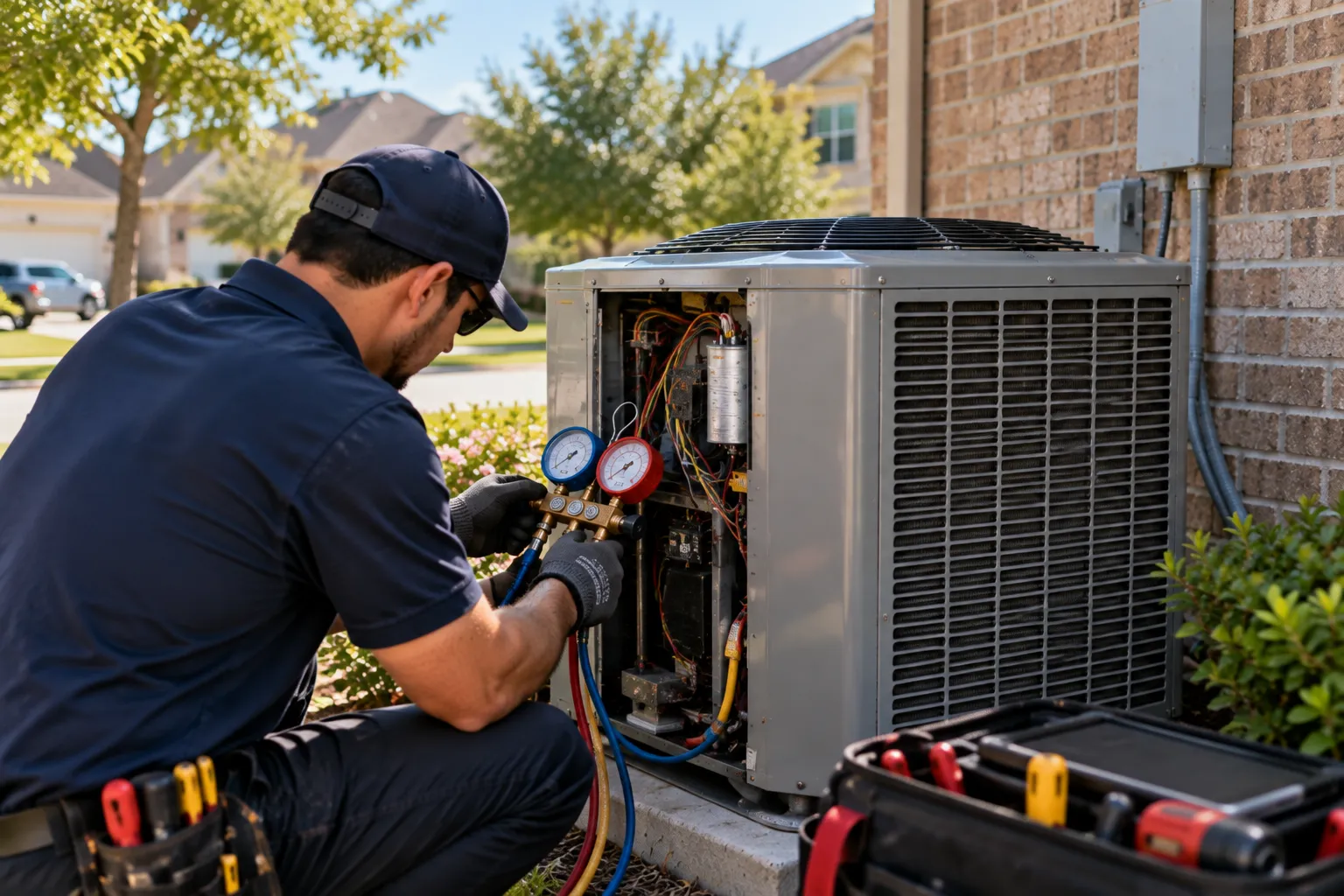
"AC tune-up" is one of the most searched HVAC terms in Houston's market — and for good reason. In a city where the air conditioner runs for eight or more months per year and where a system failure in July costs significantly more to deal with than a developing problem caught in April, the annual tune-up is the single highest-return maintenance investment available to Houston homeowners. It's also one of the most misunderstood — because what different companies mean when they say "tune-up" varies considerably, and homeowners who don't know what a proper tune-up actually includes can't tell the difference between a thorough service visit and a quick inspection dressed up in tune-up language.
This post covers exactly what a proper Houston AC tune-up includes, what it costs in the Greater Houston market, when to schedule it for maximum benefit, and what to watch for when evaluating whether a company is delivering real value or just showing up and checking a box.
WHAT A PROPER AC TUNE-UP ACTUALLY INCLUDES IN HOUSTON
The term tune-up gets applied to service visits ranging from a twenty-minute filter swap and thermostat check to a comprehensive two-hour service that addresses every major system component. In Houston's climate — where the system runs under demanding conditions for more of the year than almost anywhere else in the country — the abbreviated version isn't adequate. Here's what a proper Houston AC tune-up should cover.
Professional evaporator coil inspection and cleaning. The evaporator coil is the indoor component where refrigerant absorbs heat and moisture from the home's air. In Houston's humidity environment, biological growth establishes itself on the coil surface over the course of a cooling season — mold, mildew, and bacteria that reduce the coil's heat transfer efficiency, contribute to musty odors from the vents, and in some cases affect indoor air quality. A proper tune-up includes professional cleaning of the evaporator coil that addresses this biological fouling rather than simply noting the coil's condition without cleaning it. A tune-up that doesn't include evaporator coil cleaning hasn't addressed one of the most important maintenance items for a Houston system.
Professional condenser coil inspection and cleaning. The outdoor condenser coil rejects heat from the refrigerant to the outdoor air. Over a Houston cooling season, debris accumulates on the coil fins — pine needles in The Woodlands, Kingwood, and Conroe; cottonwood and grass in more open suburban settings; agricultural dust in Fort Bend County's rural communities; industrial particulates near the Ship Channel corridor in east Houston. This debris insulates the coil surface and forces the compressor to work harder against higher condensing temperatures, consuming more energy per unit of cooling produced and accelerating compressor wear. Professional condenser coil cleaning removes accumulated debris and restores the coil to its rated heat rejection performance.
Refrigerant charge verification. The refrigerant charge — the amount of refrigerant in the system — directly affects both cooling capacity and dehumidification performance. A system with a charge that's drifted low from a slow leak produces less cooling and less moisture removal per hour of operation than a system at the correct charge level. Verifying the refrigerant charge involves measuring system pressures and temperature differentials and comparing them to the manufacturer's specifications for the current outdoor conditions. If the charge is off, identifying and repairing the leak before adding refrigerant is the complete approach — simply adding refrigerant to a system with a leak is a temporary fix that doesn't address the underlying cause. A tune-up that includes refrigerant check should involve actual pressure measurements, not just a visual inspection of the refrigerant lines.
Capacitor testing and evaluation. Capacitors are electrical components that support motor starting and running in the compressor and condenser fan motor. They have a rated capacitance value — expressed in microfarads — and a specification tolerance. A capacitor reading significantly below its rated value is providing inadequate support to the motors it serves, causing them to draw more current than designed, run hotter than designed, and accumulate wear faster than they would with a properly functioning capacitor. A proper tune-up includes testing each capacitor's actual reading against its specification, not just checking whether the system starts — a system can start and run on a degraded capacitor while that capacitor is simultaneously causing motor damage. The technician should share the actual readings and what the specification is so you can see where the capacitor stands.
Contactor inspection and evaluation. The contactor is the electrical switch that controls power delivery to the compressor and condenser fan motor. Contactors develop pitting and burning on their contact surfaces from the electrical arc each time they close under load. A contactor with significantly pitted or burned contacts has increased electrical resistance that affects the quality of power delivery to the compressor. A tune-up should include visual inspection of the contactor contacts and evaluation of whether the contact surface condition warrants replacement.
Condensate drain inspection and clearing. The condensate drain system handles the water that drips off the evaporator coil as it removes moisture from Houston's humid air — several gallons per day during peak cooling season operation. In Houston's warm, humid environment, biological growth establishes itself in the drain pan and drain line throughout the cooling season, progressively reducing drain flow and eventually producing a complete blockage that causes water to overflow from the drain pan. A tune-up should include inspecting the drain pan for standing water and biological growth and clearing the drain line of any growth or blockage. Some technicians use a vacuum to clear the drain from the outdoor termination point; others treat the drain line with an algaecide tablet or solution after clearing it to slow biological regrowth.
Blower motor inspection and airflow verification. The blower motor moves air through the indoor air handler and through the duct system to the living space. A tune-up should include checking the blower motor's amperage draw against its rated specification — a motor drawing significantly more current than rated is working harder than it should, usually from restricted airflow, a capacitor issue, or beginning motor wear. The blower wheel should be inspected for debris accumulation — a blower wheel coated with dust and biological material from the Houston air is moving less air per revolution than a clean wheel and adding to the motor's load. In some cases, blower wheel cleaning is needed as a separate service item when accumulation is significant.
Electrical connections and wiring inspection. The electrical connections throughout the system — at the air handler, at the outdoor unit, at the disconnect boxes — can develop looseness or corrosion over time. Loose electrical connections increase resistance, generate heat, and in some cases cause intermittent electrical failures that are difficult to diagnose without knowing the connection condition. A tune-up should include checking electrical connections for tightness and inspecting for any visible signs of overheating or corrosion.
Thermostat calibration check. The thermostat controls when the system runs and at what setpoints. A thermostat that's reading indoor temperature inaccurately — which can happen from placement near heat sources, from calibration drift, or from aging sensors — causes the system to run at the wrong times and cycle off before reaching the actual desired conditions. A tune-up should confirm the thermostat is reading accurately and that the programmed settings are appropriate for the household's usage pattern.
Overall system performance assessment. At the end of the tune-up, the technician should provide a summary of the system's overall condition — what was found, what was addressed during the visit, what readings were taken, and any components that showed signs of developing wear that should be monitored or addressed before the next maintenance visit. This assessment is the information you need to understand where the system stands heading into the cooling season and to make informed decisions about any additional service recommendations.
WHAT A HOUSTON AC TUNE-UP SHOULD NOT BE
Several practices appear in tune-up service calls across the Greater Houston market that don't represent genuine value and that are worth recognizing.
A tune-up that takes less than forty-five minutes for a standard single system hasn't had time to complete the items listed above. Professional evaporator coil cleaning, refrigerant charge verification with actual pressure measurements, capacitor testing, condensate drain clearing, and the other components of a proper tune-up take time. A technician who's in and out in twenty minutes has either skipped items or performed them too quickly to do them correctly.
A tune-up that produces a recommendation to add refrigerant without identifying and repairing a leak hasn't addressed the underlying problem. Every residential AC system is a sealed refrigerant circuit — refrigerant doesn't get consumed and doesn't need to be topped off periodically. A system that needs refrigerant added has a leak. The complete repair involves finding and fixing the leak before adding refrigerant, not simply adding refrigerant and scheduling the next recharge visit.
A tune-up that comes with a high-pressure recommendation to replace major components without showing you the specific measurements that support the recommendation deserves scrutiny. A capacitor replacement recommendation should be supported by a specific capacitor reading that's outside the acceptable range. A coil replacement recommendation should be supported by specific findings — a coil that's been damaged rather than just dirty, a refrigerant leak at the coil itself. Measurements before recommendations is the standard of a trustworthy tune-up.
A tune-up priced significantly below market — $39 specials, $49 introductory offers — often serves as a loss-leader designed to get a technician into your home for an upsell visit rather than as a genuine service commitment. The economics of professional HVAC service don't support a comprehensive tune-up at prices significantly below the market range. Understanding what the price reflects helps you evaluate what you're actually getting.
WHAT AN AC TUNE-UP COSTS IN HOUSTON
The market range for a comprehensive AC tune-up from a licensed, insured Houston HVAC company in 2026 runs approximately $130 to $300 for a standard single system. This range reflects the cost of professional labor, the consumables used during the service — drain line treatment, evaporator coil cleaner, condenser coil cleaner — and the technician time required to complete a proper service visit on a Houston system.
At the lower end of this range, you're typically getting a competent tune-up from a company that operates efficiently and keeps service costs competitive. At the upper end, you're typically getting a more thorough visit, more included service items, or from a company with higher overhead costs from their brand, marketing spend, or service infrastructure.
Tune-up costs below $100 in the Houston market warrant questions about what's actually included — at that price point, something from the list above has been compressed or omitted.
Maintenance plans that bundle two service visits per year — spring cooling tune-up and fall heating inspection — typically run $200 to $450 per year for a single system and represent a better per-visit value than booking each visit separately. Maintenance plans also typically include priority scheduling for service calls, which has significant practical value in Houston's market during peak summer when service demand is highest.
When any repair items are found during the tune-up — a capacitor reading below specification, a refrigerant charge that's off, a drain line that needs clearing — those items are typically quoted separately from the tune-up cost itself. The tune-up covers the inspection and assessment; the repairs that come out of it are separate line items. This is standard and appropriate — the tune-up's value is in identifying these items while they're still manageable rather than waiting for them to produce failures.
WHEN TO SCHEDULE A HOUSTON AC TUNE-UP — TIMING MATTERS
The optimal timing for a Houston AC tune-up is March or April — before the cooling season begins, while the system hasn't yet been called on for sustained daily operation, and while scheduling is still manageable before the spring rush compresses availability.
March and April scheduling specifically serves Houston homeowners because any issues found during the tune-up can be addressed during mild weather when parts are readily available, when scheduling for follow-up repairs is easy, and when the system isn't already under daily load pressure. A capacitor found reading below specification in April gets replaced at a scheduled repair appointment in April. The same capacitor that fails in July produces an emergency service call during peak summer when every HVAC company in Houston is fielding calls simultaneously.
May is still a reasonable time for a tune-up if March or April scheduling was missed, but service availability begins to tighten in May as peak season approaches and emergency calls begin competing with scheduled maintenance appointments for technician time.
June through August tune-up scheduling is possible but should be treated as catch-up maintenance rather than optimal timing. Systems that haven't been serviced before peak season are already operating under maximum load conditions, and any developing issues that the tune-up finds have already been affecting system performance through the hottest weeks of the year.
September is a secondary optimal window — the system is still running under real load conditions for the first few weeks of September, making it possible to observe performance under meaningful demand rather than in mild weather. Issues found in September can be addressed before the system transitions to fall operation. September scheduling also serves as the starting point for fall heating inspection scheduling.
For homeowners who missed the spring window entirely and are reading this in late September or October, scheduling a fall tune-up that covers both the cooling system's end-of-season condition and the heating system's readiness for winter is the appropriate approach.
THE CONNECTION BETWEEN THE TUNE-UP AND THE SYSTEM'S REMAINING LIFE
A tune-up is not just about the current season's performance — it's about what happens to the system over its entire remaining service life. This long-term connection is worth understanding specifically.
A Houston AC system that receives consistent annual professional maintenance accumulates wear differently than one that doesn't. The condenser coil that's professionally cleaned every spring never develops the deep, packed fouling that forces the compressor to operate at elevated pressures year after year. The capacitor that's tested and replaced when it reads below specification never puts the compressor and fan motor through the accelerated wear of running on degraded capacitor support for seasons at a time. The condensate drain that's cleared annually never overflows onto the surrounding structure or backs up in ways that allow standing water in the drain pan to accelerate coil corrosion.
In Houston's climate, where the system runs for eight or more months per year and accumulates more annual operating hours than systems in moderate markets, the compounding effect of consistent maintenance versus neglect on component longevity is more pronounced than anywhere else. A Houston system that reaches fifteen years of service with consistent annual maintenance has been protected from the compounding wear that would have shortened its life to ten or eleven years without it.
The annual tune-up is the mechanism through which that protection is delivered. Not dramatically or all at once — one tune-up doesn't transform a neglected system into a healthy one — but consistently, year after year, in the same way that annual dental cleanings matter not because of what happens at any single appointment but because of what doesn't happen over years of consistent care.
WHAT TO DO IF THE SYSTEM HASN'T BEEN SERVICED IN YEARS
For Houston homeowners whose system hasn't had a professional tune-up in two or more years — or who have never had the system serviced since it was installed — the first service visit is more of a remediation than a maintenance visit. Here's what to expect.
The condenser coil may require more intensive cleaning than a well-maintained system needs annually — multiple applications of coil cleaner and more thorough rinsing to address fouling that's built up over multiple seasons rather than just the current year's accumulation.
The evaporator coil may have significant biological growth that requires professional cleaning with appropriate coil-safe cleaners rather than simple rinsing. The biological growth that builds up over multiple seasons without cleaning is more established and more firmly bonded to the coil surface than growth from a single season.
The capacitor may be reading well below specification — potentially below the point where it's reliably starting the motors rather than just below the specification threshold. Component replacement may be part of the remediation visit rather than a recommendation to monitor.
The refrigerant charge may be off from a leak that's been active for an extended period. Locating and repairing the leak and recharging the system to specification is the appropriate response — not just adding refrigerant to whatever level the system is currently at.
The condensate drain may have accumulated biological growth to the point of complete or near-complete blockage. Professional clearing and treatment is appropriate for a drain that's been unserviced for years.
The remediation visit costs more than a standard annual tune-up because more is found and more needs to be addressed. But it resets the system's maintenance baseline and allows subsequent annual tune-ups to be the routine, efficiently delivered service visits they're meant to be rather than another round of remediation.
FINDING A COMPANY THAT DELIVERS A REAL TUNE-UP IN HOUSTON
The Houston market has hundreds of licensed HVAC contractors and a wide range of service quality across them. A few specific signals help identify companies that deliver genuine tune-up value rather than abbreviated service.
The company specifies what's included before you book. A company that can tell you precisely what the tune-up covers — coil cleaning on both coils, refrigerant charge verification with actual measurements, capacitor testing, condensate drain clearing, and so on — is a company that has a defined service standard. A company that's vague about what the tune-up includes may be equally vague about what they actually do during the visit.
The technician takes measurements and shows them to you. A capacitor reading, a refrigerant pressure reading, an amperage measurement — these are specific numbers that a technician doing a proper tune-up produces. A company whose technicians show you the actual readings rather than just telling you what they found is demonstrating transparency that's worth valuing.
The visit takes at least forty-five minutes to an hour for a single standard system. This isn't a guarantee of quality — someone can spend an hour doing not much — but a tune-up completed in twenty minutes for a single system has skipped something. Ask how long the visit typically takes.
The company provides a written service report after the visit. Documentation of what was inspected, what was found, what readings were taken, what was done, and any recommendations should be part of every professional tune-up in Houston. This report is your maintenance record for warranty compliance and for your own reference at subsequent service visits.
Reviews that describe specific service details — the technician's name, what was found, what was repaired, how the technician communicated — are more informative than reviews that simply say "great service." Specific reviews reflect specific experiences rather than general sentiment and tell you more about what to expect from the actual service visit.
Multipoint AC & Heating provides comprehensive AC tune-ups, maintenance plans, repair, and installation throughout Greater Houston, including Harris County, Fort Bend County, Montgomery County, and Austin County. Our tune-ups cover everything described in this guide — both coils cleaned, refrigerant verified, capacitors tested, drain cleared, and a written assessment of your system's condition. Contact us at 832-963-3789 to schedule your spring tune-up or to discuss a maintenance plan that keeps your system serviced consistently through Houston's demanding cooling season.