Signs You Need a New AC Unit in Houston — Before It Dies on You
Discover the warning signs your AC unit is failing before it's too late. Plan a timely replacement to avoid emergencies in Houston's heat.
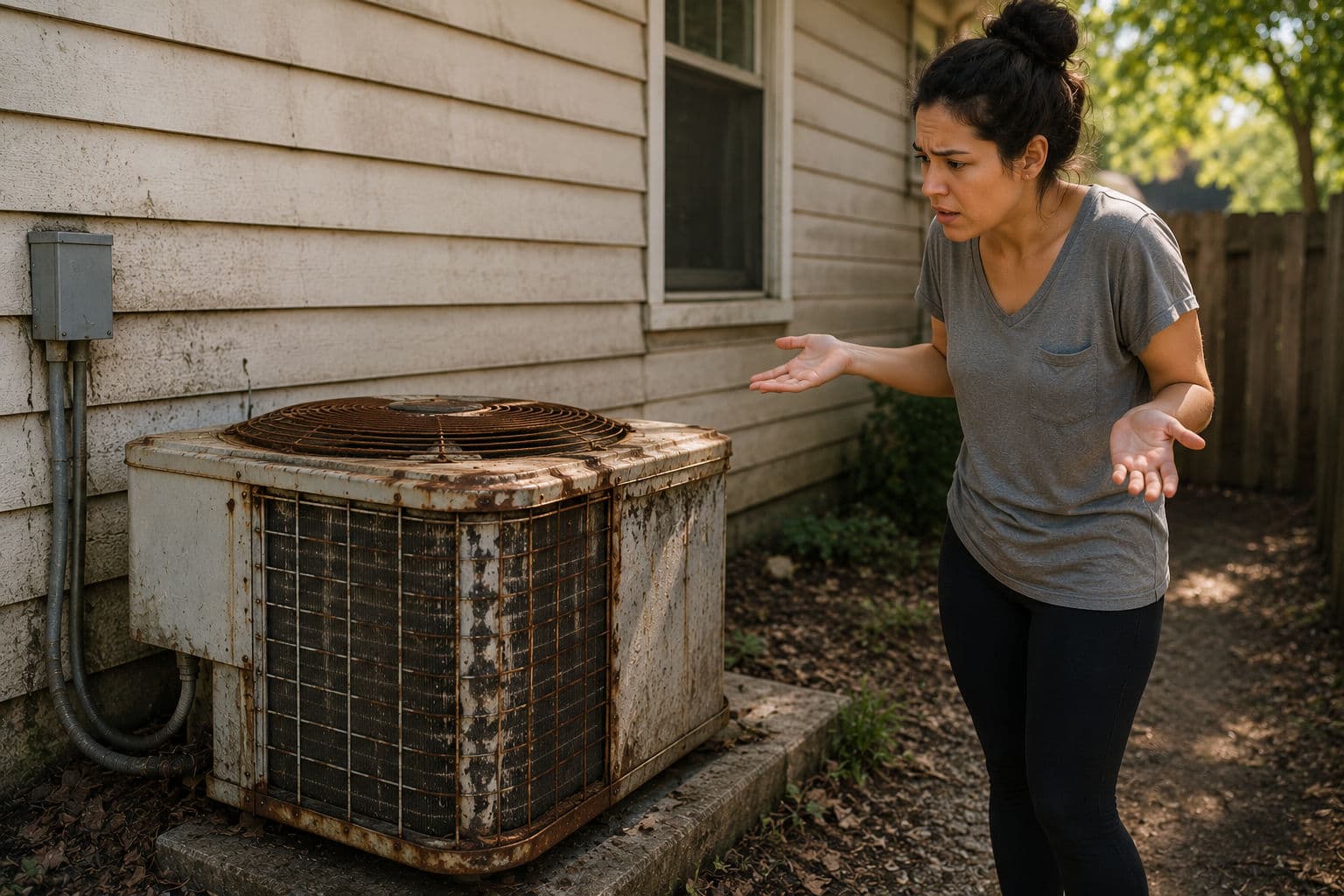
An air conditioner rarely fails without warning. The warning signs are usually there for months or even a full season before the system stops working entirely — but they're easy to dismiss, explain away, or simply not recognize for what they are. In Houston's summer, a system that dies completely on a 100-degree July afternoon is both a comfort emergency and a financial one, because you're making a major equipment decision under pressure rather than on your own timeline.
Knowing the signs that a system is approaching end of life gives you the ability to plan a replacement on your schedule — comparing quotes, selecting equipment thoughtfully, and scheduling installation at a time that works for you rather than scrambling for the first available technician during peak season when every HVAC company in the metro is fully booked.
Here's what to watch for.
THE SYSTEM IS MORE THAN 12 YEARS OLD
Age alone isn't a reason to replace an AC system that's performing well, but it's a threshold that changes how you should interpret everything else on this list. Past 12 years in Houston's climate, the compressor, capacitors, contactor, and other components have accumulated enough operating hours that failure becomes increasingly likely with each additional season.
A 14-year-old system that needs a capacitor replaced is a different situation than a 6-year-old system with the same repair. On the older system, the capacitor repair is one in a series of repairs that are becoming more frequent as multiple components approach end of life simultaneously. On the newer system, it's an isolated failure with years of reliable operation ahead.
If your system is past 12 years old, every repair it needs should be evaluated in the context of its age rather than treated as a standalone decision.
REPAIRS ARE BECOMING MORE FREQUENT
A system that went five years without needing anything and has now needed two repairs in the past two summers is showing you something important about where it stands. Component failures on aging HVAC systems tend to cluster rather than occur in isolation — when one part fails, it's often because the system has reached the age where multiple parts are simultaneously approaching the end of their service life. Fixing one component doesn't address what's developing in the others.
If you find yourself calling for HVAC service more than once per cooling season, or if each repair conversation is followed by the technician noting other components that are showing wear, the system is likely in its final years rather than the middle of its life.
THE LAST REPAIR WAS SIGNIFICANT
Some repairs on older systems are straightforward decisions — a capacitor replacement on an eight-year-old system is worth doing without much deliberation. Other repairs on older systems put you at a financial crossroads.
Compressor replacement is the most common of these. The compressor is both the most expensive component in the system and the one most indicative of overall system health. A compressor that's failed on a system that's 12 or more years old is rarely a straightforward repair decision. The compressor itself costs $1,200 to $2,500 to replace, the labor is significant, and a system that's experienced compressor failure has almost always been running under conditions — low refrigerant, dirty coils, poor maintenance — that have stressed the other components as well.
Evaporator coil replacement is a similar situation. A leaking evaporator coil on an older system often costs $800 to $1,500 or more to replace, and on a system using R-22 refrigerant the cost is higher still because of R-22's limited supply and elevated price.
When a single repair on an older system costs more than a third of what a new system would cost, the full replacement conversation deserves serious consideration rather than automatic repair approval.
YOUR ENERGY BILLS HAVE CLIMBED WITHOUT EXPLANATION
An AC system loses efficiency as it ages, and the loss accelerates in the final years before failure. A system that cost a specific amount to run per month two summers ago and is noticeably more expensive to run this summer — with the same thermostat settings, the same household, and similar outdoor temperatures — is consuming more electricity to deliver the same or less cooling than it used to.
This efficiency decline has a real dollar cost that compounds over every remaining season the system runs. A system that's costing $75 more per month to run than a new system would isn't just uncomfortable — it's eroding the cost comparison between continuing to maintain it and replacing it, making the case for replacement stronger with every passing billing cycle.
THE HOME NEVER FEELS AS COMFORTABLE AS IT USED TO
Comfort decline is one of the earliest signs of a system losing capacity, and it often precedes obvious mechanical failures by one or more seasons. If your home was reliably comfortable on peak summer days three or four years ago and now struggles to stay at the set temperature during Houston's hottest afternoons, the system has lost cooling capacity.
Capacity loss has several causes — low refrigerant, dirty coils, compressor wear — some of which are recoverable and some of which aren't. On a system that's past 12 years old and showing other signs of age, capacity decline is often a combination of factors rather than a single correctable issue, and restoring the system to its original performance level isn't always achievable through maintenance or repair.
THE SYSTEM IS USING R-22 REFRIGERANT
R-22 refrigerant was phased out of production under EPA regulations, and the supply of existing R-22 has been steadily depleting since production stopped. The cost of R-22 recharging has risen significantly as a result — what once cost $30 to $50 per pound now commonly costs $100 to $150 per pound or more depending on market conditions.
If your system uses R-22 — which is the case for most systems installed before 2010 — and it develops a refrigerant leak, the economics change dramatically compared to a leak repair on a newer system using current refrigerants. A significant R-22 recharge on a system that's already 14 or more years old can cost as much as a substantial fraction of a new system's installation price, for equipment that may have only a few seasons of reliable life remaining.
R-22 system owners should be having the replacement conversation now rather than waiting for a leak to force the issue at the worst possible time.
THE OUTDOOR UNIT IS MAKING NEW NOISES
New sounds from an aging outdoor unit — grinding, squealing, persistent clicking, or rattling that wasn't present before — are worth taking seriously rather than dismissing. On a system that's been in service for 12 or more years, new mechanical noises almost always indicate developing component failures rather than benign adjustments.
A compressor that's beginning to fail often produces a grinding or squealing sound before it stops working entirely. Catching a compressor in early failure rather than complete failure gives you the option to evaluate repair versus replacement thoughtfully rather than responding to an emergency. It also gives you the ability to keep the system limping along on reduced capacity while you schedule a replacement installation, rather than being without cooling entirely while you wait.
YOU'VE HAD MULTIPLE REFRIGERANT RECHARGES
If a technician has added refrigerant to your system more than once in recent years, there's a leak that hasn't been properly located and repaired. Repeated recharging without leak repair is a symptom of deferred maintenance that's allowing the underlying problem to compound — and the refrigerant loss itself is causing ongoing compressor damage every time the system operates on a low charge.
A system that has needed refrigerant multiple times is a system with a leak that needs proper diagnosis. On an older system, that leak repair and recharge may be worth doing — or the cost of the leak repair may tip the repair versus replacement calculation toward replacement, particularly if R-22 is involved.
THE SYSTEM IS OVER 15 YEARS OLD AND HAS ANY OF THE ABOVE SIGNS
Past 15 years of service in Houston's climate, a system has accumulated enough operating hours that replacement is typically the more financially sound decision whenever a significant repair is needed. Not because a 15-year-old system can't be repaired, but because the remaining service life after a significant repair is likely short enough that the total cost of the repair plus a replacement in two or three years exceeds the cost of replacing now and starting a new 12 to 15 year service life on a system that's covered by a manufacturer warranty.
WHAT TO DO IF YOU RECOGNIZE THESE SIGNS
The best outcome when you recognize these warning signs is to start the replacement conversation before the system fails rather than after. Get quotes, compare equipment options, and schedule installation during a period when HVAC companies have availability — late spring before peak season, or fall after the summer rush — rather than competing for the first available technician during a July breakdown when you're without AC and every company in Houston is fully booked.
A planned replacement on a system that's showing end-of-life signs almost always produces a better outcome than an emergency replacement forced by a complete failure. You have time to choose the right equipment, compare proposals, and schedule the installation at your convenience rather than accepting the first available option under pressure.
Multipoint AC & Heating provides AC repair, maintenance, and full system installation throughout Greater Houston, including Harris County, Fort Bend County, Montgomery County, and Austin County. If your system is showing any of these signs and you'd like an honest assessment of where it stands, contact us to schedule a diagnostic visit.