How Do I Know When It's Time for an AC Replacement in Houston?
Wondering if it's time for an AC replacement in Houston? Discover signs that indicate a new system might be needed and avoid unexpected breakdowns.
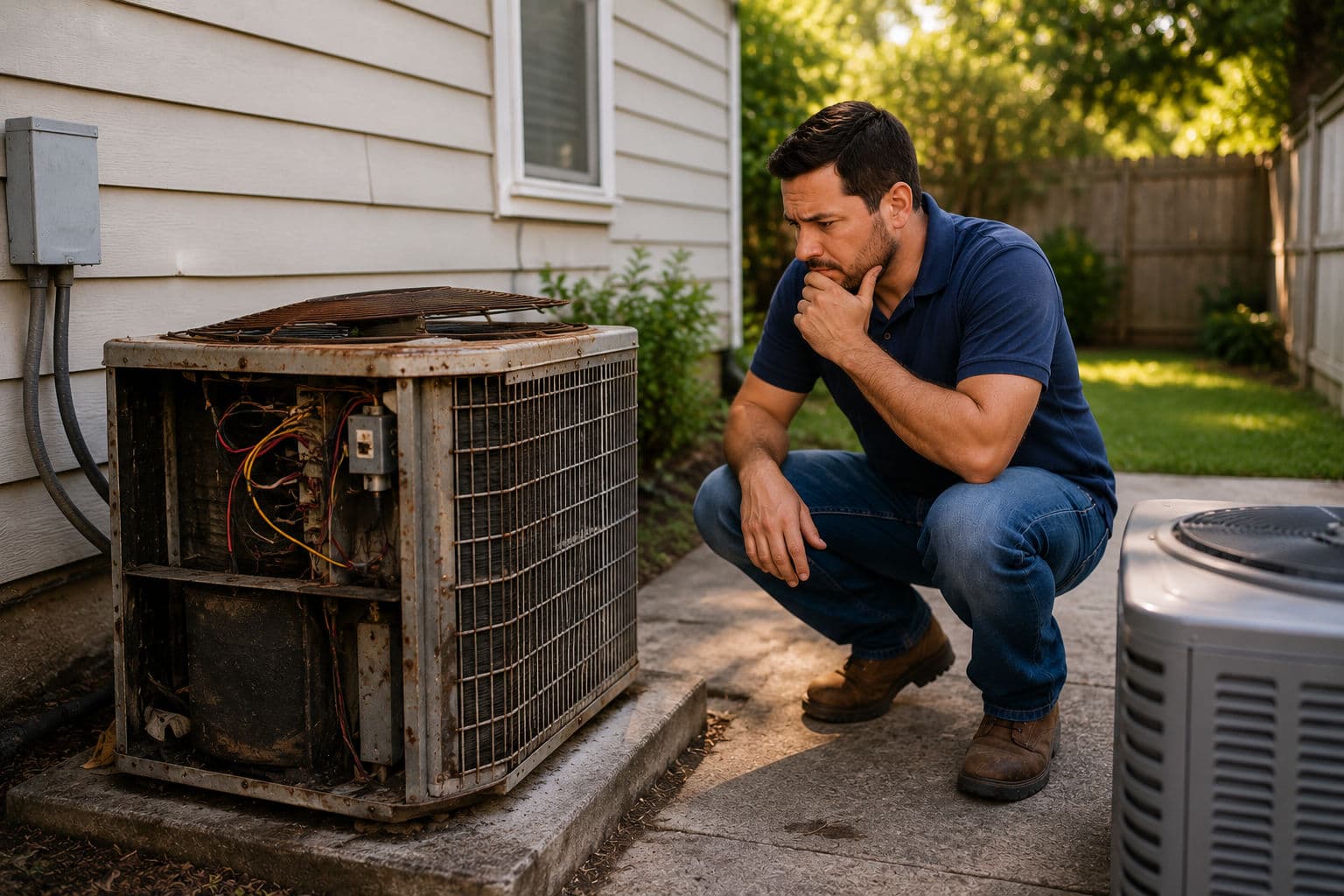
Your air conditioner won't last forever — especially in Houston's demanding climate. Here's how to recognize the signs before a breakdown leaves you without cooling in the middle of summer.
By Multipoint AC & Heating | Serving Greater Houston
Knowing when to replace your air conditioning system is one of the trickiest calls a Houston homeowner has to make. Replace too soon and you've spent money you didn't need to. Wait too long and you're stuck with an emergency breakdown on the hottest day of the year — paying premium rates for a rushed installation while your family swelters.
The truth is, most homeowners don't know it's time for a replacement until something goes wrong. But there are warning signs your system gives you well in advance — if you know what to look for. Here's what to watch for, and how the team at Multipoint AC & Heating helps Houston homeowners make the right call at the right time.
Sign #1: Your Energy Bills Keep Climbing
If your utility costs have been creeping up year over year — even though your usage habits haven't changed — your AC system is likely losing efficiency. Air conditioners lose their ability to cool effectively as components wear out, refrigerant levels drop, and years of Houston heat take their toll. An inefficient system works harder and longer to achieve the same result, and that shows up directly on your electric bill.
Houston homeowners are especially vulnerable to this because our cooling season runs from roughly April through October. That's seven months of near-constant AC operation, which accelerates efficiency loss faster than in virtually any other U.S. city.
If your summer energy bills have increased by 15 percent or more compared to two or three years ago and your rates haven't changed significantly, it's time to have your system evaluated.
Sign #2: Your AC Is No Longer Keeping Your Home Cool
This one seems obvious, but many homeowners put up with a home that never quite reaches the set temperature for longer than they should — assuming it's just the Houston heat. If your system is running constantly but your home stays at 80°F or above when it's set to 76°F, your AC is telling you it no longer has the capacity to do its job.
This can be caused by a specific repair issue — low refrigerant, a failing compressor, a dirty coil — but in older systems it often signals that the unit has simply reached the end of its effective life. No single repair will restore a worn-out system to peak performance.
Sign #3: Your System Is 10 to 15 Years Old
Most air conditioning systems have a lifespan of 10 to 15 years under normal conditions. In Houston, where systems run harder and longer than in most other parts of the country, that window can be closer to 10 to 12 years for units that haven't been regularly maintained.
If your system is in that age range, it doesn't necessarily mean you need to replace it today — but it does mean you should be watching it closely and planning ahead. An aging system is more likely to fail during peak demand, and repairs on older units become more frequent and more expensive as components approach the end of their service life.
Age combined with any of the other signs on this list is a strong indicator that replacement is the smarter investment.
Sign #4: You're Facing a Major Repair Bill
When a significant repair comes up on an older system, use the $5,000 Rule to help guide your decision: multiply the age of your system by the cost of the repair. If the result exceeds $5,000, replacement is almost always the better investment.
For example, a compressor replacement on a 13-year-old Houston AC system might cost $800 to $1,200. At 13 years old × $1,000 repair = $13,000 — well over the threshold. In that scenario, putting that money toward a new, energy-efficient system makes far more financial sense than extending the life of an aging unit by a year or two.
A new system also comes with a manufacturer's warranty and modern energy efficiency ratings that can reduce your monthly cooling costs by 20 to 40 percent compared to an older unit.
Sign #5: You're Calling for Repairs More Than Once a Year
One repair every few years is normal maintenance. But if your AC system has needed attention two or more times in a single cooling season — or if you're seeing a pattern of annual breakdowns — the system is past its reliable service life. Frequent repairs are not only expensive in the short term, they're a signal that more failures are coming.
In Houston's climate, an unreliable AC isn't just an inconvenience — it's a health risk. Heat-related illness is a serious concern when temperatures stay above 95°F for days at a time. A system you can't depend on is a liability.
Sign #6: Your System Uses R-22 Refrigerant
If your AC system was manufactured before 2010, there's a good chance it uses R-22 refrigerant — also known as Freon. R-22 has been phased out by the federal government due to its environmental impact, and production of R-22 ended in 2020. That means the supply is limited, costs have increased significantly, and servicing an R-22 system is becoming more expensive with every passing year.
If your system uses R-22 and develops a refrigerant leak, the cost of a recharge alone may be enough to justify replacement. All modern AC systems use R-410A or newer refrigerants that are widely available and properly supported.
Sign #7: Your Home Has Humidity and Comfort Problems
A properly functioning air conditioner doesn't just cool your home — it removes moisture from the air. If you're noticing that your home feels sticky and humid even when the AC is running, or if certain rooms never seem to reach a comfortable temperature, your system may no longer be performing the way it should.
In Houston, humidity control is not optional. When indoor relative humidity climbs above 55 to 60 percent, it creates conditions for mold growth, worsens allergy and asthma symptoms, and makes your home feel several degrees warmer than it actually is. An aging or undersized system that can't manage humidity is a problem that a new, properly sized system can solve.
Sign #8: Your System Is Making Unusual Noises
Banging, rattling, grinding, squealing, or clicking sounds coming from your indoor or outdoor unit are never normal. These noises typically indicate worn bearings, a failing compressor, loose components, or debris in the system. While some of these issues are repairable, they often signal broader wear that points toward replacement — particularly in systems that are already in the 10-plus-year range.
The Smartest Way to Know for Sure: Schedule Regular Maintenance
The most reliable way to know when your AC system is approaching the end of its life is to schedule regular professional maintenance. During a maintenance visit, an experienced HVAC technician can assess the overall condition of your system, identify components that are showing wear, and give you an honest, informed recommendation about whether repair or replacement makes more sense — before you're forced into a decision by an emergency breakdown.
At Multipoint AC & Heating, our technicians don't just fix what's broken today. We look at the full picture of your system's age, condition, and efficiency to help you plan ahead and make the decision that saves you the most money over time. We serve homeowners across Houston, Katy, Sugar Land, The Woodlands, Pearland, Friendswood, Missouri City, Cypress, Humble, Pasadena, League City, Baytown, Conroe, and the entire Greater Houston metro area.
What to Expect From a New AC System
If replacement is the right move, the good news is that modern air conditioning systems are dramatically more efficient than units from 10 or 15 years ago. Today's systems offer:
SEER2 efficiency ratings of 15 to 20 or higher, compared to 10 to 13 for older units — translating to significant monthly energy savings
Improved humidity control that makes Houston summers genuinely more comfortable
Quieter operation with variable-speed compressors and fan motors
Smart thermostat compatibility for automated scheduling and remote control
Manufacturer warranties of 10 years or more on parts and compressors
The investment in a new system typically pays for itself through energy savings within 5 to 8 years — and in the meantime, you get a reliable, efficient system that won't leave you stranded during a Houston heat wave.
Houston Pro Tip: Don't Wait for a Breakdown
The worst time to replace your AC system is during a summer emergency when every HVAC company in Houston is booked out for days and you have no choice but to pay whatever it takes to get someone out quickly. If your system is showing multiple warning signs, plan your replacement during the off-season — late fall or early spring — when scheduling is easier, pricing may be more flexible, and you have time to choose the right system without pressure.
Not Sure Where Your System Stands? Let Us Take a Look.
At Multipoint AC & Heating, we offer honest, no-pressure AC evaluations for homeowners throughout the Greater Houston area. We'll assess your system's age, condition, and efficiency and give you a straight answer about whether repair or replacement makes the most sense for your home and your budget.
Don't wait until the middle of a Houston summer to find out your AC is on its last legs. Call us today and let's get ahead of it.