AC Making a Clicking, Buzzing, or Grinding Noise in Houston? Here's What It Means
Is your AC making strange noises in Houston? Identify clicking, buzzing, or grinding sounds to prevent costly repairs with our expert tips.
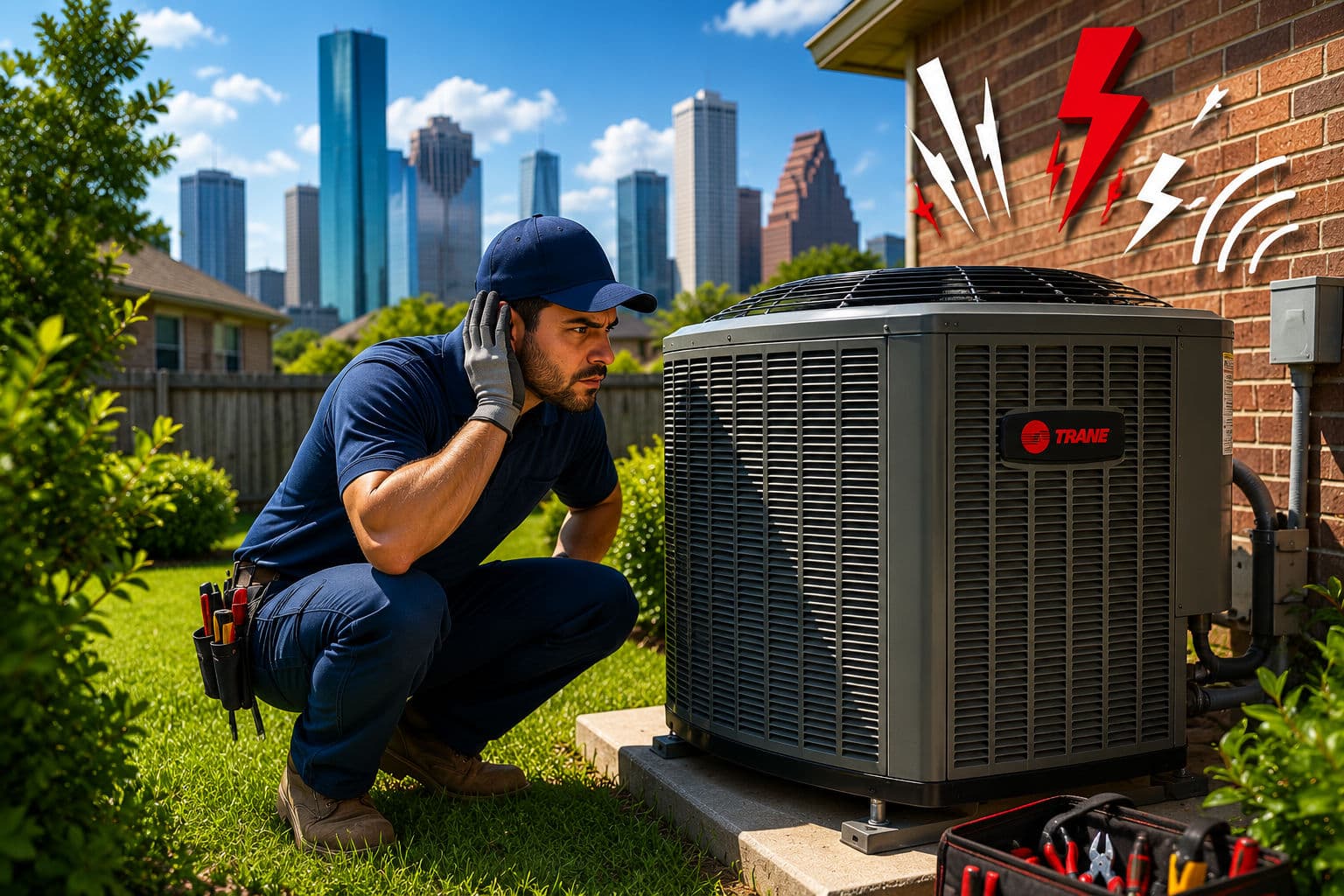
Your air conditioner is supposed to make one sound — a steady, consistent hum when it's running. When you start hearing something different, it's worth paying attention. Some AC noises are minor and easy to address. Others are early warning signs of a component failure that will get significantly more expensive if it's left alone. In Houston's peak cooling season, when systems are running eight to ten hours a day or more, developing problems accelerate faster than they would in a more moderate climate.
Here's what the most common AC noises typically mean and what you should do about each one.
CLICKING
A single click when the system starts or shuts off is completely normal — that's the sound of the contactor engaging or releasing. The problem is when clicking becomes rapid, repeated, or constant.
Rapid clicking when the system tries to start but doesn't is one of the most common sounds we get called about in Houston. It almost always points to a failing capacitor. The capacitor is a small cylindrical component that provides the electrical burst needed to start the compressor and fan motors. When it starts to fail, the system struggles to start, clicks repeatedly, and either eventually starts or gives up and shuts off. Left alone, a failing capacitor puts excessive strain on the motors and eventually leads to a motor failure — a significantly more expensive repair than the capacitor itself.
Clicking during operation rather than just at startup and shutdown can point to debris in the outdoor unit fan, a relay or control board problem, or a failing thermostat connection. These warrant a diagnostic visit to identify the source.
BUZZING
A buzzing sound from your AC outdoor unit is one of the more urgent noises to have checked because it usually indicates an electrical problem. The most common causes are a failing contactor, loose electrical connections, a refrigerant leak causing liquid refrigerant to enter the compressor, or a failing compressor itself.
A buzzing or humming outdoor unit that isn't running — the fan isn't spinning and no cold air is coming from the vents — is often a seized compressor or a capacitor failure that's preventing the compressor from starting. Both warrant a same-day service call, particularly in Houston's summer heat.
A buzzing from the indoor air handler can indicate a blower motor issue, a loose component vibrating against the cabinet, or an electrical connection problem in the air handler itself.
GRINDING
A grinding noise from your AC is one of the sounds that should prompt an immediate call. Grinding almost always means metal-on-metal contact from a bearing that has worn out in a motor — either the blower motor inside the air handler or the condenser fan motor in the outdoor unit.
When a motor bearing wears to the point of grinding, the motor is approaching failure. Running the system in this condition accelerates the damage and risks burning out the motor entirely or damaging surrounding components. A bearing replacement or motor replacement at the first sign of grinding is almost always significantly less expensive than what happens if you wait until the motor seizes.
SQUEALING OR SCREECHING
A high-pitched squealing or screeching sound, particularly from the outdoor unit, most commonly indicates a failing compressor. A compressor that's losing internal pressure or developing a mechanical fault often produces a high-pitched metallic squeal before it fails completely.
Squealing can also come from a belt-driven blower in older systems where the belt has worn or slipped. Newer systems don't typically use belt-driven blowers, but older Houston homes with original or early-replacement equipment may still have them.
Either way, squealing warrants prompt attention. A failing compressor is the most expensive component in your AC system. Catching and diagnosing it before it fails completely gives you more options — including the time to properly evaluate whether compressor repair or full system replacement makes more financial sense for a system of your age.
RATTLING
Rattling has a wider range of causes than most other AC noises and ranges from completely benign to a sign of a developing problem.
A rattling sound when the system starts that goes away once it's running is often just a loose panel or screw on the cabinet — something that can be addressed during a maintenance visit.
A rattling from the outdoor unit that persists during operation usually means debris — a leaf, a stick, a piece of cottonwood — has gotten into the unit and is hitting the fan blade. This is particularly common in The Woodlands, Kingwood, Conroe, and other heavily wooded Houston communities where organic debris around outdoor units is a consistent issue. Turning off the system and clearing the debris usually resolves it, but inspecting the fan blade for damage afterward is worth doing.
A rattling or vibrating sound from the ductwork, particularly when the system first starts up, is often caused by duct panels expanding from air pressure or temperature change. This is more common in older duct systems in Houston's established communities — Sugar Land, Katy, Humble, Missouri City, Spring — where ductwork has been in service for twenty or more years and may have loose connections or deteriorated flexible sections.
BANGING
A banging sound from the outdoor unit usually indicates a loose or broken component inside the compressor — an internal spring, a piston, or a counterweight that has come loose. A banging compressor is typically at or near the end of its service life and in most cases warrants a compressor replacement or full system evaluation to determine whether replacement of the entire system is the more practical path.
A banging from the indoor air handler at startup is sometimes a sign of an air pressure problem caused by a severely clogged filter or closed supply vents, which creates a pressure wave in the ductwork when the blower starts. Check your filter and make sure supply vents throughout the home are open before assuming it's an equipment problem.
HISSING OR BUBBLING
A hissing sound from the indoor unit or the refrigerant lines running between the indoor and outdoor unit typically indicates a refrigerant leak. Refrigerant escaping through a small leak produces a hissing sound as it transitions from liquid to gas. A bubbling or gurgling sound along the refrigerant lines usually indicates air or moisture in the refrigerant circuit, which can happen after an improper repair or a significant leak.
Both sounds warrant prompt attention. Refrigerant leaks don't resolve on their own, the system loses cooling capacity as the charge drops, and operating on low refrigerant puts additional strain on the compressor. We locate the source of the leak, repair it, and restore the system to the correct charge level before returning it to service.
WHEN TO CALL IMMEDIATELY VERSUS WHEN TO SCHEDULE A VISIT
Call the same day or use emergency service for grinding, loud banging, squealing from the compressor, buzzing combined with the system not running, or hissing from refrigerant lines — these noises indicate active damage or imminent failure in components that get significantly more expensive to address the longer they run.
Schedule a service visit within a few days for rapid clicking at startup, persistent rattling from the outdoor unit, or buzzing that doesn't seem to be affecting system performance yet — these point to developing problems that aren't emergencies today but will become more expensive if left for weeks.
Keep an eye on it and mention it at your next maintenance visit for a single click at startup and shutdown, minor rattling from the cabinet that stops once the system reaches operating speed, or duct vibration that doesn't affect airflow or comfort.
If you're hearing something from your AC that isn't on this list or that you're not sure how to categorize, the safest call is always to have it checked. In Houston's peak cooling season, a small developing problem and a system running eight or more hours per day is a combination that rarely stays small for long.
Multipoint AC & Heating provides diagnostic and repair service throughout Greater Houston, including Harris County, Fort Bend County, Montgomery County, and Austin County. For urgent AC noise issues, our 24/7 emergency service is available day and night.