Why Is My AC Freezing Up in Houston? Causes, What to Do, and How to Prevent It
Discover common reasons for AC freezing in Houston, effective solutions, and preventative tips to ensure efficient cooling throughout the summer.
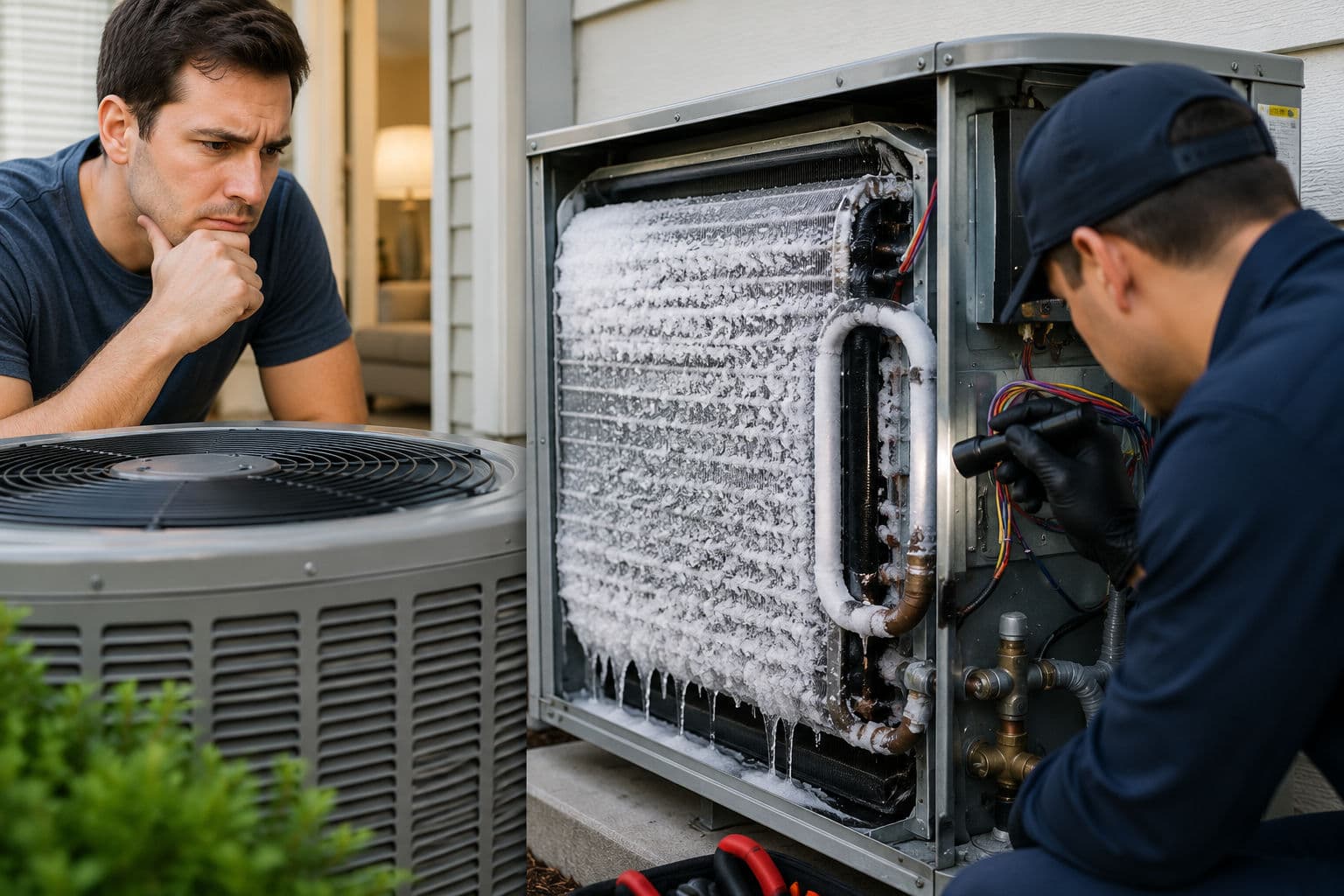
Finding ice on your air conditioner in the middle of a Houston summer feels counterintuitive. Your system is supposed to be fighting heat, not producing ice. But a frozen AC is one of the more common service calls we handle throughout Harris County, Fort Bend County, and the surrounding Greater Houston area during peak cooling season — and it's one that homeowners frequently mishandle, which turns a manageable problem into a more expensive one.
Here's what's actually happening when your AC freezes, why it happens specifically in Houston's climate, and what to do about it.
WHAT A FROZEN AC ACTUALLY LOOKS LIKE
Ice on an air conditioner doesn't always look the way you might expect. Sometimes it's visible — ice forming on the copper refrigerant lines running between your indoor air handler and the outdoor unit, or ice visible around the indoor unit itself. Other times the only sign is that the system is running but producing little to no cool air from the vents, because the ice has built up on the evaporator coil to the point where airflow through the coil is completely blocked.
If your AC is running and the vents are blowing air but it's not cold, or if you notice ice on the copper lines near the indoor unit, a frozen evaporator coil is one of the first things to check.
WHAT CAUSES AN AC TO FREEZE IN HOUSTON
Your evaporator coil operates at a very cold temperature — typically around 40 degrees Fahrenheit — to absorb heat from the warm air passing over it. Under normal conditions, the warm air moving continuously across the coil keeps the coil surface above freezing. When something disrupts that heat exchange — either by reducing airflow across the coil or by lowering the coil's operating temperature below the point where the air passing over it can keep it from freezing — ice begins to form. Left running, the ice builds up until the coil is completely encased and airflow stops entirely.
In Houston's climate, two factors make AC freezing more common than in drier regions: the high humidity means there's more moisture in the air available to freeze on the coil surface, and the long cooling season means systems run more hours per year, which accelerates the wear and accumulation issues that cause freezing.
The specific causes fall into two categories — airflow problems and refrigerant problems.
AIRFLOW PROBLEMS THAT CAUSE FREEZING
A clogged air filter is the most common cause of a frozen evaporator coil, and in Houston it's a particularly frequent finding because filters accumulate biological material faster in high-humidity conditions than in drier climates. When the filter is severely restricted, airflow across the evaporator coil drops to the point where the coil can't absorb enough heat to stay above freezing. The fix is straightforward — replace the filter — but the ice that's already formed needs to melt before the system can run normally again.
During peak Houston summer, checking your filter monthly and replacing it every 30 to 60 days is the right interval for most homes. Homes with pets, older ductwork, or higher dust levels should check more frequently.
Closed or blocked supply vents reduce the total airflow through the system below what the equipment requires. A common misconception is that closing vents in unused rooms saves energy — it doesn't. It creates a pressure imbalance in the duct system that reduces total system airflow and can contribute to evaporator coil freezing. Open all supply vents throughout your home and make sure furniture, rugs, and other objects haven't been moved to cover return air grilles since the system was last running normally.
A failing blower motor reduces airflow across the evaporator coil as it loses capacity. If the filter is clean, all vents are open, and the system is still freezing repeatedly, blower motor condition is worth having checked. A motor that's losing torque or developing bearing wear often shows reduced airflow before it fails completely, and an evaporator coil that keeps icing up is sometimes the first sign.
Dirty evaporator coil. The evaporator coil itself can accumulate biological growth and debris over time, particularly in Houston's humidity, which reduces the coil's ability to transfer heat efficiently. A fouled coil is more prone to icing than a clean one because the insulating layer of debris on the coil surface reduces heat exchange and causes the coil surface temperature to drop below freezing more easily. Professional coil cleaning during annual maintenance prevents this from developing.
Collapsed or kinked flex ductwork restricts airflow to the air handler in older Houston homes with aging duct systems. If the flex duct run serving the air handler return has collapsed, kinked, or disconnected at a fitting, the volume of air reaching the air handler may be significantly below what the system needs. This is a duct repair issue rather than an equipment issue, but its effect on the evaporator coil is the same as any other airflow restriction.
REFRIGERANT PROBLEMS THAT CAUSE FREEZING
Low refrigerant charge is the other primary cause of a frozen evaporator coil, and it's the one that requires professional repair. When the refrigerant level drops below the correct charge due to a system leak, the pressure in the refrigerant circuit falls. Lower pressure causes the refrigerant to expand and cool more aggressively than it should in the evaporator coil, dropping the coil surface temperature well below the normal operating range. Ice forms rapidly when this happens, and unlike the airflow-related freezing, simply thawing the coil and running the system again won't prevent it from icing up again — the refrigerant issue needs to be diagnosed and repaired first.
Signs that a refrigerant problem rather than an airflow problem is causing the freeze include ice forming relatively quickly after a thaw even with a clean filter and open vents, the system running continuously without reaching the thermostat setting before freezing up, and hissing or bubbling sounds from the refrigerant lines that indicate an active leak.
Refrigerant leaks don't resolve on their own. We locate the source of the leak, repair it, and restore the system to the manufacturer's specified charge before returning it to service. Adding refrigerant without repairing the leak is a temporary measure that will have the system underperforming and icing up again before long.
WHAT TO DO WHEN YOUR AC IS FROZEN
Turn the system off immediately. Running a frozen AC causes the compressor to work against the restriction of the blocked coil, which puts significant mechanical stress on the most expensive component in the system. Turn the system off at the thermostat — switching to fan only mode rather than completely off allows the blower to continue running air across the coil, which speeds up the thaw.
Let it thaw completely before restarting. Depending on how much ice has built up, thawing can take anywhere from one to several hours. Don't try to chip or scrape the ice off — the evaporator coil fins are extremely delicate and easily damaged. Place towels around the indoor unit to catch condensation from the melting ice and check the condensate drain pan to make sure it isn't overflowing as the ice melts.
Check the filter before restarting. If the filter is dirty, replace it before turning the system back on. A clean filter going forward is the most basic preventive measure against repeat freezing from airflow restriction.
Check that all supply vents and return grilles are open and unobstructed throughout the home.
Restart the system and monitor it. If it cools normally after thawing with a clean filter and open vents, an airflow restriction was likely the cause. If it freezes again within a few hours or fails to cool properly after thawing, a refrigerant problem or another issue requires professional diagnosis.
Call for service if the system refreezes, if thawing and restarting doesn't restore normal cooling, or if you notice signs of a refrigerant leak — hissing sounds, ice forming quickly after a thaw, or a system that runs continuously without reaching the set temperature. These are signs the problem is in the refrigerant circuit rather than in a simple airflow issue you can address yourself.
HOW TO PREVENT YOUR AC FROM FREEZING IN HOUSTON
The most effective prevention steps are consistent filter maintenance, annual professional coil cleaning, keeping all supply vents and return grilles open throughout the home, and scheduling a spring tune-up that includes a refrigerant charge check before the heavy cooling season begins.
In Houston's summer conditions — where systems run twelve or more hours per day and the humidity means there's always plenty of moisture available to freeze on a coil that's running colder than it should — a system that's maintained correctly is far less likely to ice up than one that's been neglected. Dirty coils, low refrigerant, and restricted airflow are all conditions that develop gradually and are caught during routine maintenance before they cause a midsummer breakdown.
If your AC has frozen up and you're not sure whether the cause is an airflow problem you can address yourself or a refrigerant issue that requires a technician, the safest approach is to thaw the system, replace the filter, restart, and watch closely. If it freezes again, call for service before running it further.
Multipoint AC & Heating provides AC diagnostic, repair, and maintenance service throughout Greater Houston, including Harris County, Fort Bend County, Montgomery County, and Austin County. For urgent AC problems during peak cooling season, our 24/7 emergency service is available any time.